

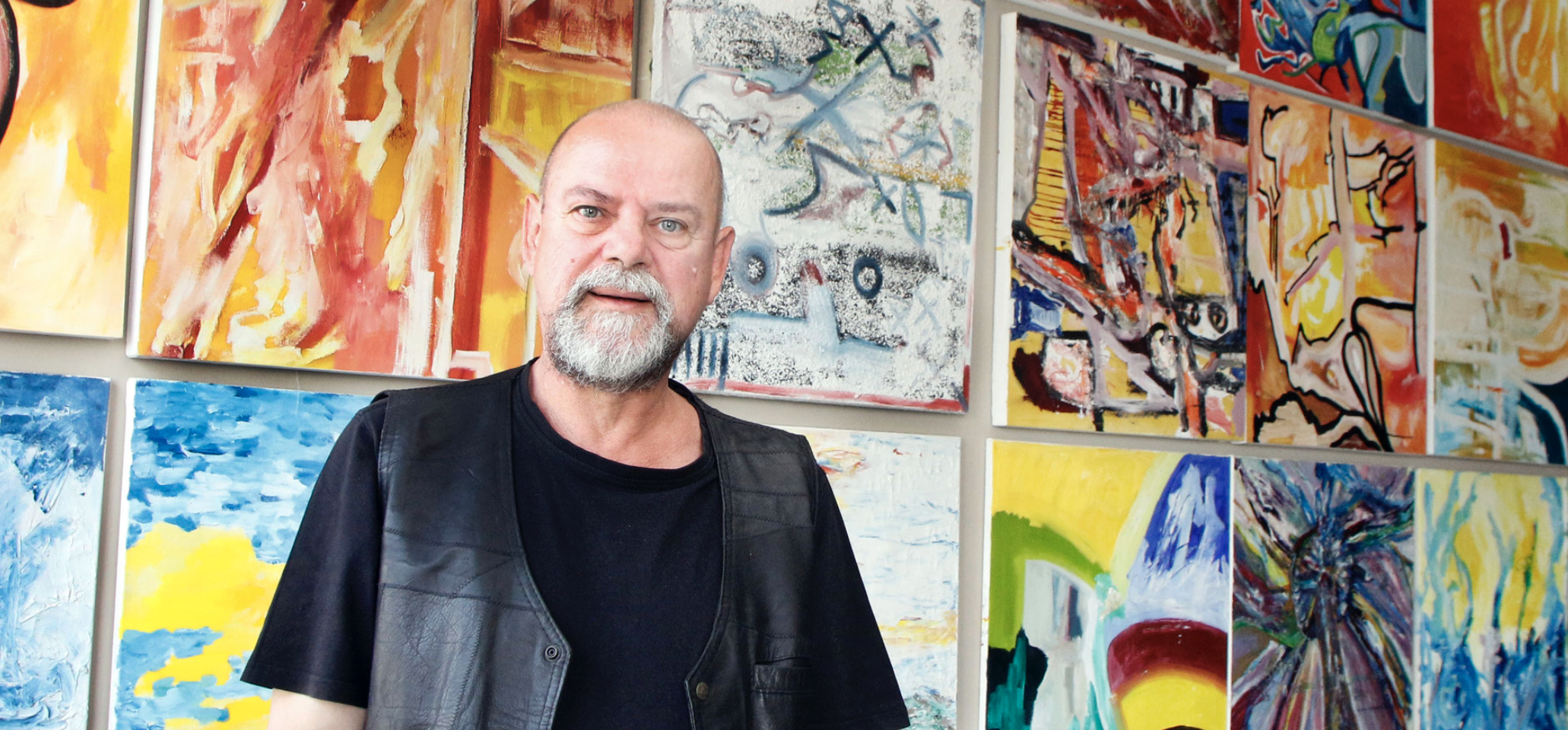
For Armin Andreas Pangerl, art has never been separated from life. Every drawing, page of writing, and painted surface reflects a personal journey shaped by hardship, resilience, curiosity, and an ongoing desire to understand the world around him. Over several decades, the German artist has built a body of work that blends visual expression with written language, creating artworks that feel as much like personal records as they do creative statements.
Born in 1965 in Bayreuth, Germany, Pangerl spent his childhood between Bayreuth, Lörrach, and Lahr alongside his three brothers. His early years offered little indication that he would eventually become associated with contemporary Outsider Art. After completing secondary school, he entered the workforce, taking on physically demanding jobs including concrete construction, factory work, and truck driving. These experiences grounded him in everyday life and exposed him to environments far removed from the traditional art world.
A major turning point came in 1988 during his military service when he experienced his first psychotic episode and was hospitalized. A second episode followed the next year, resulting in treatment at a psychosomatic clinic in Ottenhöfen. While these events brought significant personal challenges, they also marked the beginning of his artistic practice. Art gradually became a means of reflection, communication, and self-exploration.
Throughout the 1990s, Pangerl balanced work in the security industry with evening studies. He pursued courses in art history, history, and mathematics, seeking a deeper understanding of both creative and intellectual disciplines. His studies were interrupted in 1996 following a diagnosis of testicular cancer. Rather than abandoning creative pursuits, however, he shifted his focus and began working as a freelance artist and author.
His commitment to supporting creative activity extended beyond his own studio practice. After completing vocational training as a media designer in 2003, he founded the artist collective Das Atelier Lahr the following year. The collective became an important platform for artistic exchange and support. In 2007, he helped organize the first Outsider Art Market at the Prinzhorn Collection, an institution widely respected for its dedication to Art Brut and Outsider Art.
Health challenges continued to shape his life. In 2008, Pangerl was diagnosed with esophageal cancer. Additional periods of psychiatric treatment followed, and for several years he largely stepped away from making art. Yet creativity remained close at hand. In 2013, he returned to artistic practice through the creation of diary pages, an activity that would influence much of his later work.
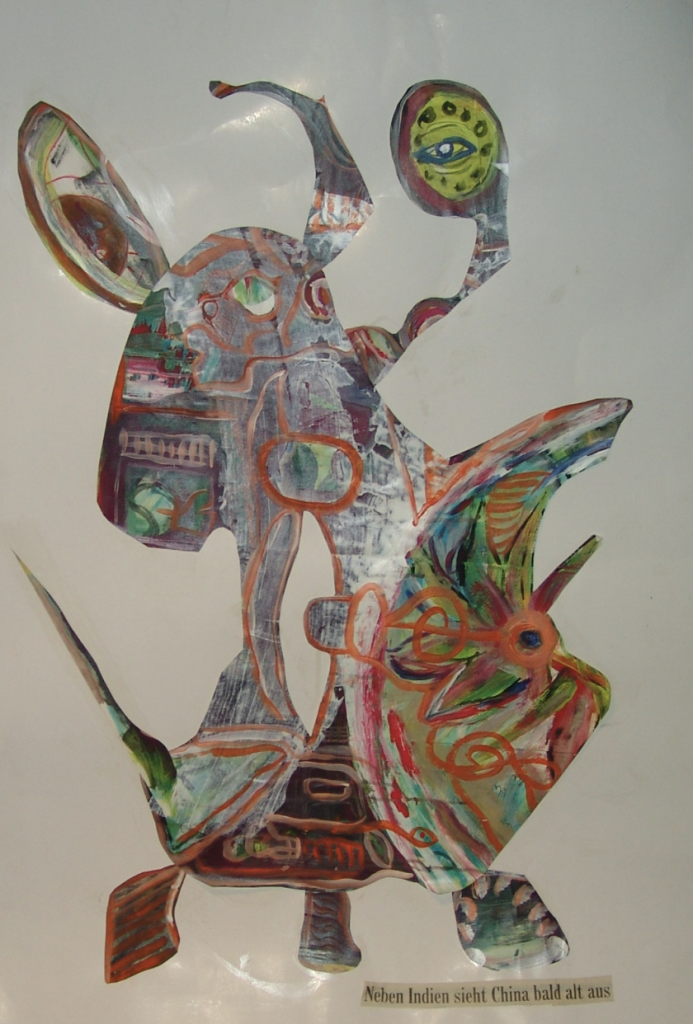
Entirely self-taught, Pangerl has remained independent in his approach to art. He began painting abstract images as a child and never followed a conventional academic route. Instead, he developed his own visual language through experience, observation, and experimentation. His works often combine drawing, painting, handwriting, symbols, and fragments of thought. Many pieces appear densely layered with words, crosses, notes, and associations that flow across the page like streams of consciousness.
This merging of image and text has become one of the defining characteristics of his work. Language is not used simply to explain an artwork; it becomes part of the artwork itself. Personal reflections, observations, memories, and spontaneous ideas coexist with visual elements, creating compositions that invite viewers into an intimate and often unpredictable world.
Among his most recognized projects is One Million, an ongoing series centered on the repeated painting of ink crosses. Through the accumulation of thousands upon thousands of marks, the project transforms repetition into a visual experience. What may initially appear simple gradually reveals layers of dedication, patience, and contemplation. The resulting works exist somewhere between order and disorder, structure and improvisation.
Pangerl’s artistic output is remarkably varied. Alongside the cross paintings, he creates figurative drawings, abstract compositions, conceptual works, collages, and mixed-media pieces. His imagery shifts freely between personal experience, social commentary, humor, and imagination. This willingness to move across different forms and subjects has allowed him to maintain a creative practice that remains open and constantly changing.
His contributions have earned recognition from collectors and institutions both in Germany and abroad. His works are represented in collections including the Prinzhorn Collection, the Henry Boxer Gallery Collection, the Peter Bolliger Collection, the Dammann Collection, the Turhan Demirel Collection, the Eckhard Busch Collection, the Dominique Peloux-Raynal Collection, the Willy Brandt House Collection in Berlin, and the Open Art Museum.
Equally important is his extensive diary archive. Since 2020, Pangerl has worked exclusively on paper sheets, continuing a lifelong habit of documenting thoughts and experiences through words and images. The Diary Archive in Emmendingen already preserves dozens of his diaries containing thousands of handwritten pages, ensuring that this deeply personal record will remain accessible for future study.
Today, Armin Andreas Pangerl lives and works in Lahr, Germany. Alongside his own artistic practice, he actively supports fellow artists through sponsorship and mentoring initiatives. His work stands as an ongoing exploration of memory, identity, illness, creativity, and endurance. Through drawings, texts, paintings, and diaries, he has created a body of work that demonstrates how art can become both a record of lived experience and a means of navigating it.
For more of Armin Andreas Pangerl’s work, please visit www.arminpangerl.com
