



For Clifford Riley, painting has always been a way of understanding the emotions that connect us all. Having begun his artistic journey at the age of twelve, he has spent decades refining a distinctive visual language he describes as “ministic realism”—a style that combines recognizable forms with a stripped-back, expressive approach that places feeling above detail. Rather than simply depicting people, Riley seeks to reveal universal emotional experiences that transcend individual identity, creating works that invite immediate empathy and personal reflection.
His portraiture and figurative paintings have been exhibited both locally and throughout Europe, often accompanied by his own poetry, further enriching the emotional dialogue between image and language. Whether portraying vulnerability, contemplation, longing, or spiritual transformation, Riley’s work explores the invisible dimensions of the human condition. Each painting becomes an invitation to pause, reflect, and recognize something familiar within ourselves, capturing both the physical presence and the inner spirit of his subjects with remarkable sincerity.
The Work of Clifford Riley
Clifford Riley’s paintings occupy a compelling space between reality and symbolism. While his figures remain recognizably human, they exist within carefully simplified environments where color, gesture, and composition become the primary vehicles of emotional expression. This balance between representation and reduction is central to what Riley describes as ministic realism, allowing the emotional content of each work to emerge with clarity and directness.
Rather than overwhelming the viewer with intricate detail, Riley intentionally pares his compositions down to their emotional essentials. Faces, bodies, and gestures become visual metaphors that communicate feelings almost instinctively. His paintings ask viewers not simply to observe, but to experience. The figures are less portraits of specific individuals than reflections of universal states of mind—fear, hope, vulnerability, resilience, desire, and spiritual searching.
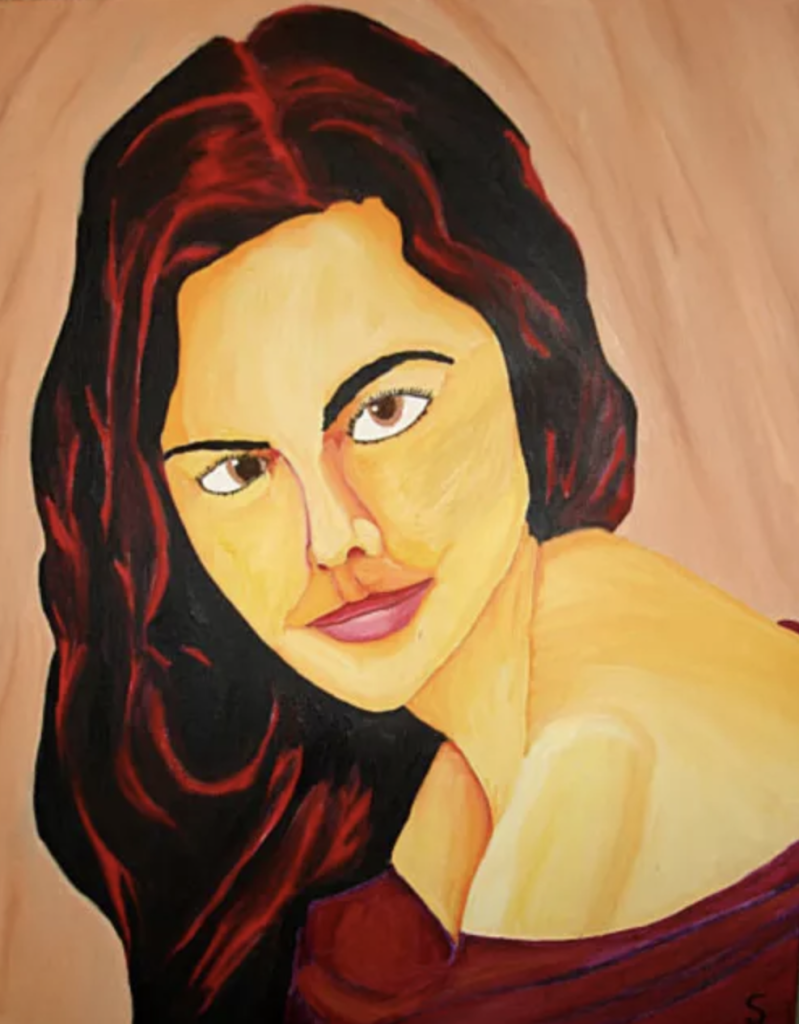
The portrait featured among his recent works demonstrates this philosophy beautifully. The subject’s direct gaze immediately establishes a connection with the viewer. Large expressive eyes become the emotional center of the composition, while flowing dark hair accented with deep crimson tones creates both warmth and dramatic contrast. The simplified modeling of the face avoids photographic realism in favor of psychological presence. Every decision—from the restrained palette to the gentle turn of the body—serves to strengthen the emotional dialogue between subject and audience. The result is a portrait that feels intimate, approachable, and quietly contemplative.
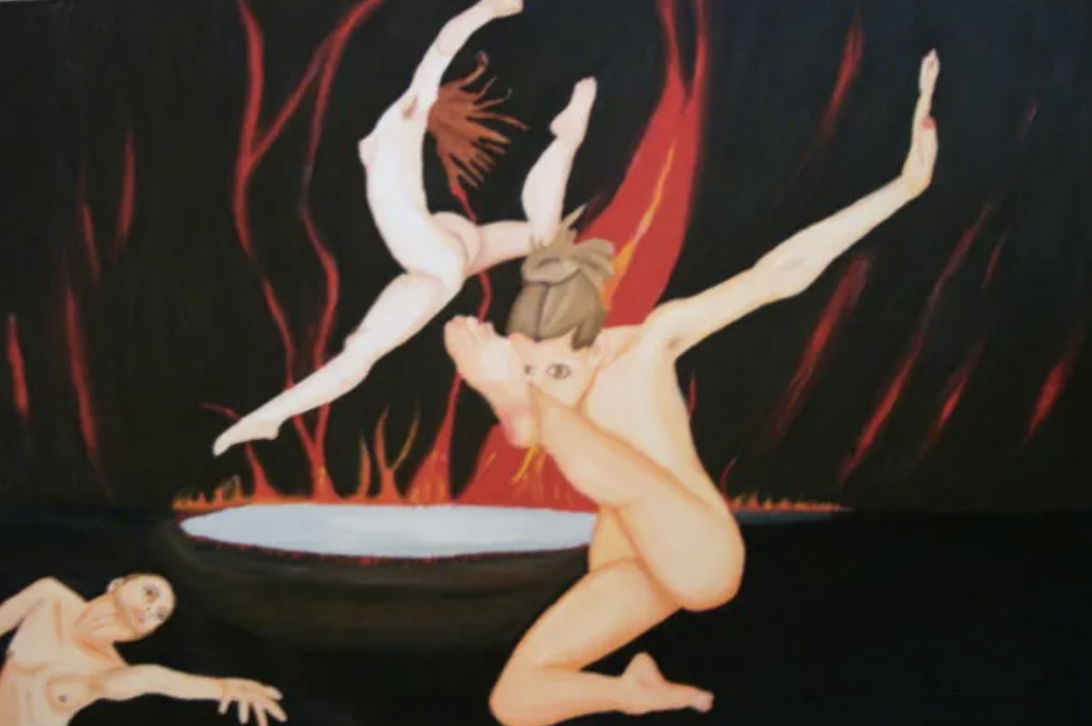
In contrast, Riley’s figurative compositions often venture into more symbolic territory. One particularly striking work presents several nude figures arranged around what appears to be a glowing vessel against a dark, flame-filled background. Rather than depicting a literal narrative, the painting evokes themes of transformation, vulnerability, sacrifice, and renewal. The surrounding fire suggests both destruction and purification, while the suspended and reclining figures introduce a dreamlike ambiguity that encourages multiple interpretations.
This openness to interpretation is one of Riley’s greatest strengths. His paintings rarely dictate a single meaning. Instead, they create emotional spaces in which viewers bring their own memories, beliefs, and experiences. The imagery functions almost like visual poetry, communicating through atmosphere rather than explanation. Much like his written poetry, the paintings rely on suggestion and symbolism instead of direct narrative.
Color plays a particularly significant role throughout Riley’s practice. Rich blacks establish dramatic theatrical spaces where figures seem to emerge from darkness into light. Deep reds introduce passion, vitality, danger, or spiritual intensity depending on the context, while pale flesh tones provide a visual focus that emphasizes human presence. These carefully controlled color relationships heighten the emotional resonance without becoming overly decorative.
Composition is equally important. Riley frequently isolates his subjects within simplified environments, removing unnecessary distractions so that posture, gesture, and expression become the primary storytellers. Negative space is used thoughtfully, giving each figure room to breathe while reinforcing feelings of solitude, introspection, or quiet tension. This minimalist approach encourages slower looking, allowing subtle emotional nuances to unfold over time.
Although rooted in figurative painting, Riley’s work reaches beyond physical likeness. His interest lies in capturing what cannot be directly seen—the psychological and spiritual dimensions of human existence. The body becomes a vessel for emotional truth, while facial expressions, body language, and symbolic settings reveal inner experiences that are both deeply personal and universally recognizable.
There is also a timeless quality to Riley’s paintings. Free from overt references to contemporary culture or specific locations, the works resist being confined to a particular moment in history. Instead, they explore enduring questions about identity, mortality, human connection, and spiritual awareness. This universality allows viewers from different backgrounds to engage with the paintings through their own emotional perspectives.
Ultimately, Clifford Riley’s art reminds us that painting is not merely about depicting appearances but about communicating experiences that words often struggle to express. Through his distinctive language of ministic realism, he creates images that bridge the visible and the invisible, the physical and the spiritual. His paintings invite contemplation rather than certainty, offering viewers an opportunity to encounter not only his artistic vision but also reflections of their own emotional lives. In doing so, Riley demonstrates that the most powerful works of art are often those that quietly reveal the shared humanity connecting us all.
