



Natalia Shabai creates art from the belief that beauty is not confined to extraordinary places. It can be discovered in nature, in living beings, and in quiet moments that might otherwise pass unnoticed. Working primarily in watercolor and oil, she uses realism to preserve these experiences and give them a lasting presence. Her paintings invite viewers to slow down and recognize the warmth, character, and emotional meaning within the natural world. Rather than presenting animals simply as subjects to be observed, Shabai portrays them as expressive individuals capable of strength, affection, and connection. Her careful attention to posture, color, and facial expression allows each image to communicate beyond its visible details. Through her work, she hopes to bring happiness and comfort while reminding viewers that meaningful beauty is often already around them, waiting to be noticed.
Strength, Tenderness, and Animal Character
Animals occupy a central place in Shabai’s work, providing her with subjects through which she can explore both physical presence and emotional expression. Her paintings of a bull and a pair of lions reveal two contrasting sides of animal life. One emphasizes power, movement, and self-possession, while the other captures intimacy and trust. Together, these works demonstrate how the artist approaches realism as more than the accurate reproduction of appearance. She uses recognizable forms to suggest personality, mood, and relationships.
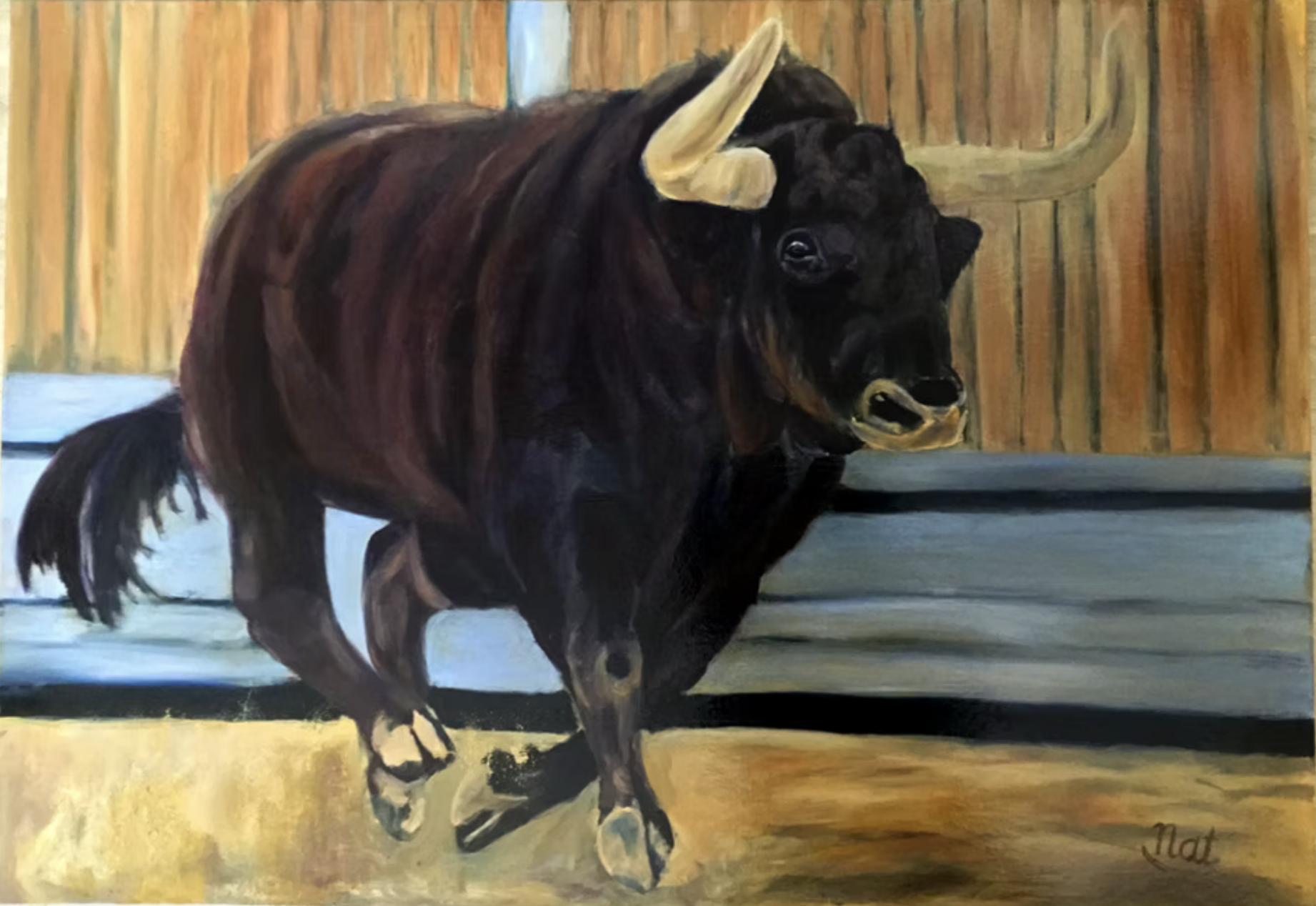
In the painting of the bull, the animal dominates the composition. Its substantial body extends across much of the image, immediately establishing a sense of weight and authority. Deep browns, burgundy tones, and areas of near-black create the impression of a dense, muscular form. The lighter horns stand out clearly against its dark head, strengthening the silhouette and directing attention toward the animal’s alert face.
Shabai depicts the bull in motion, with one leg lifted and the body turning slightly toward the viewer. This decision introduces energy into the composition. The animal does not appear passive or posed. Instead, it seems to have been observed during a brief transition from one step to the next. Its direct gaze creates an immediate encounter, as if the bull has suddenly become aware of the viewer’s presence.
The surrounding environment provides a strong visual contrast. Vertical wooden boards form a warm background of ochre, amber, and brown, while cooler blue-gray shapes define the lower space. These architectural elements establish the setting without competing with the animal. The repeated vertical lines also emphasize the bull’s broad, horizontal body. Through this balance, Shabai gives the subject both a physical setting and a commanding visual presence.
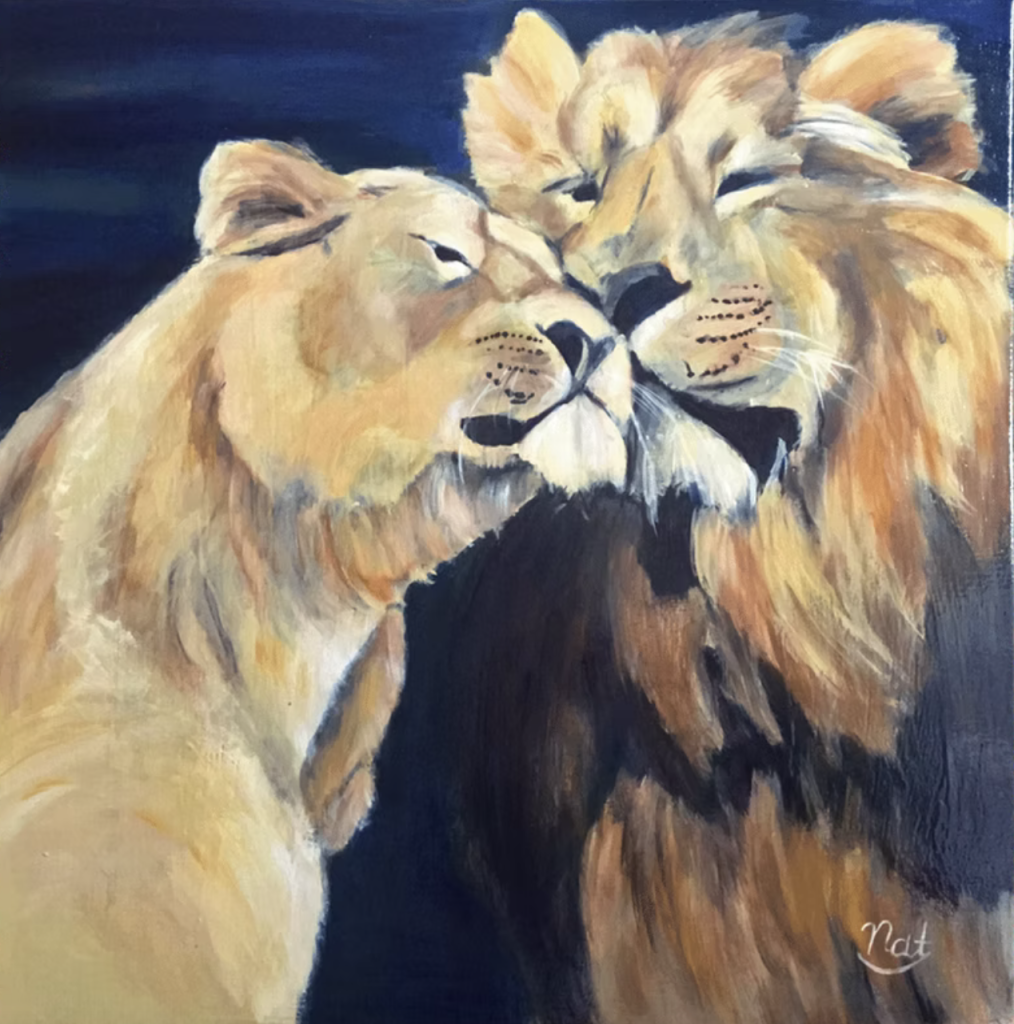
The painting of the lions offers a very different emotional atmosphere. Here, the composition is built around closeness rather than movement. A lioness and lion press their faces together, their eyes closed in a moment of apparent affection. Their touching noses and relaxed expressions communicate familiarity, comfort, and mutual trust. Shabai brings the animals close to the picture plane, removing unnecessary environmental detail so that their interaction becomes the complete focus.
The dark blue background plays an important role in shaping the mood. Its depth surrounds the lions and allows their golden coats to emerge with warmth and clarity. Cream, ochre, soft brown, orange, and muted gray are layered throughout their fur. These shifts in color create volume while giving the image a gentle, luminous quality. The lion’s mane is constructed from broader areas of dark brown and black, balanced by warmer strands around the face. The lioness appears softer and lighter, producing a visual contrast that helps distinguish the two animals while preserving their sense of unity.
Although lions are commonly associated with dominance and danger, Shabai presents them during a private and peaceful exchange. Their strength remains visible, but it is accompanied by tenderness. This combination makes the image especially engaging. The work encourages the viewer to consider affection as something shared across the living world, not limited to human experience.
Shabai’s brushwork maintains the recognizable structure of her subjects without making the paintings feel rigid. Carefully placed marks describe the animals’ eyes, noses, whiskers, horns, and fur, while broader passages of color establish their bodies and surroundings. This balance between precision and painterly freedom keeps the images expressive. The viewer recognizes each animal immediately but can also sense the artist’s hand within the surface.
Across both works, Shabai transforms observations of animals into reflections on character and connection. The bull embodies confidence and independence, while the lions suggest companionship and emotional closeness. In each painting, the artist identifies a fleeting moment and preserves it through color and form. Her realism does not merely document what an animal looks like; it communicates how its presence can feel.
Ultimately, Shabai’s paintings encourage a more attentive relationship with nature. By focusing on an alert glance, a lifted hoof, or two faces gently touching, she reveals the significance contained within brief encounters. Her work reminds viewers that beauty may appear through strength, affection, movement, or stillness. By giving these moments permanence, Natalia Shabai creates paintings that offer warmth and joy while celebrating the expressive lives of the animals around us.
