
Close Menu
ArtWire
    Trending
    • A Brief History of Pop Art: From Soup Cans to Cultural Commentary
    • Benjamin L.M.: Painting as a Vehicle for Hope
    • Steven Siegel: Reconstructing Memory Through Reclaimed Materials
    • Natalia Shabai: Finding Beauty in the Living World
    • Barbara Walker: Inheritance, Memory, and the Weight of History
    • Fant Wenger: Exploring Resonance Between Nature, Technology, and Consciousness
    • Hassan Judoo: Bringing Original Comic Worlds to Life Through Action and Imagination
    • Edward A. Burke: Visual Reflections on a Changing Planet
    ArtWireArtWire
    • Home
    • Art
    • Exhibitions
    • Events
    • Culture
    • Architecture
    • Submission
    ArtWire
    Home»Artist»David Hilditch: Painting the Fluidity of Thought
    Artist

    David Hilditch: Painting the Fluidity of Thought

    ArtWireBy ArtWireMay 12, 2025Updated:May 13, 2025No Comments3 Mins Read
    Share Facebook Twitter Pinterest LinkedIn Tumblr Email
    Share
    Facebook Twitter LinkedIn Pinterest Email Copy Link

    David John Hilditch, born in Wolverhampton in 1951, is an artist whose work merges philosophy with visual expression. His paintings are captivating explorations that challenge perception and identity, creating a unique space where paint appears to evolve on the canvas, transcending time and space.

    Hilditch’s journey in art started with a foundation in Birmingham, followed by a Fine Art Degree from Camberwell. Despite his early education, it was not until later in life, after a teaching career in Art and Design, that he dedicated himself fully to painting. Working from his studios in London and Shropshire, Hilditch immerses himself in the physicality of paint, allowing layers to build over time. This process-oriented approach reflects his philosophy of letting intention and spontaneity coexist.

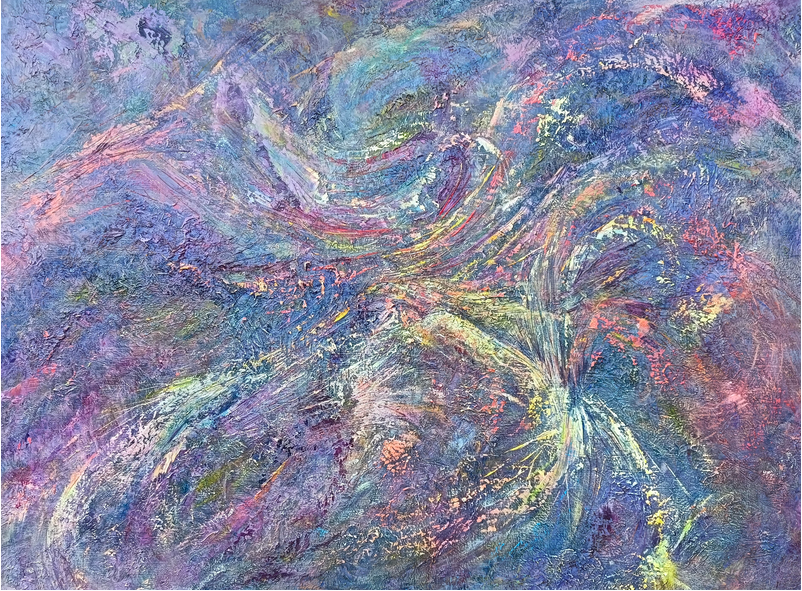
    One of his pieces, ‘Will 5’ (oil on canvas, 155×130 cm), epitomizes his style. The artwork is an abstract composition where movement and stillness merge. The strokes seem almost organic, inviting the viewer to follow their flow without dictating a specific narrative. The canvas becomes a space for contemplation, a reflection on the fluidity of existence.

    Hilditch’s work often challenges traditional interpretations of structure. His ongoing series ‘Formations’ pushes this concept further. The ninth painting in the series, ‘Formations 1.9’ (oil on canvas, 4’×3’), is a prime example. It explores the formation of structures through color, rhythm, and texture, inspired by both micro and macro images from nature. Hilditch’s technique, layering colors with dynamic strokes, creates a sense of continuous transformation. The viewer is left contemplating the origin of these forms—are they representations of the physical world, or expressions of something more abstract?

    This series exemplifies Hilditch’s commitment to exploring the boundaries of perception. His work does not seek to resolve the tension between abstract and representational art but instead invites a dialogue between the two. Each painting is a statement of how art can be both a personal reflection and a universal inquiry into the nature of being.

    Hilditch’s dedication to his craft is evident not just in his technique but in his willingness to evolve his ideas. He continues to expand the ‘Formations’ series, driven by his curiosity about how paint and canvas can communicate complex ideas. His art is less about depicting reality and more about questioning it, making his pieces dynamic points of contemplation rather than static representations.

    By embracing a practice rooted in experimentation, Hilditch creates a body of work that remains fluid and open-ended. His paintings are not fixed interpretations but are continually shaped by both the artist and the viewer. This sense of movement, of becoming rather than being, defines his artistic vision.

    David Hilditch’s work invites us to reflect on the act of seeing itself. Through his deliberate yet intuitive approach, he challenges us to reconsider the relationship between the known and the unknown, the formed and the unformed. In this way, his paintings remain alive, ever-changing, much like the ideas they seek to explore.

    Share. Facebook Twitter Pinterest LinkedIn Tumblr Email
    ArtWire
    • Website

    Related Posts

    A Brief History of Pop Art: From Soup Cans to Cultural Commentary

    July 18, 2026

    Benjamin L.M.: Painting as a Vehicle for Hope

    July 18, 2026

    Steven Siegel: Reconstructing Memory Through Reclaimed Materials

    July 18, 2026
    Leave A Reply Cancel Reply

    Don't Miss
    Exhibitions

    These 5 Women-Led Galleries Are Championing Overlooked Women Artists

    [ad_1] Art MarketMaxwell RabbLee ShinJa, installation view of “Weaving the Dawn” at Tina Kim Gallery,…

    Su Yu-Xin’s Metonyms for the Earth 

    March 7, 2025

    Trends, Tips, and Market Shifts You Need to Know

    March 7, 2025

    Cheryl Crane-Hunter: Art That Breathes With Nature

    April 29, 2025

    Meow Wolf Is Bringing Its Maximalist Magic to New York City

    March 11, 2025
    Top Posts

    A Brief History of Pop Art: From Soup Cans to Cultural Commentary

    July 18, 2026

    Benjamin L.M.: Painting as a Vehicle for Hope

    July 18, 2026

    Steven Siegel: Reconstructing Memory Through Reclaimed Materials

    July 18, 2026

    Natalia Shabai: Finding Beauty in the Living World

    July 18, 2026
    Categories
    • Architecture
    • Art
    • Artist
    • Culture
    • Events
    • Exhibitions
    About Us

    Welcome to ArtWire – Your Pulse on the Art World!

    At ArtWire, we are passionate about creativity, culture, and the transformative power of art. Our blog is dedicated to bringing you the latest in art exhibitions, events, cultural movements, and architectural marvels from around the world.

    Whether you're an artist, a collector, an enthusiast, or simply someone who appreciates the beauty of artistic expression, ArtWire serves as your go-to source for insightful articles, in-depth reviews, and exclusive event coverage.

    Our Picks

    A Brief History of Pop Art: From Soup Cans to Cultural Commentary

    July 18, 2026

    Benjamin L.M.: Painting as a Vehicle for Hope

    July 18, 2026

    Steven Siegel: Reconstructing Memory Through Reclaimed Materials

    July 18, 2026
    Most Popular

    Vincent Valdez on making art that connects communities – The Art Newspaper

    March 7, 2025

    Edward A. Burke: Visual Reflections on a Changing Planet

    July 13, 2026

    Lori Goldberg: Between Memory, Nature, and Transformation

    June 19, 2026
    • Privacy Policy
    • Disclaimer
    • Terms and Conditions
    • About us
    • Contact us
    Copyright © 2026 ArtWire All Rights Reserved.

    Type above and press Enter to search. Press Esc to cancel.