



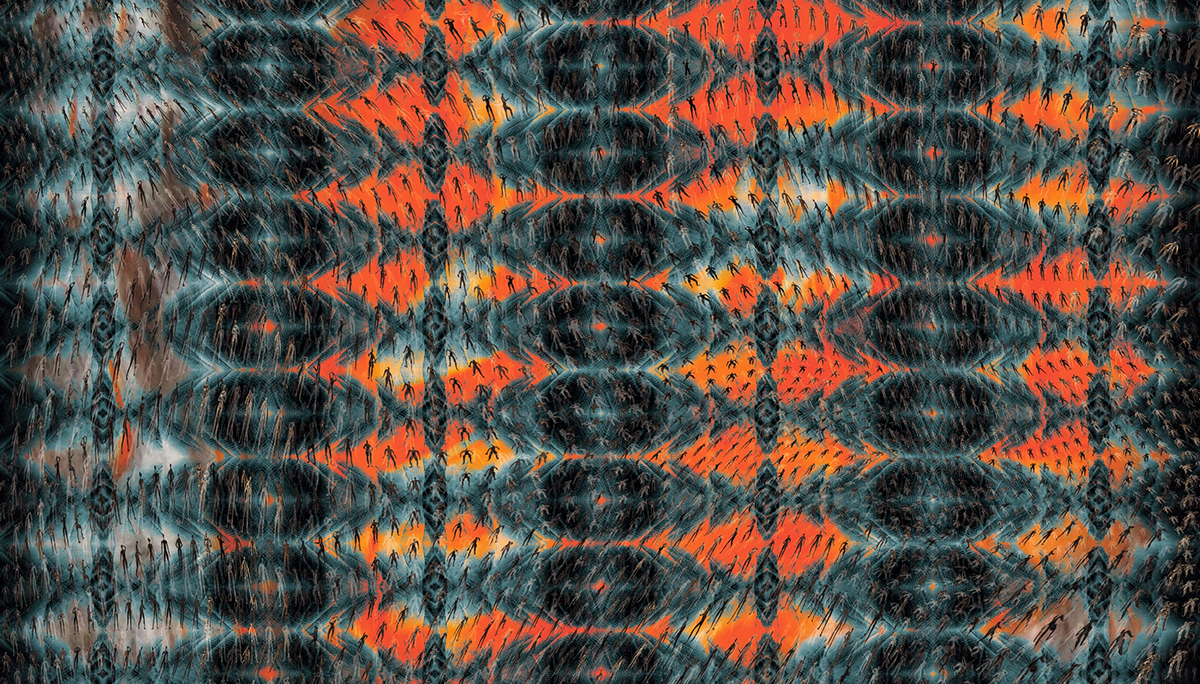
History enters everyday life through the values people inherit, the relationships they form, and the circumstances they struggle to understand. Working in Athens, Greece, Vicky Tsalamata explores these connections through a practice attentive to both social tensions and private experience. Her observations carry an ironic edge, questioning what happens to human dignity when political interests and moral compromises determine the conditions of existence. Alongside this criticism runs a concern for the bonds that sustain people: friendship, love, communication, and a sense of belonging. Her series La Comédie Humaine and Bird’s Eye approach these concerns from different perspectives, bringing literary ideas, cultural memory, and self-awareness into her exploration of contemporary life. Through printmaking, she considers how experiences accumulate and how their effects extend beyond what can immediately be seen. The resulting inquiry moves between the individual and society, examining the search for meaning amid forces that continually reshape the world.
La Comédie Humaine
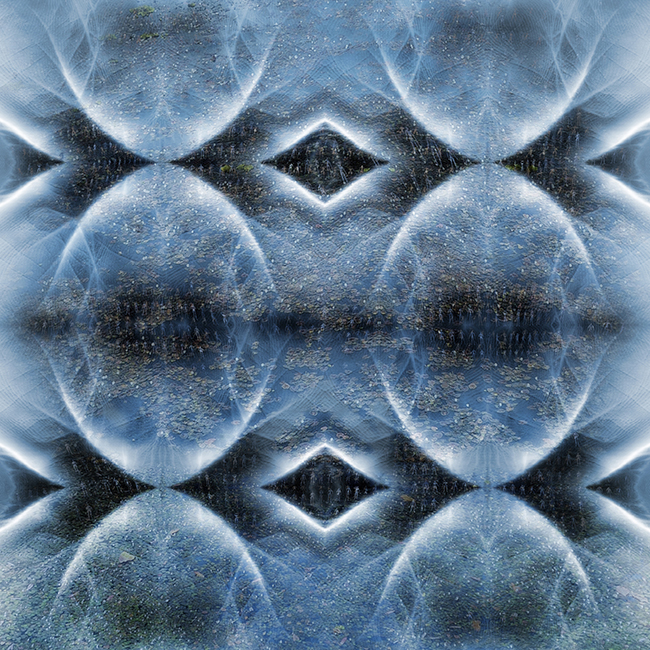
For Tsalamata, the human face holds the traces of a particular time. Its meaning extends beyond appearance to encompass the fears, desires, struggles, and social conditions associated with a life. In La Comédie Humaine, this understanding connects personal experience with history. The individual carries the effects of a surrounding world, including pressures that may remain invisible but nevertheless influence how people live and relate to one another.
The series references Honoré de Balzac’s La Comédie Humaine and Dante’s Divine Comedy. These connections establish a framework for reflecting on society and justice. Balzac’s examination of human relationships and Dante’s vision of divine judgment provide different points of departure for questions about morality. Tsalamata brings those questions into the present, considering the distance between the principles people claim to uphold and the conduct that social and political systems actually encourage.
Her sarcasm addresses a disturbing imbalance: the weak face increasing hardship while the corrupt gain greater strength. This is central to her account of the human condition. Individuals must live within structures capable of subordinating their needs and reducing their sense of importance. The series asks viewers to confront the consequences of that relationship, particularly when injustice becomes embedded in ordinary life. Its historical references suggest that these tensions belong to an ongoing human story.
Loneliness adds another dimension to this critique. Tsalamata emphasizes the need for communication in a world where people can feel both constrained and profoundly alone. Love and friendship become essential to her consideration of how human relationships might withstand such conditions. She develops the series through intaglio and mixed media, using seventeen iron matrices worked with intaglio techniques. Read alongside her statement, the physical act of creating and transferring marks offers a parallel to the ways experience registers upon a life and becomes part of its history.
Bird’s Eye
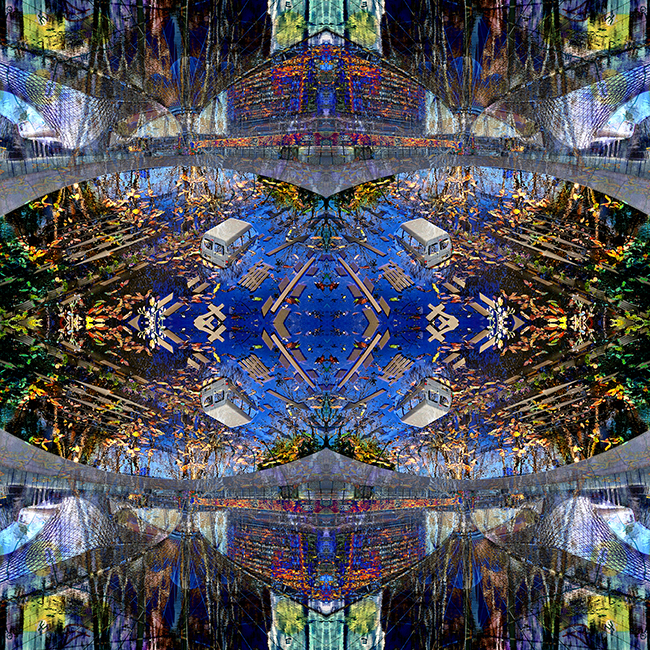
The search for cultural identity provides the starting point for Bird’s Eye. Tsalamata considers a world altered by globalization, where people seek an understanding of themselves within shifting social relationships. Cultural heritage offers a connection to something larger than individual experience, while self-awareness helps establish a personal position within that broader context. The work explores this continuing effort to recognize where one belongs and what gives that belonging meaning.
Its title introduces the possibility of a more expansive view. Looking from a distance can reveal connections that are difficult to grasp while immersed in immediate circumstances. In Tsalamata’s statement, this perspective also directs attention inward. Bird’s Eye attempts to map the hidden paths, memories, and structures that contribute to individual and collective unconscious life. The act of surveying becomes a way of examining the less visible foundations of human understanding.
Contemporary printmaking gives this exploration a layered visual language. Matter and light interact through traces and impressions, suggesting that meaning emerges through relationships between different elements. The reference to mapping helps explain the work’s ambition: to recognize something about a landscape that exceeds its outward features. Applied to human experience, this approach invites consideration of the memories, cultural associations, and unseen connections that influence a person’s understanding of the present.
Across both series, Tsalamata returns to the difficulty of finding a place within an unstable world. La Comédie Humaineexamines the conditions that diminish human worth and separate people from one another. Bird’s Eye explores the possibility of gaining perspective and developing inner awareness. Their shared concerns bring social circumstances into contact with emotional and cultural life. Through these inquiries, printmaking becomes a means of reflecting on how people carry history, respond to change, and continue searching for relationships and meanings that can sustain them.
