



For MUNEZERO Benjamin, painting is both an artistic practice and an act of environmental storytelling. Rooted in the landscapes and wildlife of Rwanda, his work celebrates the remarkable beauty of Africa while exploring the profound relationship between humanity and the natural world. Drawing inspiration from the continent’s rich ecosystems, cultural traditions, and diverse wildlife, Benjamin transforms familiar natural subjects into thoughtful reflections on identity, spirituality, and conservation.
Working in a refined realist style, he combines meticulous observation with a philosophical approach that invites viewers to look beyond physical appearances. Every animal becomes more than a portrait of nature—it serves as a symbol of resilience, wisdom, vulnerability, and coexistence. Through his paintings, Benjamin seeks to preserve not only the visual richness of African wildlife but also the emotional and cultural connections that define it. His art encourages contemplation while reminding us that protecting nature also means protecting memory, heritage, and the future of generations to come.
The Artist’s Work: The Silent Language of Nature
MUNEZERO Benjamin’s paintings reveal an extraordinary sensitivity to the emotional power of wildlife. Rather than presenting animals merely as scientific studies or decorative subjects, he portrays them as living individuals whose presence invites empathy, reflection, and respect. His work exists at the intersection of realism and symbolism, where technical precision becomes a vehicle for exploring deeper philosophical questions about life and humanity’s place within nature.
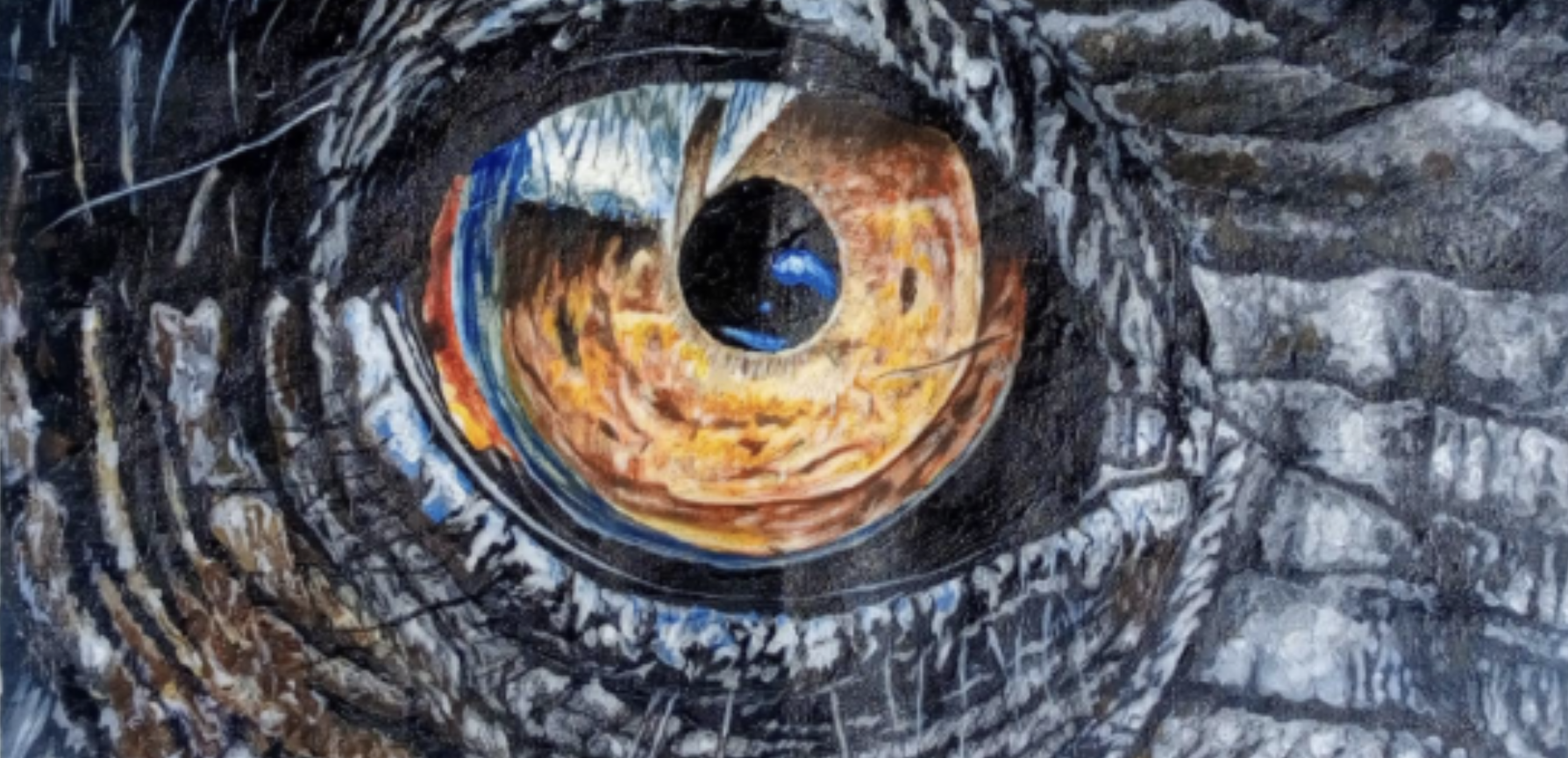
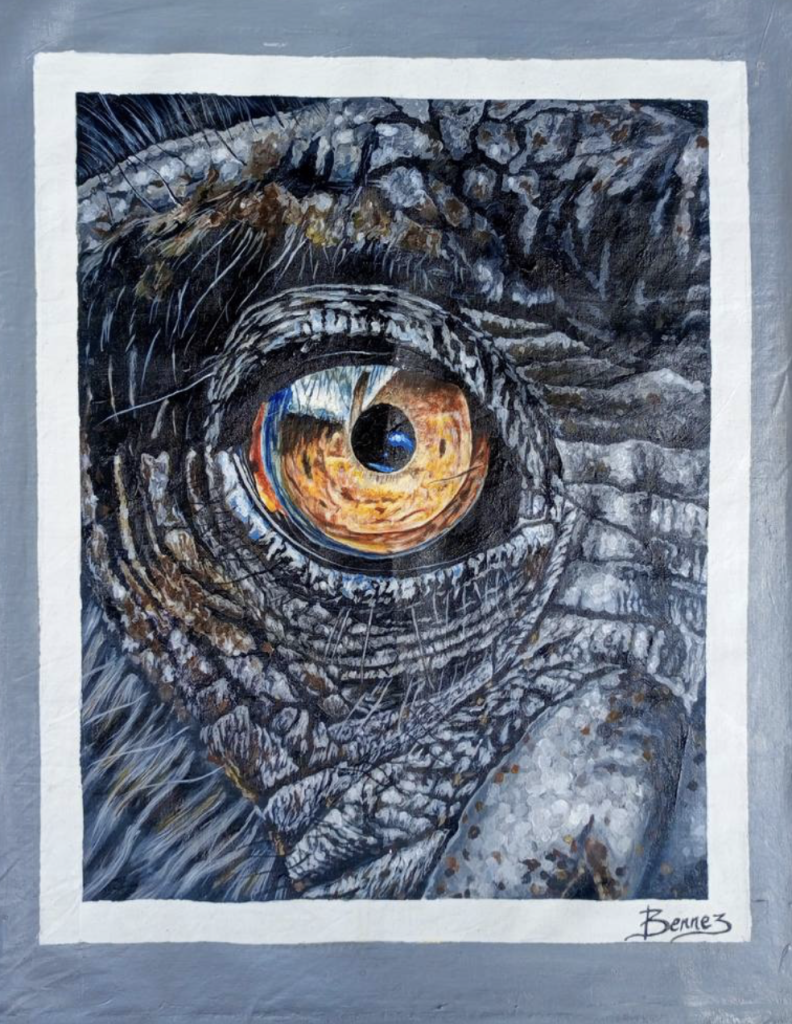
This intimate portrait of an owl demonstrates Benjamin’s remarkable ability to transform a single detail into an unforgettable visual experience. Instead of depicting the entire bird, he focuses almost exclusively on its eye, allowing the viewer to enter into an intensely personal encounter. The composition eliminates unnecessary distractions, directing complete attention toward the owl’s penetrating gaze.
The eye dominates the painting with remarkable force. Brilliant amber, gold, and deep orange tones radiate from the iris, contrasting dramatically against the cool greys, blacks, and muted browns that define the surrounding feathers. This striking use of color creates an immediate emotional tension. The warm, luminous eye appears almost illuminated from within, suggesting intelligence, awareness, and an inner life that extends beyond the physical form of the bird.
Benjamin’s mastery of realism becomes evident in the extraordinary rendering of texture. Every feather, wrinkle, and subtle variation in the owl’s skin is carefully observed and painted with remarkable patience. The intricate patterns surrounding the eye reveal countless layers of fine brushwork, demonstrating not only technical discipline but also a profound respect for the natural complexity of his subject. The tactile quality of the surface invites close inspection, rewarding viewers with new discoveries as they move nearer to the work.
Yet the painting’s strength lies not simply in its realism but in its psychological depth. The owl’s gaze appears unwavering and contemplative, creating the impression that the viewer is being observed as much as observing. This reversal transforms the traditional relationship between artwork and audience. Rather than remaining passive spectators, viewers become participants in a silent dialogue with the animal.
Owls have long occupied a symbolic place in cultures around the world, representing wisdom, mystery, intuition, and hidden knowledge. Benjamin embraces these universal associations while grounding the image firmly in the physical reality of the bird itself. The symbolism never overwhelms the realism; instead, each strengthens the other. The owl remains unmistakably a living creature, yet its presence also suggests broader reflections on awareness, perception, and humanity’s responsibility toward the natural world.
Light plays an equally important role in the composition. Rather than employing dramatic external illumination, Benjamin allows light to emerge organically through subtle tonal transitions across feathers and skin. This restrained approach heightens the brilliance of the eye, making it the undeniable focal point while preserving the quiet atmosphere that defines the painting.
The close cropping further intensifies the emotional encounter. By eliminating environmental context, Benjamin removes narrative distractions and encourages viewers to focus entirely on expression and presence. The result is almost meditative. The painting asks for patience and sustained observation, rewarding those who slow down enough to appreciate its intricate details and emotional complexity.
Underlying the technical accomplishment is Benjamin’s ongoing commitment to conservation and environmental awareness. His wildlife paintings remind viewers that every species possesses its own dignity and intrinsic value. Rather than delivering overt political messages, he encourages protection through admiration and understanding. By revealing the extraordinary beauty found within even a single eye, he demonstrates why wildlife deserves both respect and preservation.
Ultimately, MUNEZERO Benjamin’s work reflects a philosophy that sees nature not as something separate from humanity but as an essential part of our shared existence. His paintings encourage viewers to rediscover wonder through careful observation and to recognize that every living creature carries its own story. Through exceptional craftsmanship, emotional sensitivity, and a deep reverence for Africa’s natural heritage, Benjamin creates images that are at once visually captivating and spiritually resonant. His art reminds us that in looking closely at nature, we may ultimately learn to see ourselves more clearly.
