



[ad_1]
It takes loads of vitality to understand the world, and evolution favors energy efficiency. Consequently, the human mind does a terrific job of studying to filter issues out. We lose the small print of our environment as they develop acquainted, transferring via life in a state of near-automatism, recognizing objects and ideas — “garments, furnishings, one’s spouse, the concern of struggle,” as Viktor Shklovsky places it in “Art as Technique” — with out actually seeing them. In that 1917 textual content, the Russian critic famously argued that artwork’s objective was to get well these items, “to make the stone stony.” Extra not too long ago, a wave of students and artists have acknowledged that the stone must be stony as by no means earlier than: As we’ve turn into habituated to the ravages of industrialism, this computerized anthropocentric march ahead has plunged the world deeper into local weather disaster. Tutorial approaches like “object-oriented ontology” and “the vegetal turn” search to reorient our notion of actuality in order that nature comes again into focus.
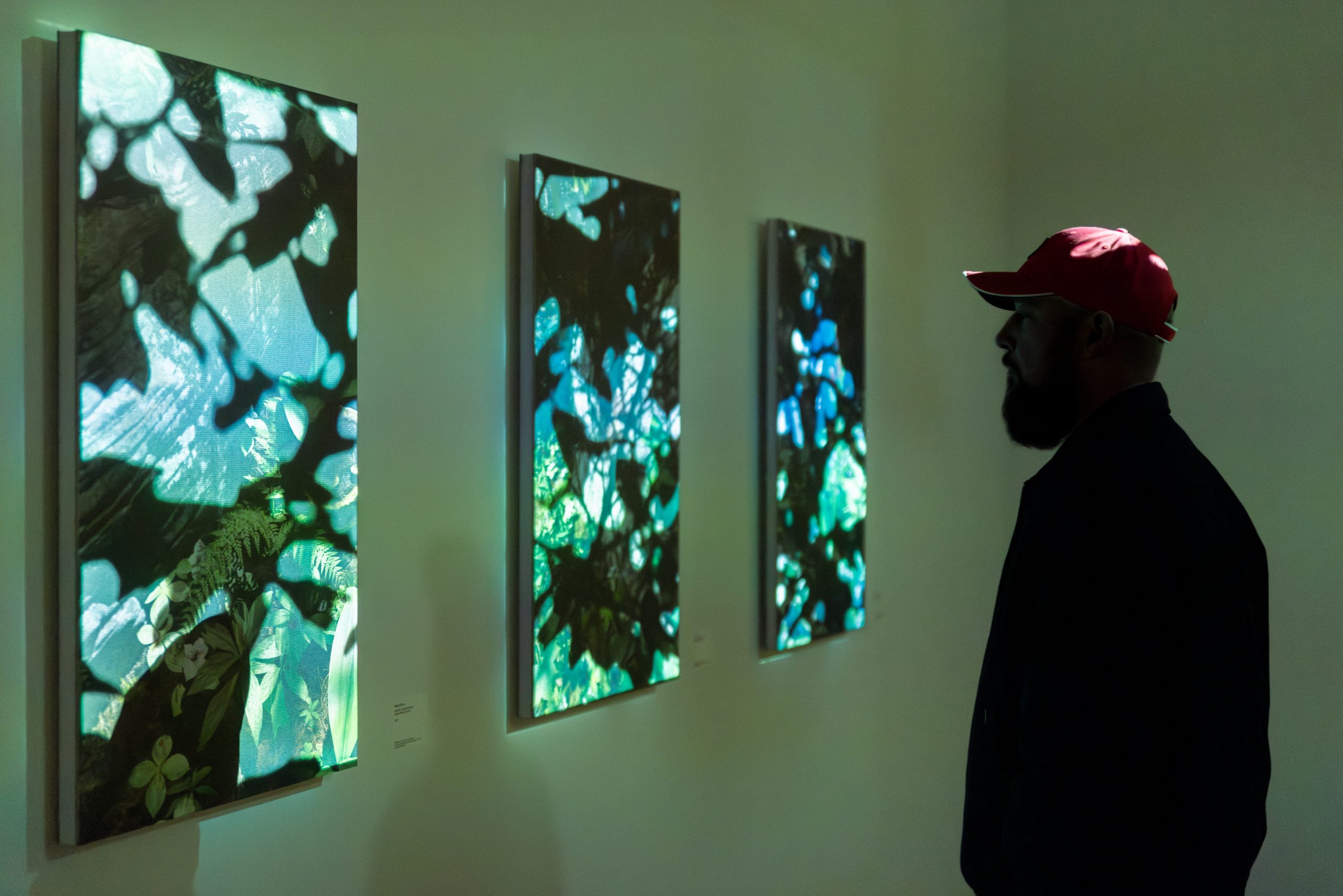
One frontier of this battle has been tackling “plant blindness,” or the post-industrial tendency to ignore flora to the purpose of its invisibility. (The place the names, sorts, and makes use of of vegetation have been as soon as frequent information, now they dissolve into an amorphous inexperienced backdrop.) The e-book Science/Fiction: A Non-History of Plants (2025) and its accompanying exhibition, which opened on the Maison Européenne de la Photographie in Paris and travels to the Foto Arsenal Wein in October, is a part of this broader push to recenter the botanical.
Written by Felix Hoffmann, Simon Baker, Giovanni Aloi, Natsumi Tanaka, and Michael Marder and edited by Maison Européenne de la Photographie, Victoria Aresheva, and Clothilde Morette, Science/Fiction weaves an eclectic picture historical past of vegetation from the Nineteenth century to the current, transferring non-chronologically between works like Anna Atkins’s “Asplenium angustifolium” — one in all her iconic 1850s cyanotypes of ferns— and Stan Brakhage’s 1981 movie “Backyard of Earthly Delights,” during which the filmmaker adhered vegetation on to clear movement image celluloid. It not solely questions the boundaries between human and nature, but additionally seeks to interrupt down the dividing line between artwork and science, giving equal weight to Laure Albin-Guillot’s Nineteen Thirties breakthroughs in photomicrography (which Albin-Guillot herself labelled as “ornamental”) and up to date items by Sam Falls, who composes and captures indexical impressions of vegetation on canvas and ceramics. As an object, the e-book ties these disparate items collectively nicely, drawing out surprising visible kinships between work from completely different contexts.
Like many makes an attempt to rethink the artwork historic canon as of late, Science/Fiction employs a thematic construction. One downfall of this non-historical technique is that it at instances overstates the novelty of vegetation as a significant pressure in science fiction; the killer plant subgenre is at least as old as Anna Atkins, and positively extra missed. Likewise, it underemphasizes the Nineteenth-century beginner botany craze that catalyzed Atkins’s work. Aristocratic scholar-inventors like William Henry Fox Talbot developed new visible instruments (like pictures!) partly to catalogue their ever-expanding colonial Wunderkammers, not directly resulting in the very applied sciences that allow our fashionable methods of seeing. That century’s European lust for unique vegetation is maybe the inverse of as we speak’s plant blindness, and it birthed a vibrant custom of gothic plant sci-fi that likewise blurred the boundaries between human and vegetal to uncanny impact. Removed from passive wallflowers, these imagined vegetation have been brokers of typically terrifying, all-consuming will, gobbling up botanists and shielding their native lands.
On the similar time, by forgoing chronology and disciplinary frameworks, Science/Fiction embraces fiction’s skill to understand the incomprehensible. How does one image a manner via disaster in any other case? Reasonably than a conquest of details or a group of specimens, the e-book builds a botanical daydream. This isn’t a nasty factor — in the case of surviving the Anthropocene, we’d like a little bit extra creativeness, and dreaming could be pressing work.


Science/Fiction: A Non-History of Plants (2025), written by Felix Hoffmann, Simon Baker, Giovanni Aloi, Natsumi Tanaka, and Michael Marder; edited by Maison Européenne de la Photographie, Victoria Aresheva, and Clothilde Morette; and revealed by Spector Books, is offered for pre-order on-line. The e-book shall be out there for buy on April 29.
[ad_2]
Source link
