



Camille Ross was born in 1964 in San Francisco, California, and grew up caught between two very different worlds: radical Berkeley and the deep South of Mississippi. This constant push and pull between progressive activism and entrenched racism shaped the way she sees the world. Ross is biracial and part Cherokee, and her sense of identity—complicated and layered—runs through all of her work. It’s not just a background detail. It’s the root of her purpose as an artist.
She studied at Goddard College and later earned an MFA from Cranbrook Academy of Art in 1991. Since then, she’s been awarded fellowships and support from the New Mexico Council on Photography, the Tucson Council on the Arts, and the International Women’s Foundation of Marfa, Texas. But beyond awards, what drives her is a need to speak for those who’ve been silenced. Ross is a civil liberties activist and documentary photographer who digs into hard truths, never flinching from uncomfortable stories.
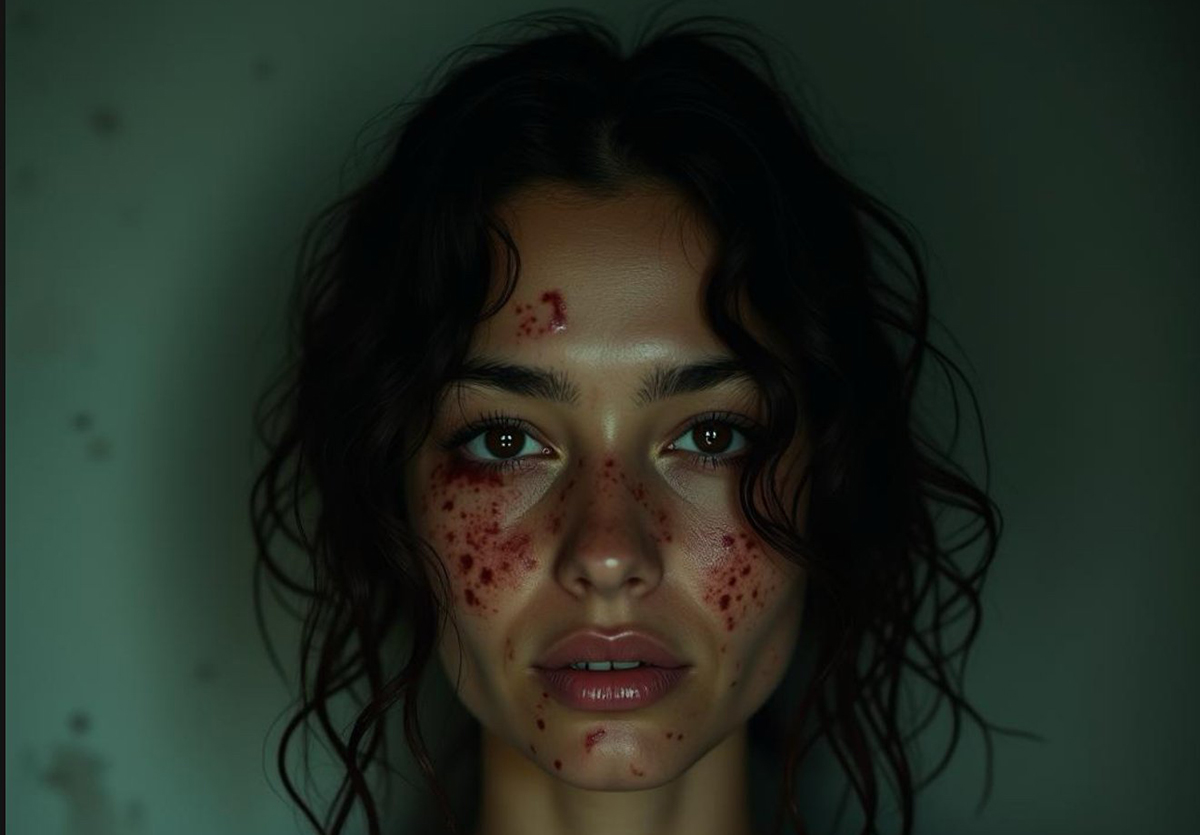
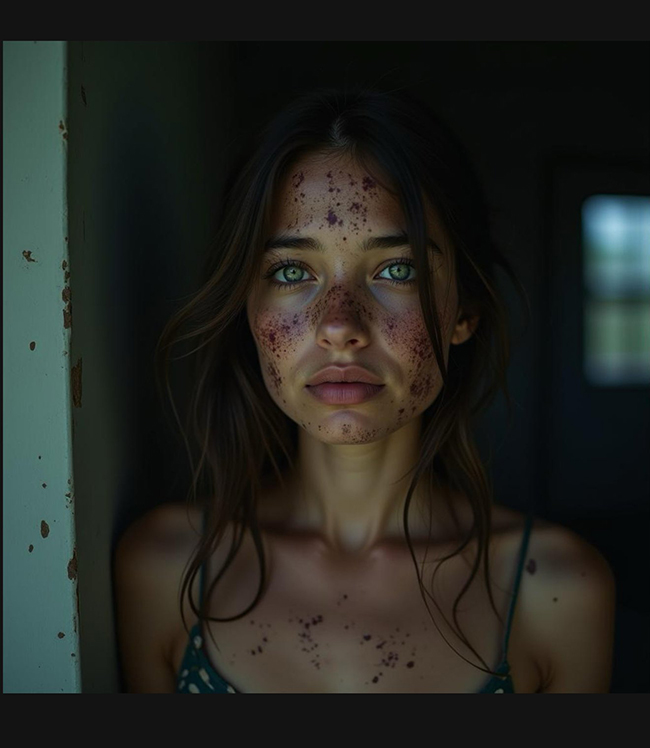
Her latest body of work is focused on victims of sex trafficking, specifically in war-torn Ukraine. This is not distant for Ross—it’s personal. A survivor of early childhood sexual abuse herself, she’s channeling a lifelong ache into this series. She isn’t trying to shock for shock’s sake. She’s trying to wake people up. As she puts it, when Russian soldiers started raping Ukrainian women and girls, something inside her snapped. That was the moment she knew she had to act.

Rather than attempt to cover the entire global epidemic all at once, Ross is zooming in on one region—Ukraine—where these crimes are actively unfolding. By focusing her lens here, she brings clarity to an otherwise overwhelming crisis. It’s a way to humanize what is too often buried in statistics and political reports. The work is raw. There’s rage in it. But there’s also deep empathy. Ross doesn’t photograph victims as objects of pity. She captures them in their full humanity, even in their silence.
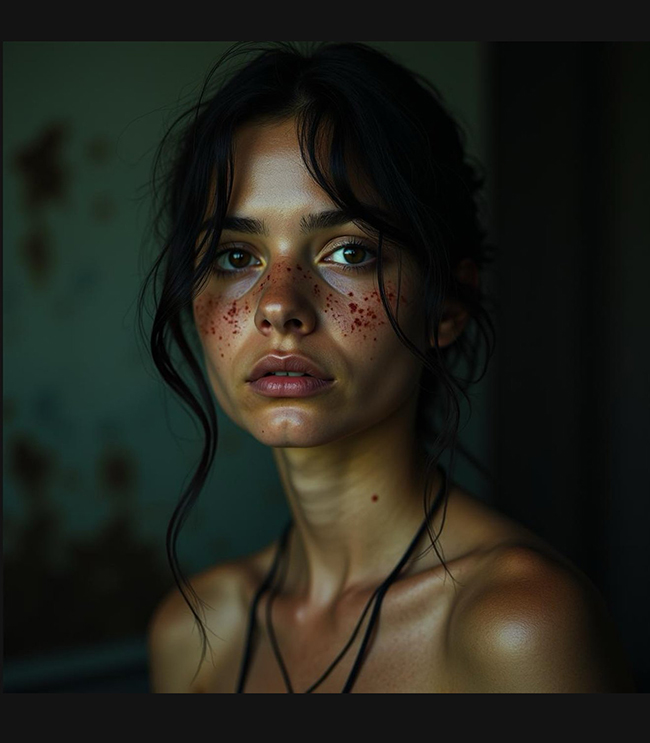
She uses her large LinkedIn network of artists and supporters as a sounding board—posting new images, getting feedback, gauging the pulse of those who care about social justice. It’s a kind of grassroots publishing model. Art is her form of protest, but also her method of healing. She often shares her own survival story publicly, hoping it helps other women come forward. For her, art is activism, and activism is survival.
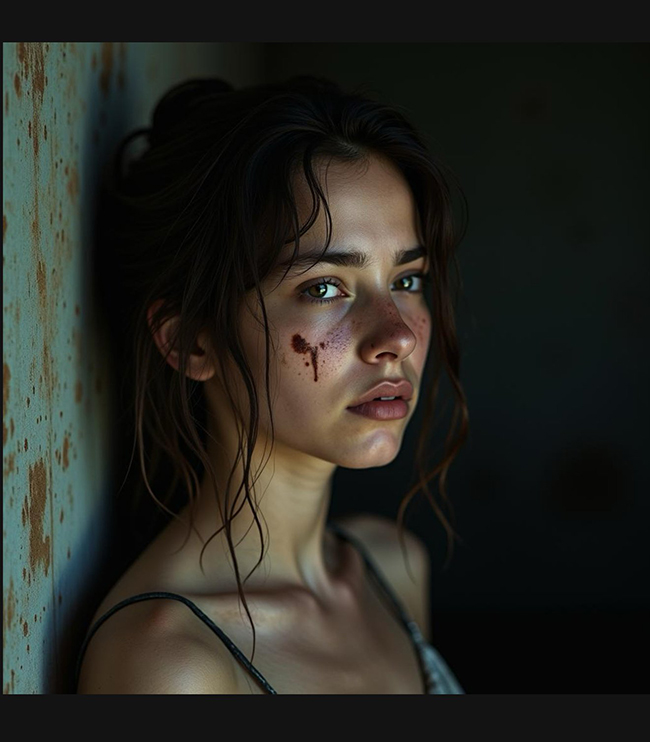
In this project, Ross also touches on a broader issue: how sexual violence against women is almost always treated as a side effect of war, not the main story. She calls that out directly. It’s not just a “dark chapter”—it’s the whole book for many women and children. And it’s not limited to Ukraine. Her photos draw a straight line from Eastern Europe to Native American reservations in the U.S., where the epidemic of missing and murdered Indigenous women continues largely ignored.
This is not a comfortable project to look at, and Ross knows that. Many people, she says, want to live with their heads in the sand. They don’t want art in their homes that reminds them of trauma. But that’s part of the problem. The more invisible this crisis remains, the less likely it is to change. Ross hopes that by confronting people with the reality—and doing so through photography, which doesn’t lie—we can start to see movement toward accountability. She wants sexual violence in war to be classified as one of the most severe Crimes Against Humanity, with real consequences. She wants law enforcement systems—domestic and international—to take women’s safety seriously.
What drives her isn’t just anger. It’s also grief. And behind that grief is a quiet, persistent hope. Ross believes that awareness is a form of power. Her photos don’t scream. They don’t need to. They stay with you, long after you’ve looked away. They ask hard questions: Why are women and girls still so unsafe? Why do justice systems fail us so consistently? And who benefits from that failure?
There’s no clean ending to a project like this. It’s ongoing, like the crisis itself. Ross continues to document, to listen, and to share. She has a lighter project coming next, she says—something to give people a break from the weight. But this series is the one closest to her heart. It’s the one she had to make. Because sometimes, bearing witness is the only thing that feels like enough. And even then, it never really is.
