



Originally from Stuttgart, Germany, Sonja Kalb has established an artistic practice characterized by bold experimentation, expressive color, and a deep appreciation for abstract forms. Her educational background in textile and design engineering, where she earned a Dipl. Ing. degree in Textile and Design, provided her with a strong foundation in visual composition, materials, and creative techniques. As her artistic journey progressed, Kalb gradually moved beyond the structured disciplines of design, embracing the freedom and spontaneity of abstract painting. Her work reflects this creative evolution, combining vibrant colors, dynamic brushwork, and richly layered textures to produce compositions that convey energy, emotion, and a distinctive sense of artistic freedom.
Now living and working in Düsseldorf, Germany, Kalb creates expressive compositions that explore the relationship between natural environments and human emotion. Her paintings combine energetic gestures, intricate surfaces, and striking chromatic contrasts, transforming familiar elements of nature into immersive visual experiences. Through her evolving practice, she demonstrates how technical knowledge and artistic freedom can coexist, creating works that invite viewers to discover new dimensions of beauty, vitality, and imagination.
Blooming Nature III: A Celebration of Color, Movement, and Organic Energy
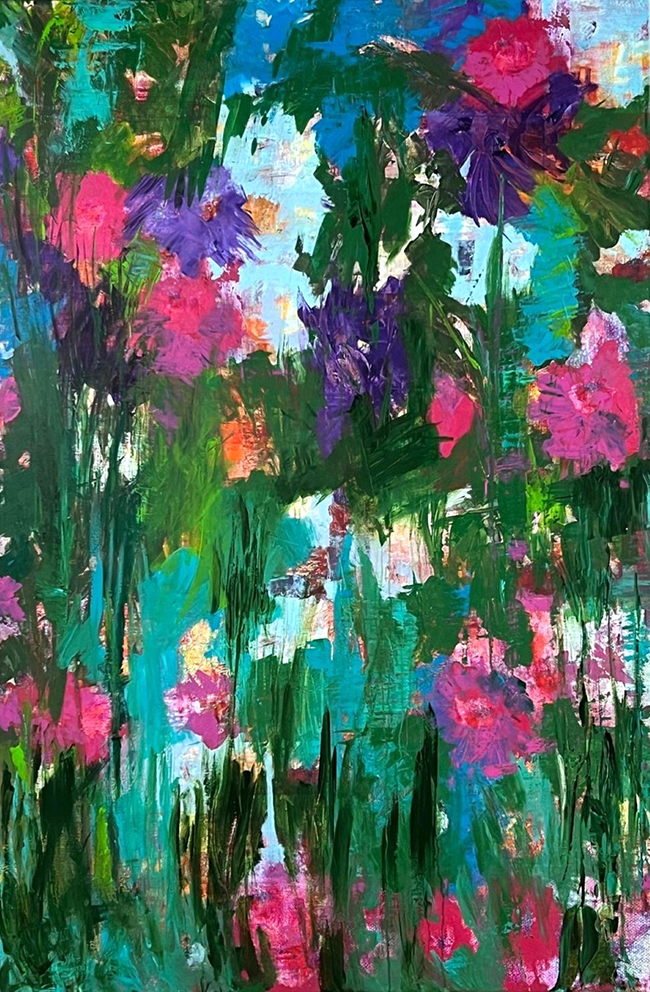
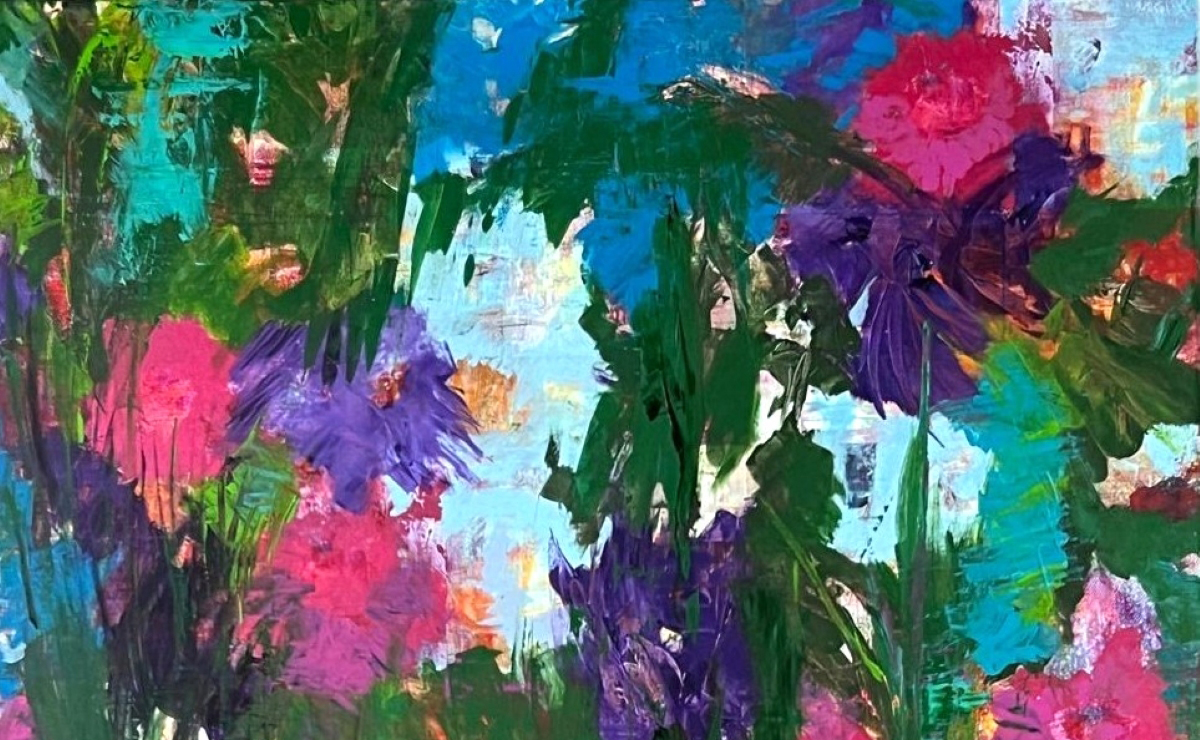
In Blooming Nature III (2025), a mixed-media painting on canvas measuring 180 × 120 cm, Sonja Kalb presents an exuberant interpretation of nature’s extraordinary capacity for growth, transformation, and renewal. Rather than depicting a recognizable landscape through conventional representation, she creates a richly textured visual environment where color and gesture evoke the sensation of standing within a flourishing garden. The composition unfolds through overlapping layers of vibrant pigments, organic shapes, and expressive brushwork, capturing the unpredictable rhythms of the natural world.
Deep emerald greens establish a powerful visual foundation, suggesting dense foliage, intertwining stems, and the mysterious depths of a thriving botanical environment. Against these darker passages, brilliant turquoise emerges with remarkable intensity, introducing moments of openness and luminosity. These contrasting greens and blues create a dynamic atmosphere in which light appears to filter through an abundance of vegetation. The result is a composition that feels simultaneously expansive and intimate, inviting viewers to explore its intricate relationships between color and form.
Among the most compelling elements of the painting are the vivid blossoms that appear throughout the canvas. Saturated pinks, crimson reds, and rich violet tones punctuate the surrounding greenery, creating dramatic focal points that immediately attract attention. Some floral forms are loosely defined, their petals suggested through sweeping gestures and concentrated applications of pigment. Others dissolve into abstract passages, becoming part of the painting’s broader network of movement and texture. This interplay between recognizable botanical references and spontaneous abstraction allows the imagery to remain open to interpretation.
Kalb’s handling of color is particularly significant in establishing the painting’s emotional character. The intensity of the pink and purple passages introduces a sense of exuberance, while the darker green areas provide visual weight and complexity. Turquoise and pale blue sections offer moments of relief, preventing the composition from becoming visually overwhelming. Through these carefully balanced contrasts, the artist creates an experience that is energetic without sacrificing harmony. Color becomes more than a descriptive element; it operates as an expressive force capable of communicating excitement, warmth, mystery, and renewal.
The painting’s vertical orientation further strengthens its connection to the natural world. Elongated marks and downward-flowing passages suggest hanging vegetation, climbing plants, and the intricate structures of a flourishing garden. These directional gestures encourage the eye to travel continuously across the surface, discovering new relationships between the densely layered forms. At the same time, irregular interruptions of light and color establish an engaging visual rhythm, recalling the unpredictable patterns found in untamed natural environments.
Texture plays an equally important role in shaping the painting’s visual identity. Through her mixed-media approach, Kalb develops surfaces that appear layered, tactile, and constantly shifting. Broad strokes intersect with smaller marks, while areas of concentrated pigment contrast with lighter, more translucent passages. These variations create a compelling sense of depth, as though different elements of the composition occupy overlapping spatial planes. The viewer encounters not a fixed image but an environment that seems to reveal additional details through sustained observation.
Although floral imagery provides the painting’s central inspiration, Blooming Nature III extends beyond a straightforward celebration of botanical beauty. Its expressive structure suggests the continuous processes of emergence, change, and regeneration that define living ecosystems. Blossoms appear amid dense vegetation, while contrasting colors evoke the coexistence of delicacy and strength. Kalb captures nature not as a static arrangement of attractive forms but as an active, evolving presence filled with tension, resilience, and possibility.
There is also a distinctly emotional dimension to the work. The uninhibited brushwork and saturated palette communicate a sense of freedom that contrasts with the precision traditionally associated with technical design. Yet the composition retains an underlying awareness of balance and organization. This relationship between spontaneity and structure reflects Kalb’s ability to integrate different aspects of her creative background into a unified artistic expression.
Ultimately, Blooming Nature III invites viewers to experience nature through sensation rather than literal observation. Its flourishing colors, layered textures, and rhythmic gestures create an atmosphere of abundance that celebrates the beauty of organic transformation. Through this vibrant composition, Sonja Kalb offers a compelling reminder that the natural world is not merely something to observe, but a source of emotional connection, creative discovery, and enduring inspiration.
