


Leonid Vidrak is an internationally exhibited artist whose work reflects a sustained interest in harmony, human connection, and the expressive possibilities of color and light. Trained at Russia’s School of Fine Arts and the Academy of Arts and Architecture, Vidrak developed a strong technical foundation while cultivating an artistic language shaped by emotion, observation, and atmosphere. His practice includes oil, tempera, watercolor, and mixed media, allowing him to explore different relationships between surface, transparency, texture, and form. Rather than simply reproducing the visible world, he transforms familiar scenes into poetic spaces where mood and memory become equally important. His paintings have been exhibited internationally and are represented in both public and private collections around the world. Across his varied body of work, Vidrak invites viewers to slow down and experience painting as a form of quiet communication, one capable of connecting people through shared feelings and visual rhythms.
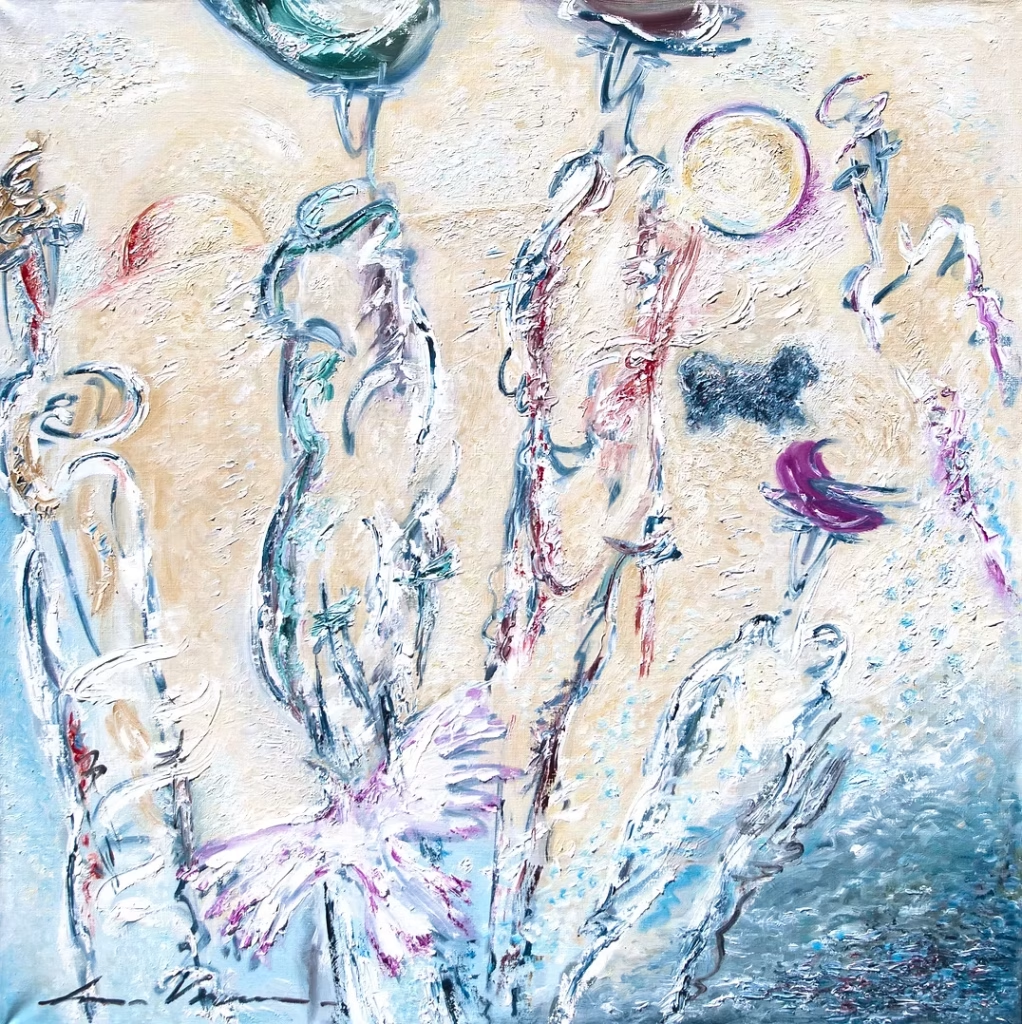
Sunny Day on a Shore
At the heart of Vidrak’s practice is a search for balance. His paintings often feel carefully structured, yet they rarely appear rigid or overly controlled. Forms, colors, and gestures coexist within compositions that retain a sense of movement and openness. This balance between discipline and spontaneity gives his work its distinctive emotional character. Every element appears to serve the larger atmosphere, whether it is a luminous area of color, a subtle transition in tone, or a figure placed within an expansive setting.
Vidrak’s academic background plays an important role in this approach. His education provided him with knowledge of drawing, composition, perspective, color theory, and material techniques. However, technical skill is not treated as an end in itself. Instead, it becomes the framework through which personal feeling can emerge. The strength of his work lies in the way formal knowledge supports, rather than overwhelms, the emotional experience of an image.
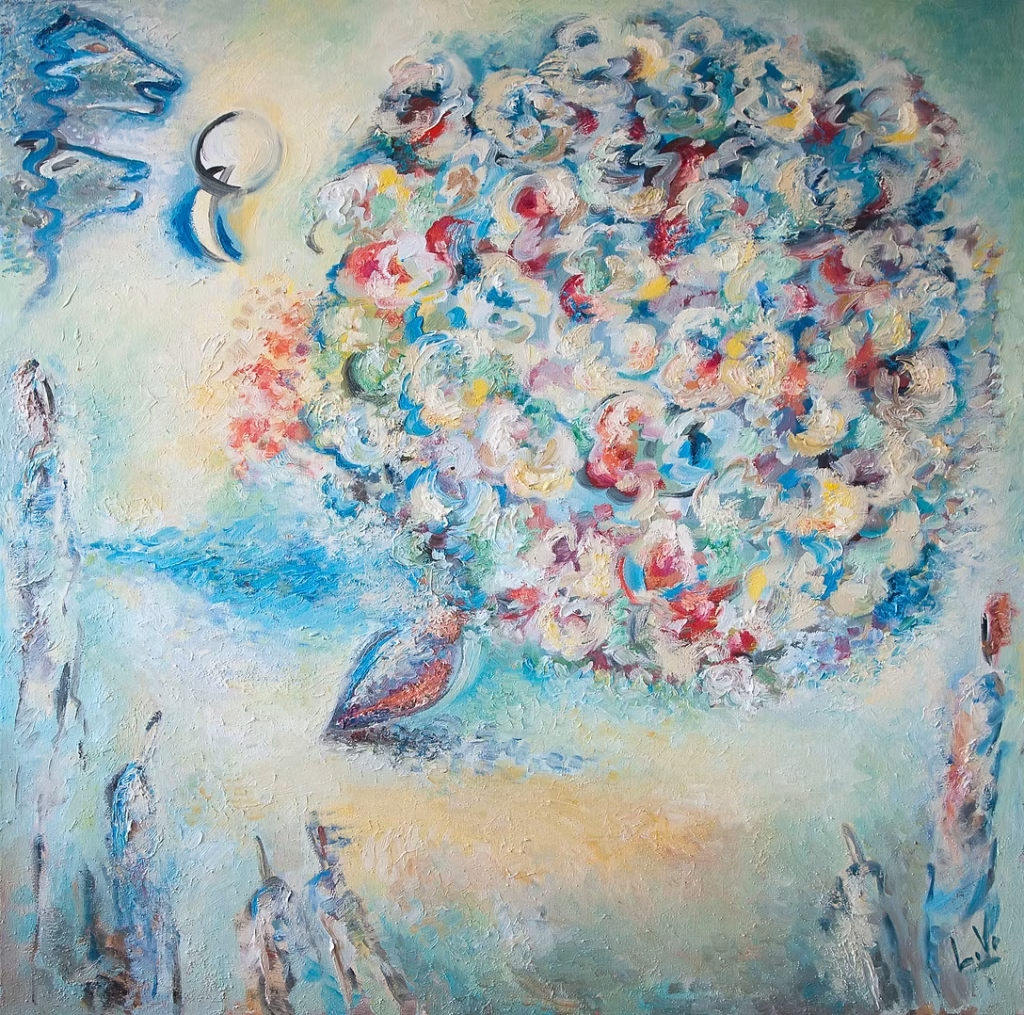
Promenade along Caesarea shore
Color is one of Vidrak’s most important expressive tools. He does not use it only to describe objects or establish realistic surroundings. Color creates temperature, rhythm, distance, and psychological tone. Warm and cool hues may be placed in conversation, while delicate transitions of light help unify the image. These relationships often produce a sense of harmony that can be felt before the painting is fully interpreted. The viewer responds first to the atmosphere and then begins to discover the details within it.
Light is equally central to his visual language. In Vidrak’s paintings, illumination can suggest passing time, changing weather, emotional clarity, or the lingering presence of memory. Light may reveal a figure, soften the boundaries of a landscape, or create a gentle tension between visible and concealed forms. Rather than functioning only as a physical effect, it becomes a poetic presence that shapes the meaning of the composition.
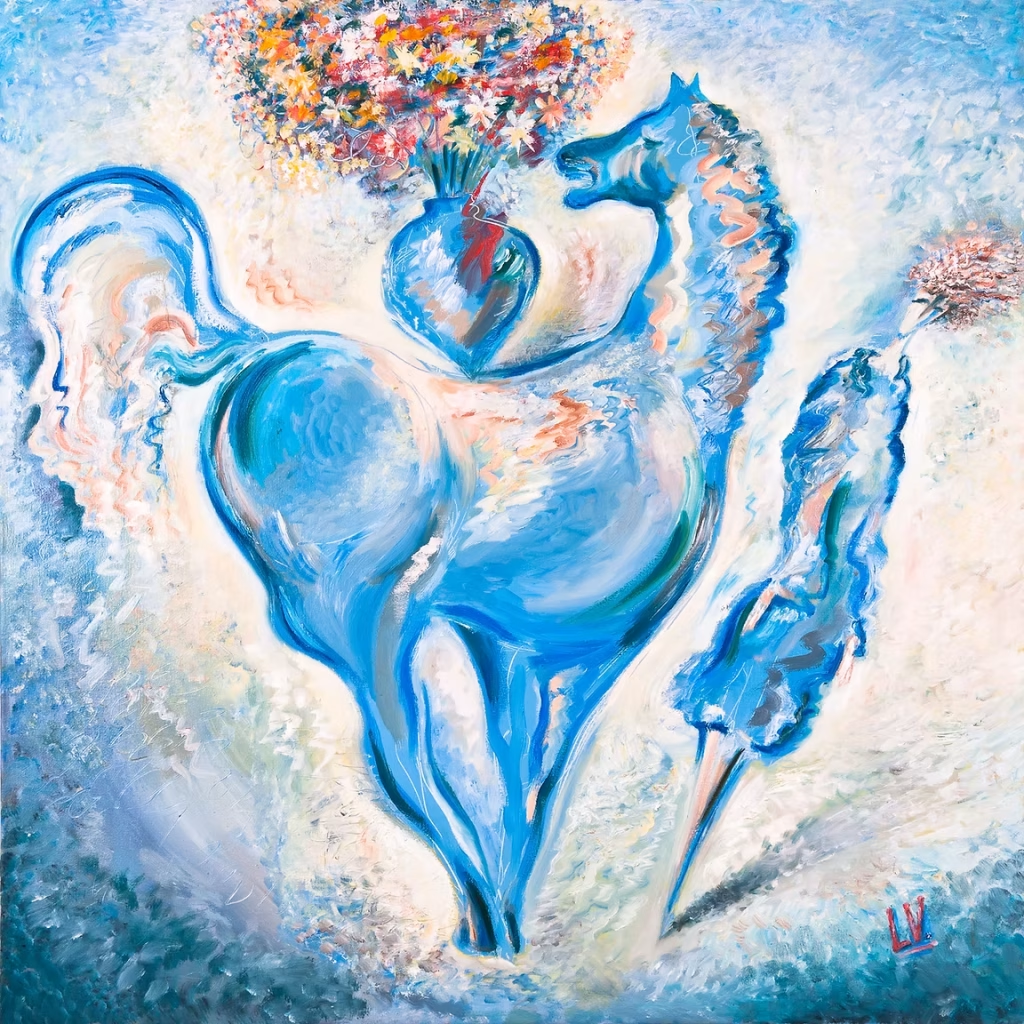
Blue Horse and Lady
His use of different media further expands this investigation. Oil paint offers depth, richness, and the possibility of gradual tonal development. Tempera can introduce clarity, precision, and a distinctive surface quality. Watercolor allows transparency and immediacy, while mixed media creates opportunities for experimentation and unexpected visual relationships. By working across these materials, Vidrak adapts his process to the needs of each image rather than limiting himself to a single method.
Human connection is another recurring concern. Even when his paintings are not explicitly narrative, they can suggest moments of encounter, reflection, or shared experience. Figures may appear as individuals, but they also become part of a broader emotional and visual environment. Their relationship to one another, to the surrounding space, and to the light often carries more significance than any specific action. This openness allows viewers to bring their own memories and interpretations to the work.
There is a gentle universality in Vidrak’s paintings. The emotions they evoke do not depend on elaborate explanations or fixed stories. Feelings of closeness, solitude, hope, calm, and contemplation emerge through visual relationships. This quality may help explain why his work has found a place in public and private collections internationally. Although viewers come from different cultural backgrounds, they can recognize the emotional language created through color, gesture, and atmosphere.
Vidrak’s paintings reward patient attention. At first, a composition may be appreciated for its beauty or technical assurance. With longer viewing, subtle tensions begin to appear: contrasts between movement and stillness, intimacy and distance, material presence and fleeting light. These qualities give the work a depth that extends beyond its immediate visual appeal.
Ultimately, Leonid Vidrak approaches painting as a means of creating connection. His art brings technical knowledge together with sensitivity, using color and light to communicate experiences that words cannot fully contain. Through oil, tempera, watercolor, and mixed media, he builds images that are both carefully considered and emotionally accessible. His work reminds us that harmony is not the absence of complexity, but the meaningful relationship between different forces. In Vidrak’s paintings, color, light, form, and feeling meet to create spaces of reflection, inviting viewers to recognize something familiar within the poetic world before them.
