



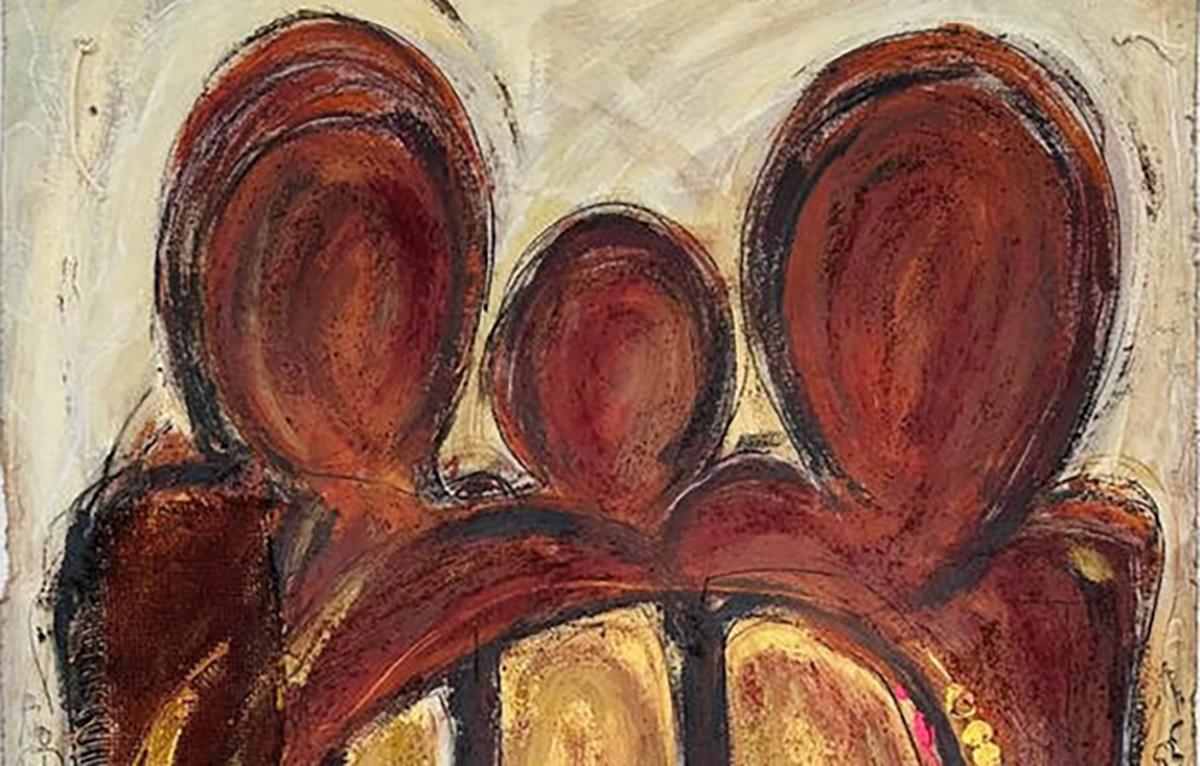
Born in 1977 in Alaveddy, a village in Jaffna, Sri Lanka, VP Vasuhan developed an early connection to the visual traditions of Tamil culture. Northern Sri Lanka and South India share a rich cultural heritage shaped by common languages, religious practices, folk customs, and artistic forms. These influences surrounded Vasuhan throughout his childhood and became an important foundation for his creative development. His grandfather, a farmer, introduced him to the rhythms of rural life and encouraged a lasting respect for the land. Vasuhan also encountered religious paintings, embroidery, pottery, and kolam, the traditional Tamil practice of creating intricate floor designs with rice flour. Together, these experiences taught him to see art as something inseparable from everyday life, family, nature, and collective memory. His work continues to draw upon these origins while examining migration, cultural identity, human connection, and the stories people carry across generations.
The Earth as Witness
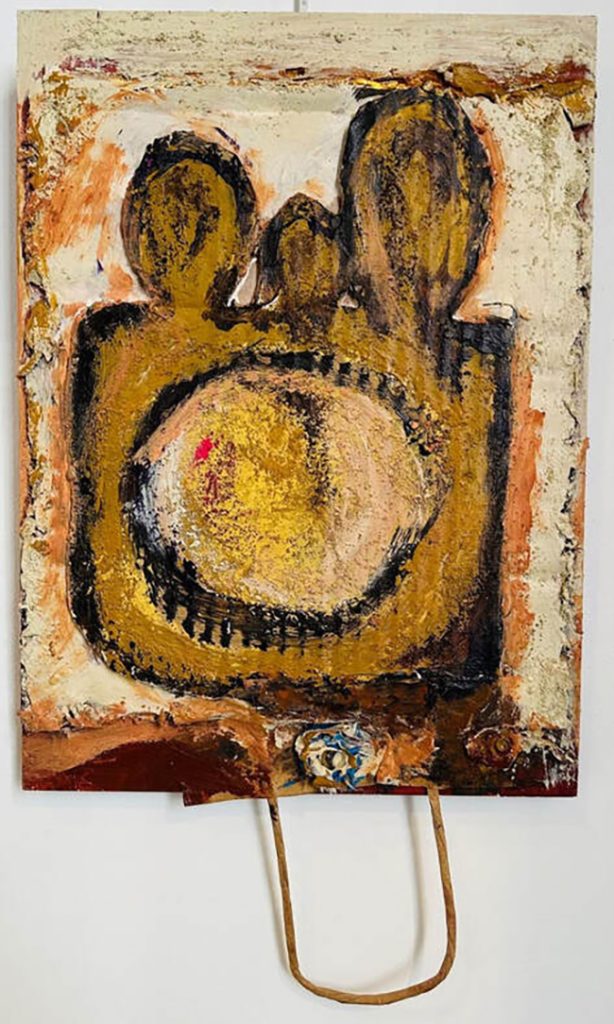
In “Little Family,” VP Vasuhan returns to the earth as both a physical material and a symbol of shared human origin. The exhibition is rooted in the belief that nature preserves traces of our journeys, histories, and relationships. Clay, stone, raw pigments, weathered wood, and seashells collected from different landscapes are incorporated into the works, allowing each surface to carry the memory of a particular place.
These materials are not merely decorative additions. They become active participants in the paintings, bringing their own textures, colors, imperfections, and histories. A piece of worn wood may suggest the passage of time, while clay connects the work to agriculture, shelter, pottery, and the human body. Seashells recall movement across coastlines and the vast distances that separate communities. By bringing these natural elements together on canvas, Vasuhan creates a meeting place between geography and memory.
The exhibition’s restrained palette of browns, ochres, muted reds, and other earthy shades reinforces this connection. For Vasuhan, variations in skin color, customs, food, and daily life may be shaped by climate, geography, and the minerals found in the soil. Yet beneath these visible differences lies a common beginning. Humanity emerged from the same earth and belongs to one extended family.
This understanding gives the exhibition its emotional and philosophical center. “Little Family” is not simply about a single household. It expands the meaning of family to include ancestors, neighbors, displaced communities, future generations, and people who may never meet but nevertheless share a collective human inheritance.
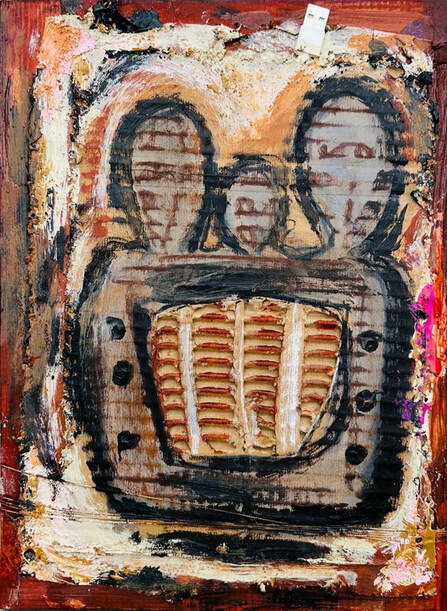
Vasuhan describes each person as carrying an invisible suitcase filled with stories. Some are openly remembered, while others remain hidden, denied, or transformed by time. Migration can make this emotional luggage especially heavy. Leaving one’s birthplace may create opportunity, but it can also produce distance from familiar languages, customs, landscapes, and relationships. Nostalgia becomes a way of holding onto what can no longer be physically reached.
Through art, these private histories are given space to surface. Vasuhan’s works function as a form of healing for both artist and viewer. They do not attempt to erase pain or resolve every conflict. Instead, they invite recognition. Materials drawn from the earth hold difficult memories gently, turning individual experience into something that can be shared and contemplated.
The exhibition also proposes that artistic creation is not limited to professional artists. People continually shape their surroundings through the stories they tell, the conversations they begin, the traditions they preserve, and the ways they raise their children. Painting is one medium among many. Everyday life itself can become a creative act through which values and memories are passed forward.
Central to the exhibition is the Tamil idea of “Kootu Kudumbam,” or the extended family. This form of family life includes the wisdom of grandparents, conversations on the porch, shared meals, laughter in the kitchen, and responsibilities carried collectively. Vasuhan’s paintings evoke these intimate moments without reducing them to simple nostalgia. They acknowledge the warmth of ancestral solidarity while confronting the growing isolation of contemporary life.
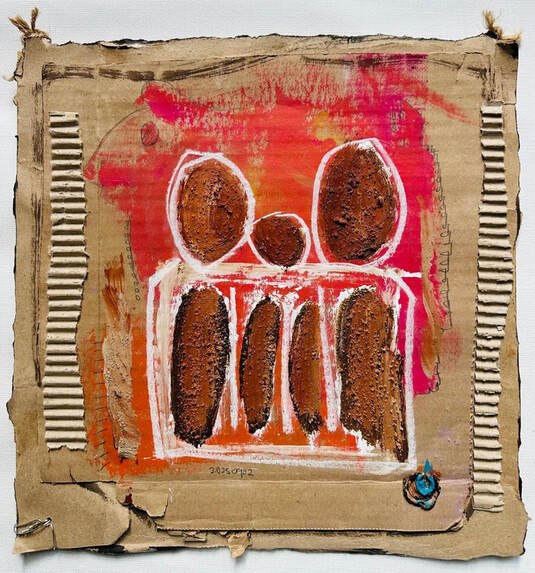
As younger generations move to distant cities and countries, traditional family structures may become fragmented. Landscapes change, homes are left behind, and relationships must adapt across great distances. Nevertheless, Vasuhan suggests that connection can survive migration. The memory of family continues through gestures, rituals, language, food, and the stories people choose to preserve.
In a world frequently divided by borders, identity, and conflict, “Little Family” offers a quiet but insistent call for unity. Its message is not that differences should disappear, but that they should exist within an awareness of shared origin. Recognizing ourselves in others becomes an essential expression of human culture.
Even when people are uprooted, they remain part of a collective memory. The earth beneath each new home connects them to the land they left and to the wider human story. Vasuhan’s work ultimately reminds us that we are never entirely separate individuals. Across landscapes, generations, and cultures, we remain members of one family.
“Petit Famille” follows Vasuhan’s earlier exhibitions “Nous sommes une famille,” presented in Guadeloupe in 2024, and “Kooddu Kudumpam – Familiale,” held in Tonnerre, Burgundy, in 2025.
