



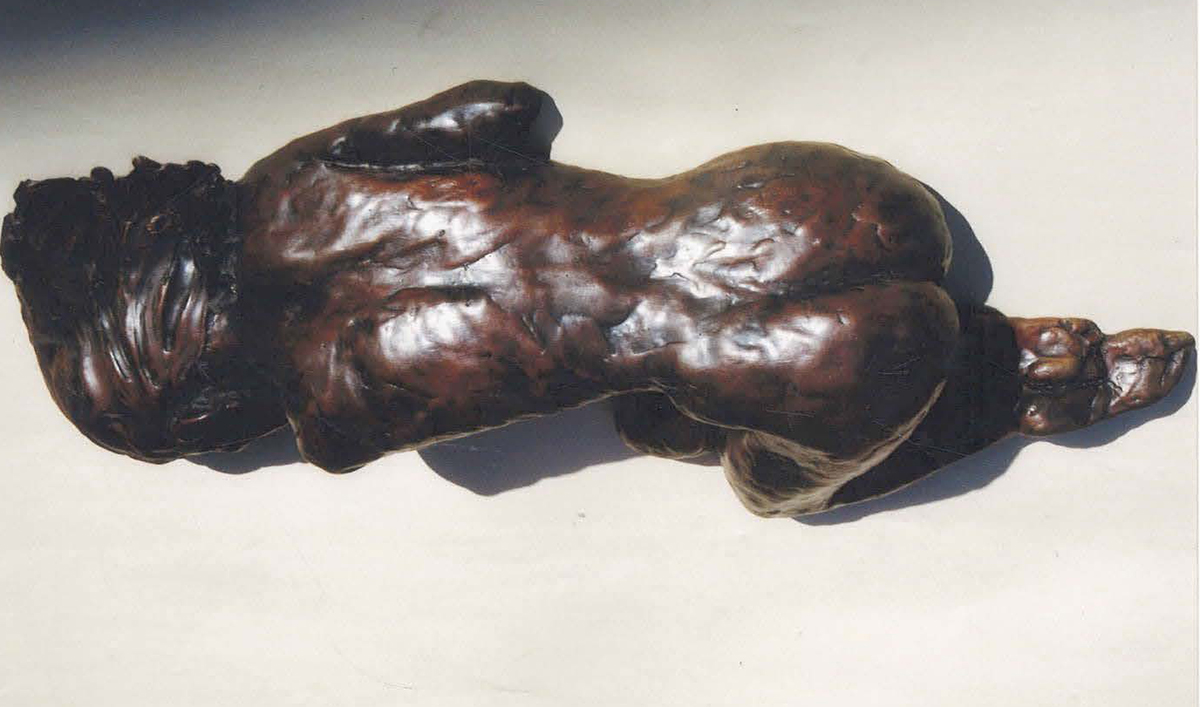
John Gardner didn’t fall into sculpture by accident—it’s something he shaped deliberately, over time, with the same steady hands he uses on clay and bronze. His path into the art world wasn’t linear, but it was rich with texture. Like his work, Gardner’s journey is layered. He’s more than a sculptor; he’s a narrator. Each piece tells a quiet story, echoing a belief that humanity and tenderness deserve as much space in history as titles and victories.
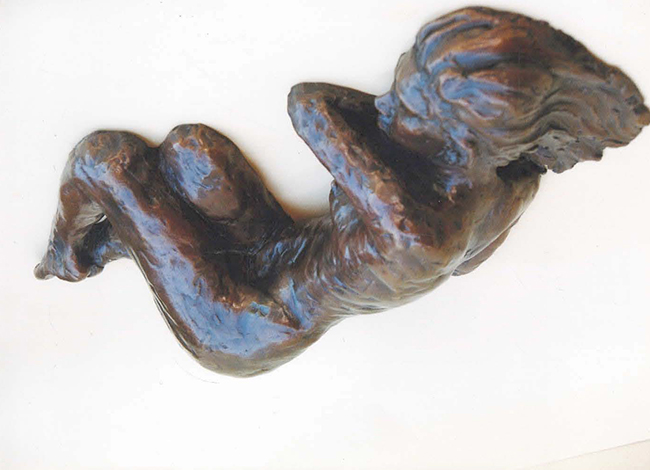
His bronzes aren’t just likenesses. They hold presence. They breathe a certain calm into a room. There’s no rush in his work, no flash. He captures gestures, moods, and the soul beneath the surface. Gardner’s sculptures often nod toward individuals—some known, some imagined—not for their fame, but for their humanity. This belief carries through all his pieces, perhaps none more directly than in Womanity.
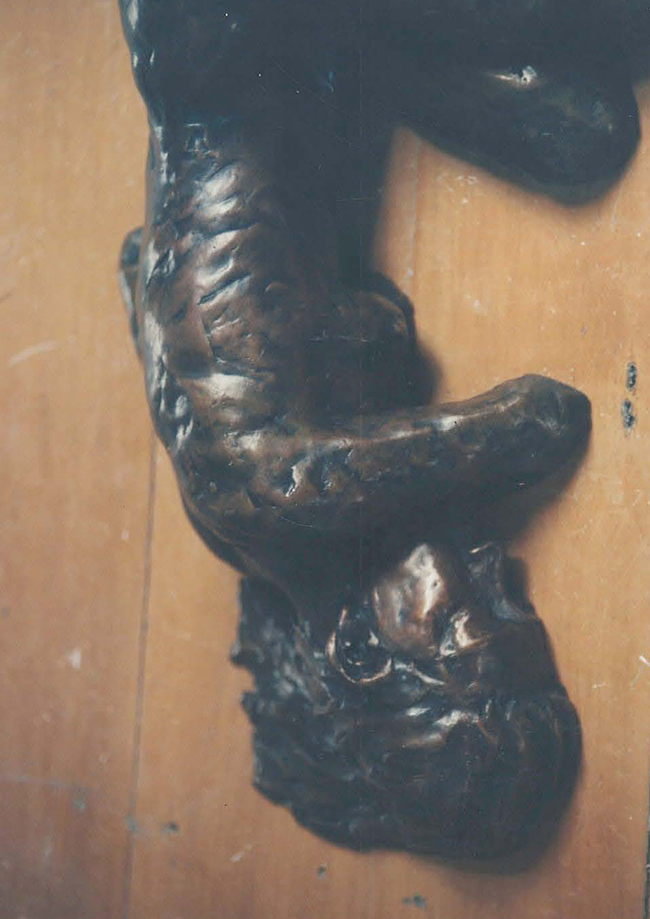
On “Womanity”
The very essence of
Perfection in imperfection
Verdant full bodied
Sensuous and serene
—John Gardner
That’s the opening to the short verse Gardner pairs with Womanity, a bronze sculpture that speaks volumes without a raised voice. In both the piece and the poem, he’s chasing something elemental. Something old, familiar. The woman here isn’t an individual portrait. She’s all of us—or rather, all of us who’ve emerged from the earth, been shaped by time, and stand fully present.
The sculpture has a rooted, grounded quality. She isn’t dainty. She doesn’t pose. Instead, she occupies space unapologetically. There’s volume in her frame, not just physical, but emotional. The surface shows Gardner’s hand—tool marks, textures, deliberate imperfections that call back to the clay’s origins. She’s “verdant” not in color, but in spirit. Alive with the fullness of experience.
Gardner doesn’t sculpt idealized bodies. He sculpts real presences. Womanity could be ancient or contemporary. There’s something timeless in the curve of her hips and the shape of her body. She’s serene—but not passive. There’s strength in her softness. A defiance in her stillness. She is what she is. She doesn’t ask to be read or admired. She simply exists.
The line “moulded from the clay from which we emerge / and to which we return” frames the piece in a cycle. It reminds you that this woman is not just symbolic of femininity—she’s symbolic of being. Of life and death, of making and undoing. The body here is sacred not because it’s perfect, but because it’s human.
Gardner’s materials echo this too. Clay, bronze—earth and fire. They’re old tools. Permanent in their own way. And yet, the way he uses them keeps them raw, porous. He doesn’t buff the bronze into polish. He leaves the marks in. That’s where the story is.
In conversation, Gardner has said he wants his sculptures to feel lived in. Not like statues, but like presences you’d recognize in a dream. Womanity does that. She feels familiar. Like someone’s mother, someone’s lover, someone’s friend. She’s both specific and collective. She has a body shaped by history, not trend. She looks like someone who’s lived—and Gardner lets that show.
In a world of smooth surfaces and social filters, Womanity is a reminder of something older, slower, and more honest. She’s the “perfection in imperfection.” She doesn’t hide her creases, her stories, her quiet strength. Gardner makes you feel that without pointing a finger. He just lets her stand.
And maybe that’s the point of his work as a whole. He sculpts with reverence, not spectacle. He’s not interested in the loud moment. He’s interested in the long one—the kind that lingers. The kind that lives in the space between words, between gestures.
Womanity isn’t just about women. It’s about humanity, seen through a feminine lens. It’s about grounding, returning, accepting. There’s no armor here. Just a body, open to the world, anchored in itself.
Gardner said once that history shouldn’t only remember achievements—it should remember warmth. Womanity does that. She remembers for us. She reminds us what it means to be formed, to stand, and eventually, to return.
