

Close Menu
ArtWire
    Trending
    • A Brief History of Pop Art: From Soup Cans to Cultural Commentary
    • Benjamin L.M.: Painting as a Vehicle for Hope
    • Steven Siegel: Reconstructing Memory Through Reclaimed Materials
    • Natalia Shabai: Finding Beauty in the Living World
    • Barbara Walker: Inheritance, Memory, and the Weight of History
    • Fant Wenger: Exploring Resonance Between Nature, Technology, and Consciousness
    • Hassan Judoo: Bringing Original Comic Worlds to Life Through Action and Imagination
    • Edward A. Burke: Visual Reflections on a Changing Planet
    ArtWireArtWire
    • Home
    • Art
    • Exhibitions
    • Events
    • Culture
    • Architecture
    • Submission
    ArtWire
    Home»Artist»Helena Kotnik: Mapping the Inner World Through Color
    Artist

    Helena Kotnik: Mapping the Inner World Through Color

    ArtWireBy ArtWireApril 28, 2025Updated:April 28, 2025No Comments3 Mins Read
    Share Facebook Twitter Pinterest LinkedIn Tumblr Email
    Share
    Facebook Twitter LinkedIn Pinterest Email Copy Link

    Helena Kotnik’s work shows how naturally she blends deep psychological questions with bright, almost playful visuals. Trained at Barcelona University and the Akademie der bildende Künste in Vienna, and holding a Master’s degree, Kotnik has built a body of work that doesn’t just aim to be looked at—it invites you to feel something more layered. Her paintings are what she calls “psychological human landscapes,” where emotion, memory, and social commentary run just under the surface.
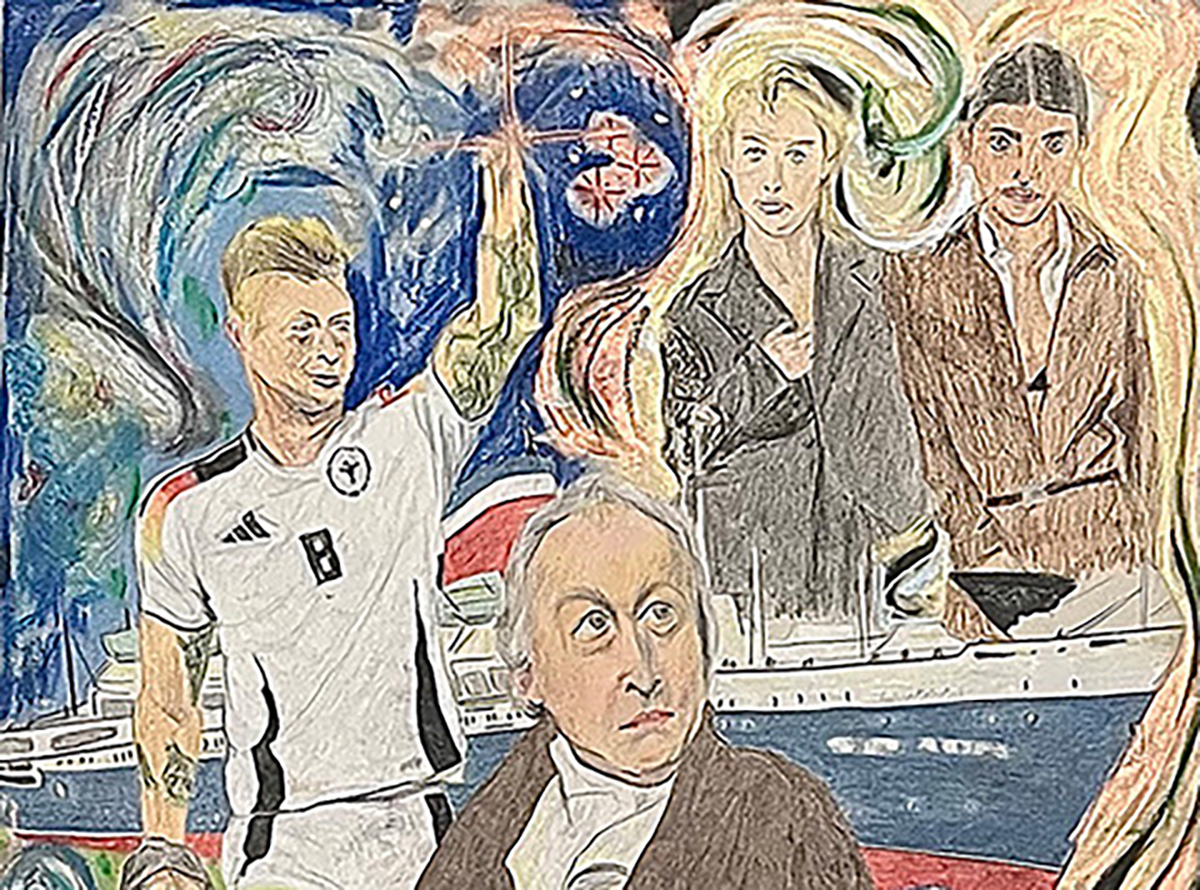
    Her art is colorful but not careless. There’s always something simmering underneath the cheerful palette—an awareness of the world’s contradictions, a sensitivity to the way people move through life. She draws from a wide range of influences across art history, yet her voice remains her own. Each piece seems to bridge time: a nod to the past, a question for the present. She doesn’t just paint scenes; she paints the feeling of being alive.


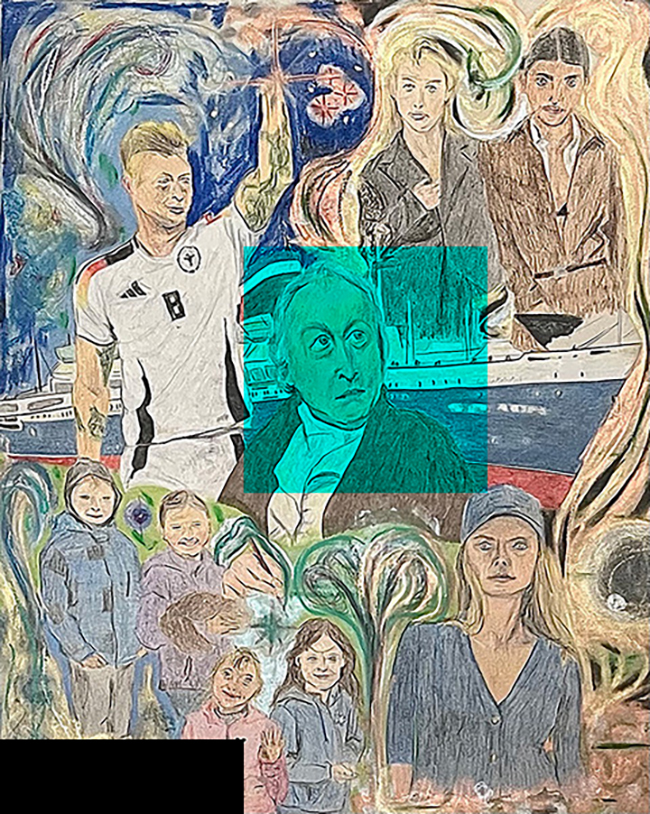
    The Work: Freedom (2025)

    Freedom isn’t a painting that tries to explain itself too much.
    It simply offers a feeling and lets you step into it.

    Drawn with pencil colors and soft pastels on a 65 x 50 cm surface, the piece carries a lightness that matches its theme. There’s no heavy-handed symbolism or thick layering. Instead, the work flows the way a breeze moves through an open window—easy, natural, almost unnoticed until you pause and realize how much it matters.

    Kotnik captures that rare moment when you feel completely in tune with yourself and the world around you. It’s the kind of feeling that doesn’t come often—when you know you’re exactly where you need to be, doing exactly what you’re meant to do. In Freedom, that feeling isn’t shouted out in bold strokes or loud contrasts. It’s whispered through delicate lines, soft blends of color, and a composition that feels as organic as breathing.

    But Freedom doesn’t just rest in personal emotion. Kotnik layers in another idea: the flow of history.
    The painting also speaks to how events unfold, how one action leads to another, almost like a chain reaction.
    There’s movement here—not chaotic, not rushed, but steady. Like a river, history carves out new paths, and every twist and turn builds on what came before.

    In this way, Freedom becomes about more than just the personal—it becomes about collective experience. It touches on the idea that freedom isn’t static. It evolves. It progresses. It’s built on what came before and what will come after. The feeling of personal authenticity mirrors the broader story of how societies shift and grow.

    The artwork’s colors play a big role in delivering these ideas. Soft, almost naïve tones suggest a sense of innocence and hope. They avoid the heavy gloom that often weighs down work dealing with history or society. Instead, Kotnik gives us a more open, gentle version of both memory and ambition—a belief that movement forward can be full of lightness and trust.

    Freedom doesn’t demand a complicated interpretation. It works because it speaks directly to something simple and universal: the desire to belong, the need to move forward, the quiet joy of feeling yourself flow with the current rather than against it.

    Helena Kotnik’s gift is her ability to make serious ideas feel accessible without watering them down. Freedom carries emotional depth without the burden of emotional heaviness. It suggests that even the biggest movements—whether in personal growth or in the sweep of history—can start from a small, authentic place.

    And sometimes, that’s enough.

    Share. Facebook Twitter Pinterest LinkedIn Tumblr Email
    ArtWire
    • Website

    Related Posts

    A Brief History of Pop Art: From Soup Cans to Cultural Commentary

    July 18, 2026

    Benjamin L.M.: Painting as a Vehicle for Hope

    July 18, 2026

    Steven Siegel: Reconstructing Memory Through Reclaimed Materials

    July 18, 2026
    Leave A Reply Cancel Reply

    Don't Miss
    Artist

    Shaghayegh Balandari: Where Poetry Becomes Image

    Shaghayegh Balandari is an Iranian contemporary calligraphy artist whose work explores the intimate relationship between…

    Art Institute of Chicago Returns 12th-Century Nepalese Sculpture

    March 7, 2025

    Benjamin L.M.: Painting as a Vehicle for Hope

    July 18, 2026

    Eva Zucker: Exploring the Fragile Boundaries Between Reality and Imagination

    June 17, 2026

    A Trove of Ancient Jewelry Discovered At Egypt’s Karnak Temples

    March 7, 2025
    Top Posts

    A Brief History of Pop Art: From Soup Cans to Cultural Commentary

    July 18, 2026

    Benjamin L.M.: Painting as a Vehicle for Hope

    July 18, 2026

    Steven Siegel: Reconstructing Memory Through Reclaimed Materials

    July 18, 2026

    Natalia Shabai: Finding Beauty in the Living World

    July 18, 2026
    Categories
    • Architecture
    • Art
    • Artist
    • Culture
    • Events
    • Exhibitions
    About Us

    Welcome to ArtWire – Your Pulse on the Art World!

    At ArtWire, we are passionate about creativity, culture, and the transformative power of art. Our blog is dedicated to bringing you the latest in art exhibitions, events, cultural movements, and architectural marvels from around the world.

    Whether you're an artist, a collector, an enthusiast, or simply someone who appreciates the beauty of artistic expression, ArtWire serves as your go-to source for insightful articles, in-depth reviews, and exclusive event coverage.

    Our Picks

    A Brief History of Pop Art: From Soup Cans to Cultural Commentary

    July 18, 2026

    Benjamin L.M.: Painting as a Vehicle for Hope

    July 18, 2026

    Steven Siegel: Reconstructing Memory Through Reclaimed Materials

    July 18, 2026
    Most Popular

    Eva Zucker: Exploring the Fragile Boundaries Between Reality and Imagination

    June 17, 2026

    Mexican Artist Duo ASMA Follow Their Materials into the Unconscious 

    March 10, 2025

    Dr. Tricia Seymour-Barrier: Painting Through Intuition, Energy, and Inner Resonance

    June 18, 2026
    • Privacy Policy
    • Disclaimer
    • Terms and Conditions
    • About us
    • Contact us
    Copyright © 2026 ArtWire All Rights Reserved.

    Type above and press Enter to search. Press Esc to cancel.