


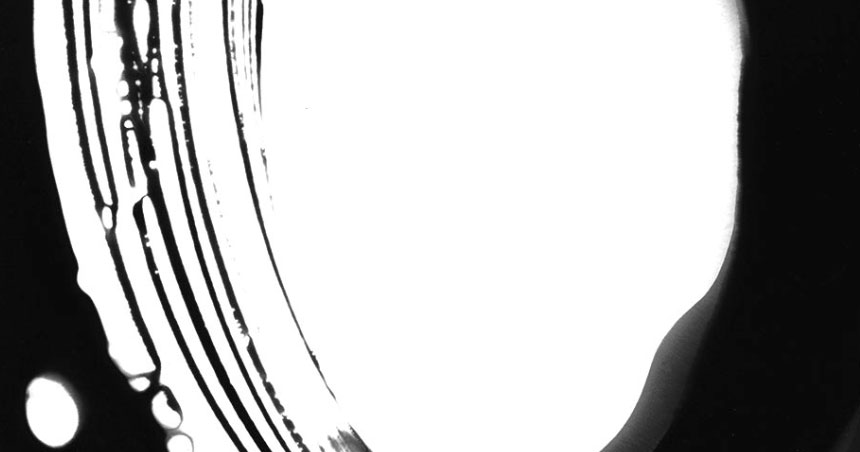
Cynthia Karalla fuses activism, experimentation, and a pragmatic sensibility into a body of work that challenges photographic convention. Trained first as an architect and later as a photographer and fine artist, Karalla brings structural rigor and an investigative eye to every piece she makes. Her practice treats material processes—chemical reactions, paper, light—as collaborators: like turning negatives into positives, she finds ways to invert accident and loss into deliberate expression. Grounded in a no-nonsense attitude, Karalla’s work is equal parts witty, confrontational, and formally adventurous. Whether reclaiming discarded materials or transforming errors into a new visual language, she uses the history of analogue photography and the discipline of design to make work that is both immediate and conceptually layered, asking viewers to reconsider what counts as image, value, and authenticity.
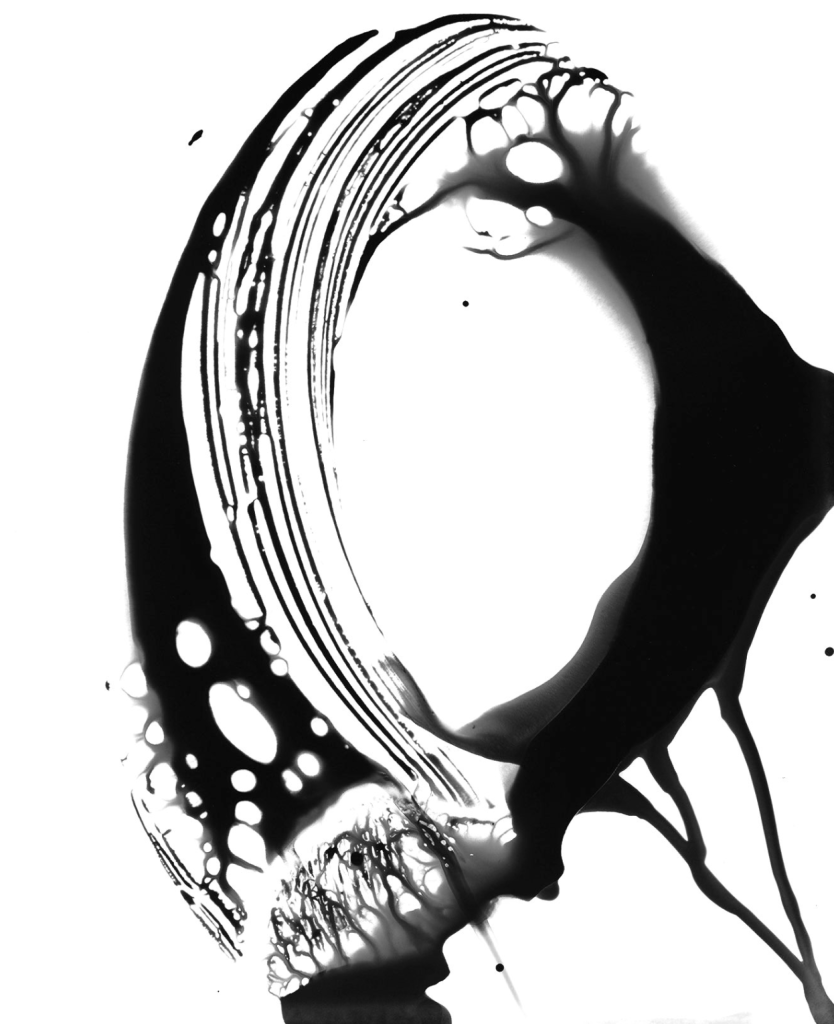
This is one of my bestselling images—and it began with a Craigslist robbery. I named it Developer Sketches because of how it was made, though its true, jokier birth name is “It’s Craigslist, Toots!” The story starts when I found an online listing for six unopened boxes of rare Agfa darkroom paper from the 1960s. I bought them all for $200, thinking I’d scored a great deal. A few hours later in the darkroom, while running tests, I discovered something odd: the supposedly unopened paper had clearly been exposed to daylight. The boxes had been compromised—the emulsion damaged and the paper unusable for conventional printing. I called the seller to complain; his curt reply was, “It’s Craigslist, Toots!” That phrase lodged in my mind. What did he mean by it? The dismissive shrug echoed like an attitude about commerce, risk, and the flea-market culture that underpins much of our secondhand economy.
I couldn’t help myself. I texted him back a playful, slightly threatening message—“Yo, dude, my friends Tony and Sal live around the corner from you. I gave them your address. You can explain to them what ‘Craigslist Toots’ is, because I don’t get it, I am just a Girl.” The absurdity of the exchange flipped my mood. I went from outraged buyer to amused storyteller, picturing the seller nervously looking over his shoulder for weeks. That shift from victim to author was the pivot point: what could I do with this exposed, ruined paper? Conventional printing was out—the developer reacts to light to turn paper dark, so any pre-exposed sheet would simply blacken where developer touched it. Instead of discarding the material, I began to think like a maker who has to work with constraints. What if I used the darkroom developer itself as a drawing tool?
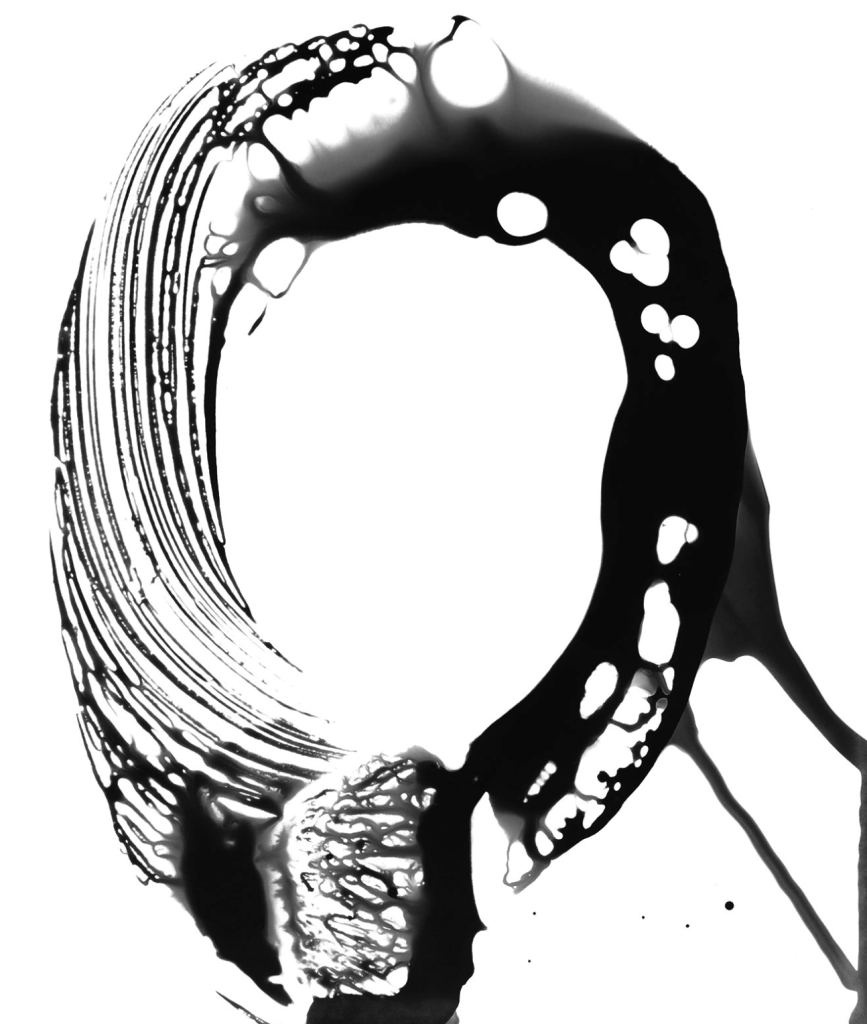
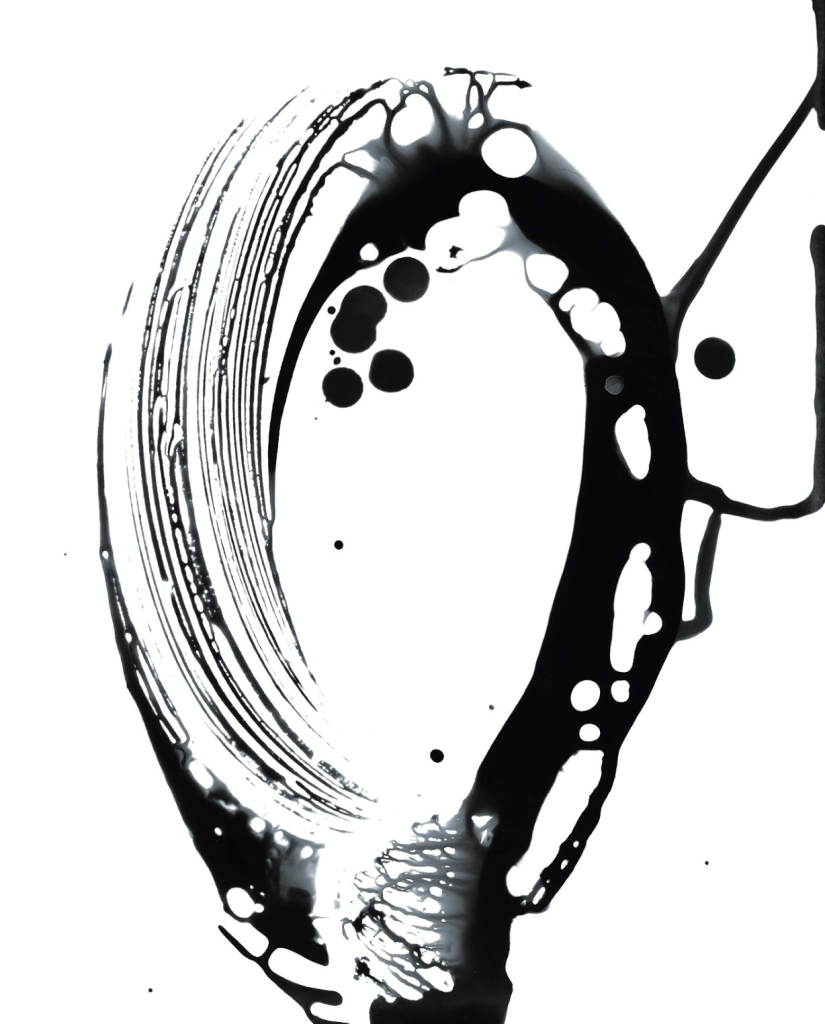
I began sketching directly onto the sensitized paper with syringes, brushes, and droppers filled with developer. Each mark produced a negative-to-positive alchemy: where the chemical contacted the sheet it darkened, creating lines and shapes in reverse of how one normally prints. The process became performative and immediate—a choreography of wrist, breath, and timing. Marks were made in real time, their appearance dependent on dilution, pressure, and the moment of exposure. The technique forced decisions: broad sweeps created washes of tone, successive touches layered density, and accidental drips registered as gestures. What had been a ruined supply turned into an experimental studio practice that felt equal parts drawing, printmaking, and photographic process.
To expand the work, I moved the darkroom into a larger studio to allow for bigger sheets and bolder motions. The scale transformed the action: I worked standing, sometimes with the paper pinned to a vertical surface or spread on a table, making marks that read like abstract calligraphy. The memory of a documentary I’d seen as a child—an Asian artist meditating with an ink-soaked brush—shaped this phase. I remembered the artist holding the brush upright with two hands, producing long, decisive strokes that seemed to capture motion itself. That masculine image of bravado and line made me reflect on my own gesture as a woman. Rather than emulate that posture, I reinterpreted it: my marks became an assertion of female presence, an “O” of containment and invitation rather than a straight-line proclamation of force.
The works that emerged are paradoxical: they look like paintings but are photographic by means; they read as accidental yet are tightly controlled; they memorialize a petty theft while celebrating the serendipity that theft enabled. The title “It’s Craigslist, Toots!” captures the humor and irony—an otherwise disposable cultural shrug turned into an incitement for creativity. Collectors and viewers respond to the immediacy of the marks and the layered backstory; the pieces act as traces of a process that embraces error and reclaims it as aesthetic value.
Karalla’s Developer Sketches are emblematic of her broader practice: she treats materials and mishaps as raw narratives, reframing failure as a method rather than an endpoint. The series is not only a commentary on the economy of objects and the precariousness of analogue photography, but also a celebration of risk, improvisation, and the way a single phrase—spoken casually by a stranger—can become the seed for work that resonates far beyond its Craigslist origin.
