



Contemporary artist JD Miller has developed a distinctive artistic vision that challenges traditional ideas of painting through the movement he founded, Reflectionism. Recognized for pushing the possibilities of three-dimensional oil painting, Miller creates immersive works that encourage viewers to experience art as something active rather than static. His paintings are designed to engage with changing light, shifting perspectives, and the presence of the viewer, making each encounter with the work feel unique. This innovative approach has attracted collectors, museums, and galleries across the United States, where his artworks have become part of both public and private collections. While rooted in the traditions of painting, Miller’s practice extends beyond the flat surface, inviting audiences into an experience that combines visual depth, movement, and emotional resonance. His work reflects a continuing exploration of human connection, perception, and the ways art can transform everyday observation into something dynamic and deeply engaging.
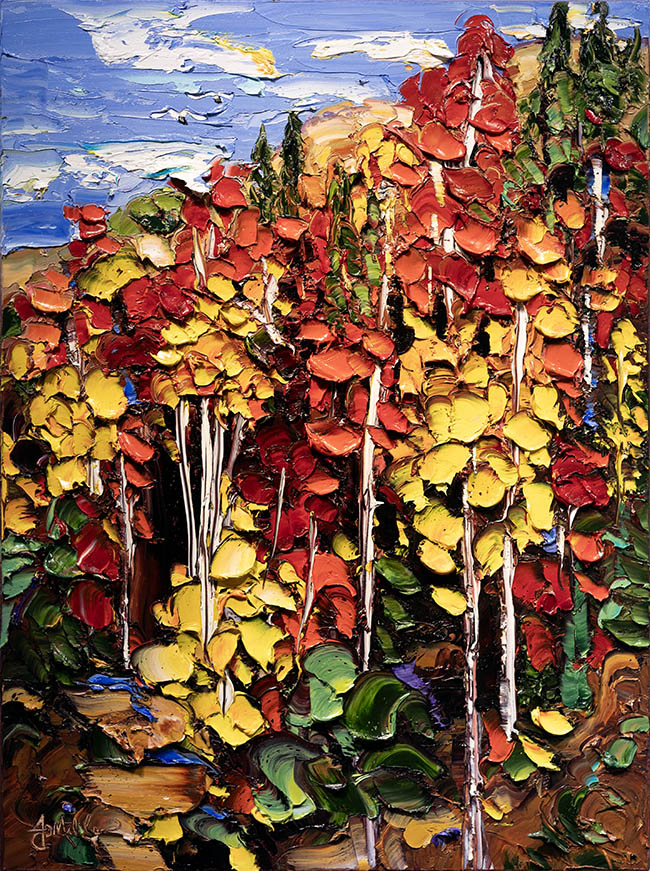
JD Miller Reflectionist dimensional oil painting.
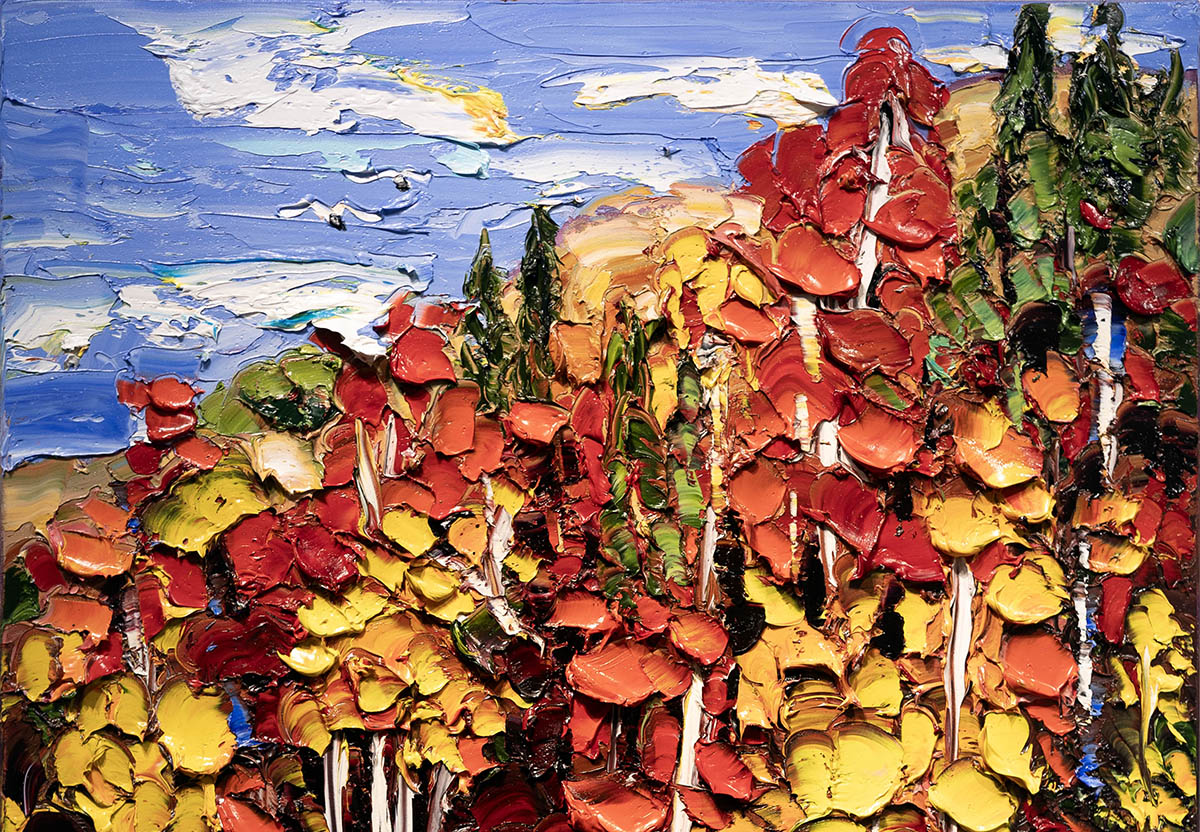
The painting presented here captures the vibrant energy that defines much of JD Miller’s artistic language. Rather than portraying a quiet landscape, he transforms a familiar stand of autumn trees into an experience filled with movement, texture, and light. Rich layers of thick oil paint rise from the canvas, creating a sculptural surface that changes character as natural or artificial light moves across it. The painting encourages viewers to look beyond the image itself and become aware of the physical qualities of the paint, where every ridge, curve, and palette-knife stroke contributes to the overall experience.
At first glance, the composition celebrates the brilliance of autumn. Brilliant reds, glowing yellows, warm oranges, and deep greens fill the canvas with remarkable intensity. Slender white trunks rise vertically through the composition, creating structure amid the abundance of colorful foliage. Above the trees, patches of blue sky and soft white clouds provide moments of openness that balance the dense forest below. The contrast between the calm sky and the energetic vegetation creates a harmonious rhythm that guides the eye naturally throughout the painting.
Texture plays a central role in the work. Instead of blending colors into smooth transitions, Miller builds the painting with generous applications of oil paint that almost resemble carved forms. Every leaf appears to have its own physical presence, while the thick paint captures and reflects light differently depending on the viewer’s position. This constantly shifting surface aligns closely with the ideas behind Reflectionism, where the artwork continues to evolve as lighting conditions and viewing angles change. The painting is never entirely fixed; it offers new visual experiences with every encounter.
The composition also demonstrates a confident balance between abstraction and representation. Although the forest is immediately recognizable, the forms remain expressive rather than literal. Individual leaves are suggested through bold shapes and confident strokes instead of meticulous detail. This allows the painting to retain its emotional impact while avoiding unnecessary realism. The landscape becomes a place of feeling as much as observation, encouraging viewers to connect with the atmosphere instead of simply identifying objects.
Color serves as one of the painting’s strongest expressive tools. The vivid reds and brilliant yellows communicate warmth, vitality, and seasonal transformation, while the darker greens and earthy browns provide visual grounding. The carefully arranged palette creates a sense of depth without relying solely on traditional perspective. Instead, overlapping textures and contrasting colors build space naturally, allowing the viewer to move visually through the forest as though stepping into it.
Movement is another defining quality. The vertical tree trunks provide stability, but the swirling applications of paint create an underlying sense of motion throughout the composition. Leaves appear to shimmer, branches seem to sway, and the entire forest feels animated by invisible currents of wind and light. This subtle dynamism reflects Miller’s broader artistic interest in creating works that feel alive rather than frozen in a single moment.
Beyond its visual richness, the painting invites reflection on humanity’s relationship with nature. The changing colors of autumn suggest cycles of growth, transformation, and renewal. Rather than presenting nature as distant scenery, Miller immerses the viewer within it, encouraging an appreciation of both its beauty and its continual evolution. The work becomes not simply a depiction of trees but an invitation to experience the emotional power of seasonal change.
Another compelling aspect of the painting is its ability to reward prolonged observation. From a distance, the composition reads as a vibrant autumn landscape. As viewers move closer, however, countless individual gestures emerge within the paint itself. Thick ridges, overlapping palette-knife marks, and subtle color variations reveal the artist’s physical process, making the act of creation visible alongside the finished image. This layered viewing experience reflects Miller’s belief that art should continue to reveal itself over time.
Ultimately, this painting exemplifies JD Miller’s ability to combine innovation with emotional accessibility. Through Reflectionism, he transforms traditional oil painting into an immersive encounter where texture, light, movement, and color work together to create a constantly evolving visual experience. The result is a landscape that feels both familiar and fresh—celebrating the beauty of nature while demonstrating how contemporary painting can continually expand the ways we see, feel, and connect with the world around us.
