



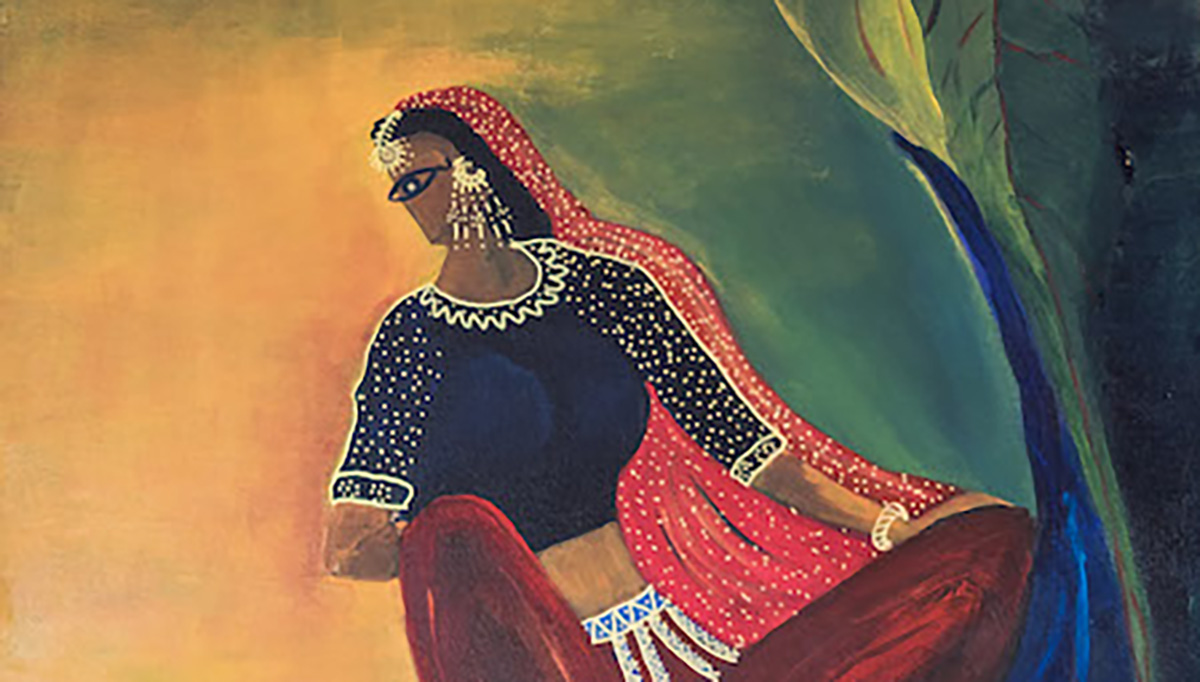
For Canberra-based artist Kirandeep Grewal, creativity provides a meaningful way to explore cultural identity, personal experiences, and humanity’s relationship with nature. Drawing inspiration from her Indian heritage and life in Australia, she creates paintings that reflect the emotional complexities of belonging, adaptation, and self-discovery. Her artistic practice brings together memories, cultural traditions, and observations of the natural environment, transforming individual experiences into narratives with broader significance.
As both an artist and educator, Grewal values art’s ability to encourage reflection and foster understanding between people from different backgrounds. Her compositions frequently incorporate symbolic imagery to communicate ideas about resilience, cultural continuity, and personal growth. Through her work, she considers how individuals preserve meaningful connections to their origins while embracing the opportunities and challenges of unfamiliar environments.
Migration (2017)
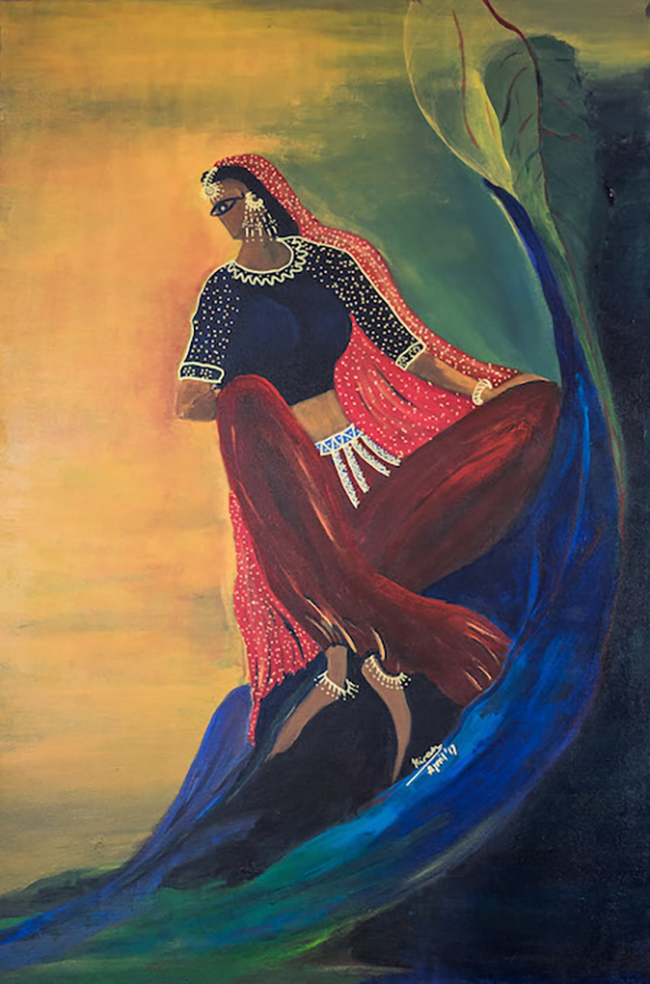
Acrylics on canvas, 92 × 61 cm
In Migration, Grewal examines the emotional and cultural transformations associated with leaving one’s homeland and establishing a new life abroad. Through self-portraiture, she reflects on the challenges of adapting to unfamiliar surroundings while maintaining a strong connection to the traditions and relationships that have shaped her identity.
Migration involves more than geographical relocation. It can change how individuals perceive themselves, their families, and their place within society. For Grewal, the experience has encouraged independence, resilience, and a deeper understanding of her own capabilities. The painting acknowledges these personal developments while recognising the emotional sacrifices that often accompany significant life transitions.
Traditional clothing and jewellery play an important symbolic role within the composition. These elements represent her cultural inheritance, carrying memories of family customs and values passed down through generations. Their inclusion reinforces the importance of preserving cultural identity, regardless of where life may lead.
The artwork also considers how distance influences relationships. While migrants establish new routines and experiences, loved ones remaining in their homeland continue their own journeys. Over time, these separate paths can reshape familiar connections, creating emotional changes that extend beyond physical separation.
Grewal draws particular inspiration from her great-grandmother, whose determination and wisdom remain meaningful influences in her life. Remembering her ancestor’s strength provides encouragement as the artist navigates her own experiences of change.
Ultimately, Migration presents identity as something that continues to evolve without losing its foundations. The painting celebrates the possibility of embracing new beginnings while honouring the people, traditions, and memories that remain part of one’s personal history.
Mayura on the Waterfall (2018)
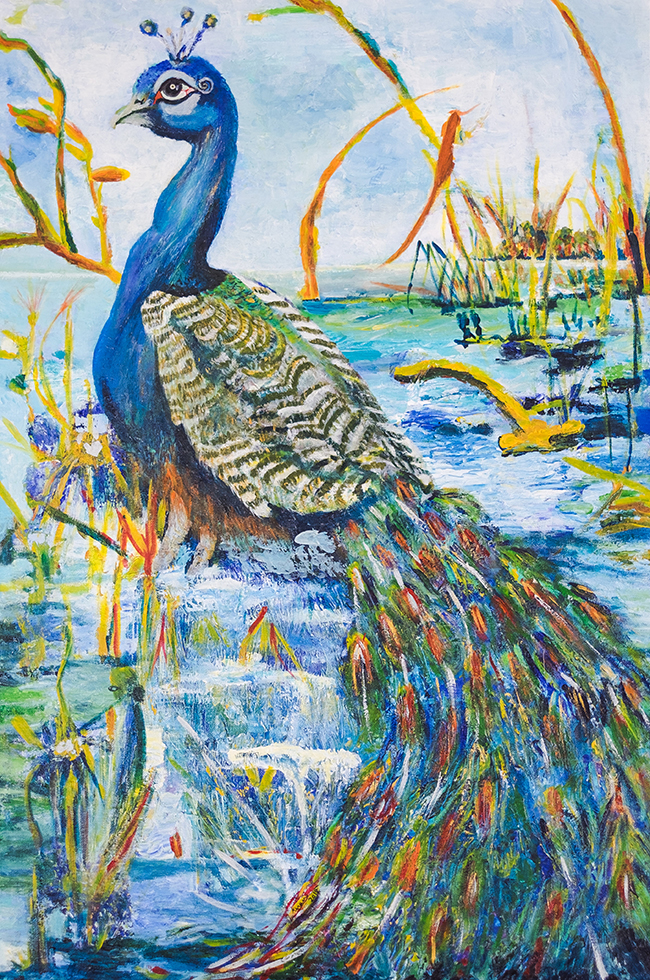
Acrylics on canvas, 61 × 92 cm
In Mayura on the Waterfall, Grewal turns to the natural world to explore confidence, emotional balance, and acceptance of life’s unpredictable circumstances. The composition depicts a peacock resting on rocks beside flowing water, creating a visual contrast between stillness and continuous movement.
The peacock symbolises dignity, self-assurance, and inner strength. Its composed posture suggests an ability to remain confident despite uncertainty. Rather than reacting to the surrounding movement, the bird appears comfortable within its environment, expressing a quiet sense of stability.
The waterfall introduces a contrasting symbol. Its uninterrupted flow represents the constant changes and unexpected developments that shape human existence. Like moving water, life follows a course that cannot always be controlled or anticipated.
By placing these elements together, Grewal communicates the importance of responding to change with patience and confidence. The peacock’s forward-looking gaze suggests a willingness to embrace the future without becoming overwhelmed by previous experiences.
The painting reflects Grewal’s belief that resilience does not always require resistance. Sometimes, strength emerges through acceptance, adaptability, and the ability to remain emotionally grounded.
Through this symbolic encounter, Mayura on the Waterfall encourages viewers to consider their own responses to uncertainty. Grewal presents nature as a source of wisdom, reminding us that personal growth often begins when we learn to move forward with confidence and openness.
Gum Tree (2015)
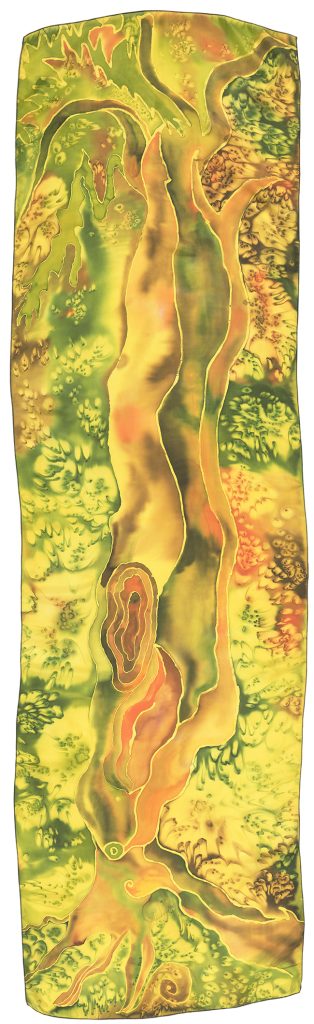
Silk dyes on Indian silk, 54 × 200 cm
Australia’s distinctive natural environment provides the inspiration for Gum Tree, a silk wall hanging that celebrates Grewal’s appreciation for the country she now calls home. Created with silk dyes on Indian silk, the artwork combines Australian botanical imagery with a material closely associated with her cultural heritage.
The gum tree represents Grewal’s growing connection to Australia’s landscape and its remarkable biodiversity. Through this familiar botanical subject, she expresses admiration for the natural surroundings that have become an important part of her everyday experiences.
The work also reflects her respect for Aboriginal peoples’ longstanding relationships with Country and their understanding of the connections between people and the environment. These perspectives encourage consideration of ecological responsibility and the importance of respecting the natural world.
The use of Indian silk introduces another layer of meaning. By depicting an Australian tree on a material associated with her ancestral background, Grewal brings together two cultural influences that contribute to her evolving identity.
The artwork’s elongated format further emphasises the tree’s presence, creating a contemplative composition that connects material, memory, and place.
Together, Migration, Mayura on the Waterfall, and Gum Tree demonstrate Grewal’s interest in the experiences that shape personal identity. Through cultural symbolism, natural imagery, and autobiographical reflection, she creates artworks that celebrate resilience, belonging, and the enduring connections between people, heritage, and the environment.
