



Julian Jollon is an American artist whose creative journey reflects resilience, transformation, and a profound appreciation for the mysteries of existence. Educated in Fine Arts, Photography, and Painting, Jollon initially envisioned a future devoted to artistic expression. However, his professional life took an unexpected direction when he entered the field of Hospital Epidemiology, dedicating many years to scientific investigation, healthcare systems, and the complexities of human survival. His personal experience of undergoing a liver transplant further transformed his perspective, deepening his understanding of mortality, renewal, and the extraordinary value of time. These experiences have become an important influence on his artistic vision, encouraging him to explore the connections between physical existence, spiritual awareness, and the natural world. Returning to his creative roots, Jollon approaches photography as more than visual documentation. His work becomes a means of discovering hidden narratives, preserving moments of wonder, and contemplating the relationship between humanity, nature, and memory.
Ancient Corn Maidens: Discovering the Sacred Language of the Earth
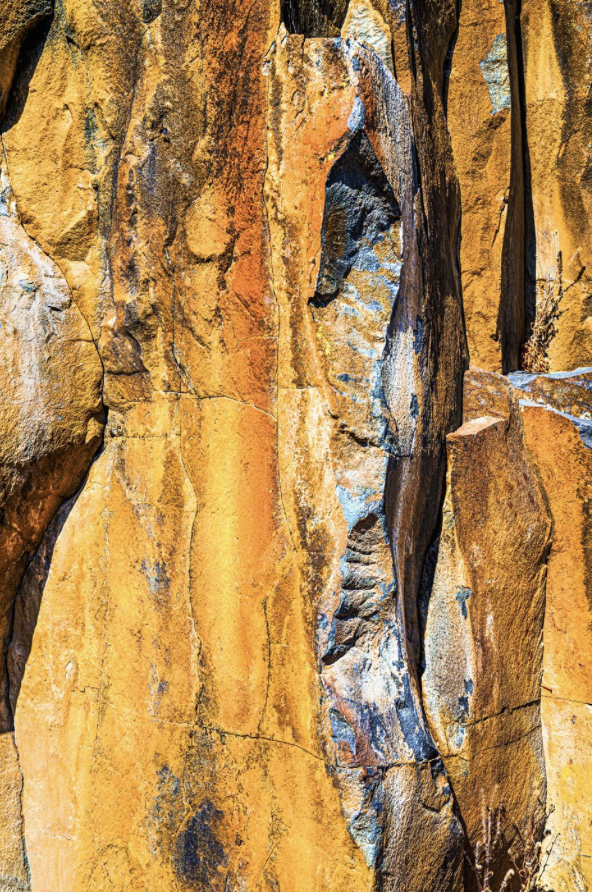
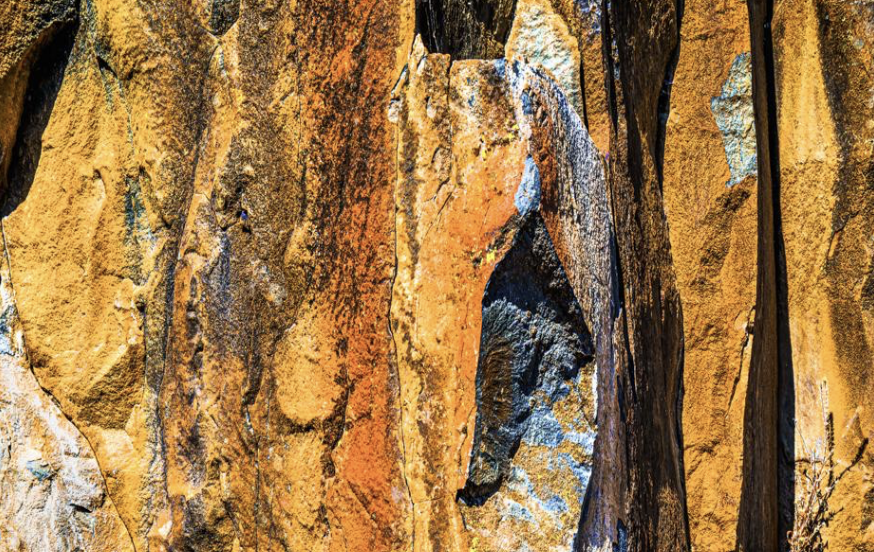
In Ancient Corn Maidens, Julian Jollon transforms a rugged geological landscape into an evocative exploration of ancestral memory, Indigenous mythology, and the spiritual presence of nature. Through photography, he invites viewers to look beyond the physical characteristics of weathered stone and recognize the possibility of stories embedded within the earth itself. What initially appears to be an arrangement of cliffs, fractures, and mineral textures gradually becomes a landscape filled with symbolic figures, ancient traditions, and imagined spiritual encounters.
Central to the photograph is the suggestion of the Yellow and Blue Corn Maidens, figures associated with the sacred importance of maize in various Indigenous traditions of the American Southwest. Corn has long represented nourishment, continuity, renewal, and the relationship between human communities and the land. By drawing upon this symbolism, Jollon creates a visual narrative in which natural formations become expressions of cultural memory and spiritual imagination.
The photograph’s geological surfaces play an essential role in establishing its mysterious atmosphere. Layers of rock, sculpted by centuries of environmental change, appear almost architectural in their complexity. Deep crevices suggest hidden passages, while irregular contours resemble figures emerging from the stone. Light and shadow introduce additional dimensions, allowing the landscape to shift between recognizable physical reality and abstract visual interpretation.
Rather than presenting nature as a passive subject, Jollon encourages viewers to experience the landscape as something possessing presence and character. The rocks appear to communicate through their shapes, textures, and silent endurance. Their surfaces become metaphorical records of time, suggesting that the earth preserves histories far older than human recollection.
This imaginative interpretation is expanded through the accompanying poetic narrative, Stone That Breathes Her Name. The poem introduces Yellow Maiden as a spiritual traveler approaching a canyon where the ancient forces of the landscape seem to awaken. Her journey unfolds through gestures of humility, attentiveness, and reverence.
As Yellow Maiden approaches the cliffs, she encounters spirits whose presence is expressed not through visible bodies but through sensations and the mysterious language of stone. Their communication emphasizes patience and listening, suggesting that understanding the natural world requires sensitivity rather than domination.
Her offering of cornmeal and cedar ash becomes a symbolic acknowledgment of the relationship between humanity and the environment. These gestures evoke ceremonial traditions while reinforcing the narrative’s central theme: the importance of approaching the earth with gratitude, respect, and awareness.
One of the poem’s most compelling moments occurs when the maiden places her hand upon the rock and experiences a sudden revelation of ancestral imagery. The appearance of luminous markings and a woman holding maize suggests a connection between generations, linking agricultural traditions, spiritual inheritance, and collective remembrance.
Through this poetic encounter, Jollon’s photograph acquires another dimension. The geological landscape is no longer simply a visual subject; it becomes a setting for an imagined exchange between past and present, the tangible and intangible.
The photograph also reflects Jollon’s broader interest in transformation. Just as his personal journey involved profound physical and professional changes, the image explores how familiar materials can reveal unexpected meanings when approached from a different perspective. Ordinary stone becomes a source of spiritual possibility, while photography becomes a bridge between observation and imagination.
Importantly, Ancient Corn Maidens does not attempt to provide a literal historical account. Instead, it offers an artistic meditation inspired by Indigenous symbolism, encouraging contemplation of cultural heritage, ecological interconnectedness, and the enduring significance of place.
Jollon’s artistic achievement lies in his ability to transform geological observation into a contemplative experience. His photograph asks viewers to reconsider what they perceive as silent or lifeless, suggesting that landscapes can inspire powerful reflections on identity, belonging, and continuity.
Ultimately, Ancient Corn Maidens celebrates the relationship between the visible world and the stories humanity discovers within it. Through the combined language of photography and poetry, Julian Jollon creates an atmosphere of mystery, reverence, and quiet revelation. The work reminds us that meaningful encounters with nature begin not merely through looking, but through the willingness to observe carefully, imagine deeply, and listen to the histories that the landscape may inspire us to remember.
