



Eva Zucker (born 1985) is a contemporary figurative painter from Germany whose work delves into identity, vulnerability, and the emotional complexities of human experience. Working as a self-taught artist, she has developed a distinctive visual language that combines elements of storytelling, symbolism, and psychological exploration. Her paintings often draw from familiar cultural narratives while transforming them into deeply personal reflections on memory, perception, and the subconscious. While she is known for her Adapted Art series, her work extends beyond it and also explores deeper psychological and emotional themes through contemporary figurative painting.
Through carefully composed figures, dreamlike settings, and recurring symbolic characters, Zucker creates worlds that feel both recognizable and unsettling. Her artworks invite viewers into spaces where innocence and uncertainty coexist, encouraging reflection on the hidden aspects of human nature. Her work has been featured in exhibitions, interviews, and cultural publications, and is held in private collections throughout Germany, Austria, and Switzerland.
Rather than offering straightforward narratives, Zucker presents scenes filled with ambiguity and emotional tension. Each painting functions as an invitation to pause, observe, and interpret, allowing viewers to discover their own meanings within the imagery. By combining technical precision with psychological depth, she creates artworks that linger in the mind long after the first encounter.
Between Fairy Tales and the Subconscious
At first glance, Eva Zucker’s paintings appear to reference familiar stories from childhood. Characters such as Alice in Wonderland, the White Rabbit, and Snow White emerge throughout her work, instantly recognizable yet transformed into something far more complex than their original literary counterparts. Rather than retelling well-known fairy tales, Zucker uses these characters as symbolic vessels through which she examines identity, memory, fear, and self-discovery.
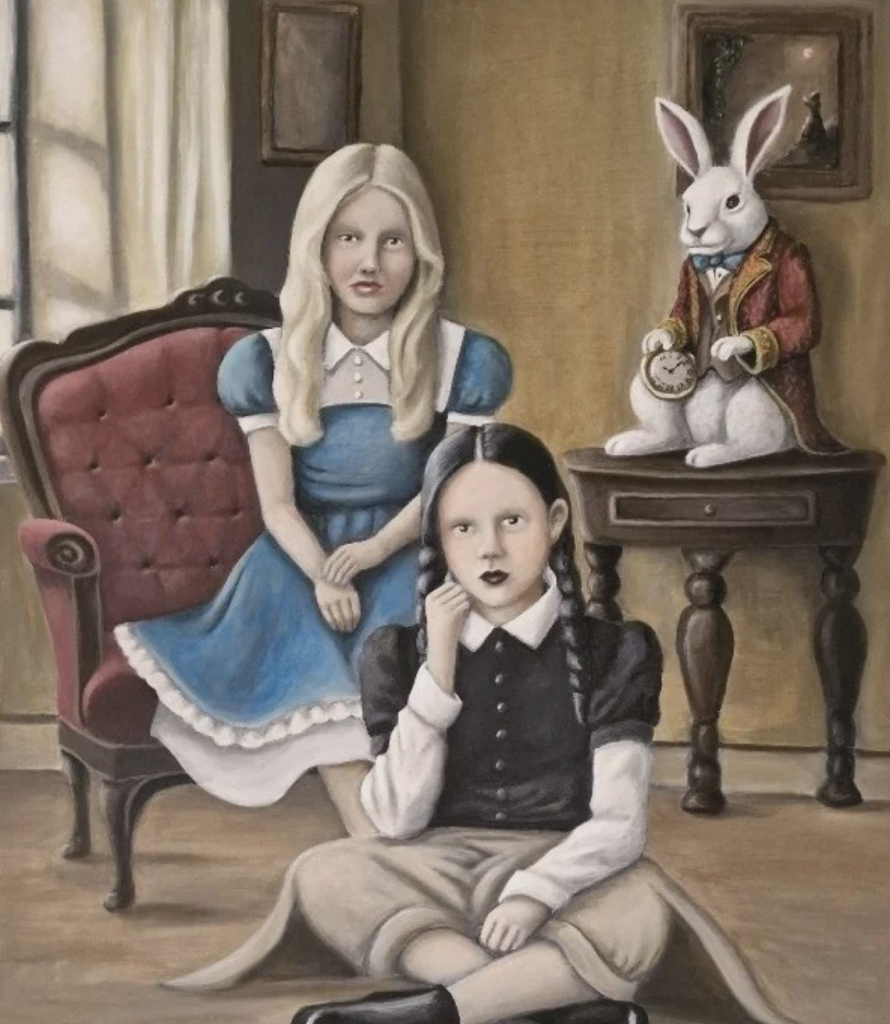
In one painting, two young girls occupy an interior space alongside the iconic White Rabbit. The setting appears calm and domestic, yet an unmistakable feeling of tension runs beneath the surface. The expressions of the figures are distant and contemplative, as though they are caught between childhood innocence and a deeper awareness of the world around them. The rabbit, holding its pocket watch, becomes more than a reference to Lewis Carroll’s story. It serves as a symbol of time, transition, and the uncertainty that accompanies personal growth.
This interplay between familiarity and unease is a recurring aspect of Zucker’s artistic practice. Her paintings invite viewers into spaces that seem safe and recognizable before gradually revealing layers of psychological complexity. The result is imagery that feels suspended between dream and reality.
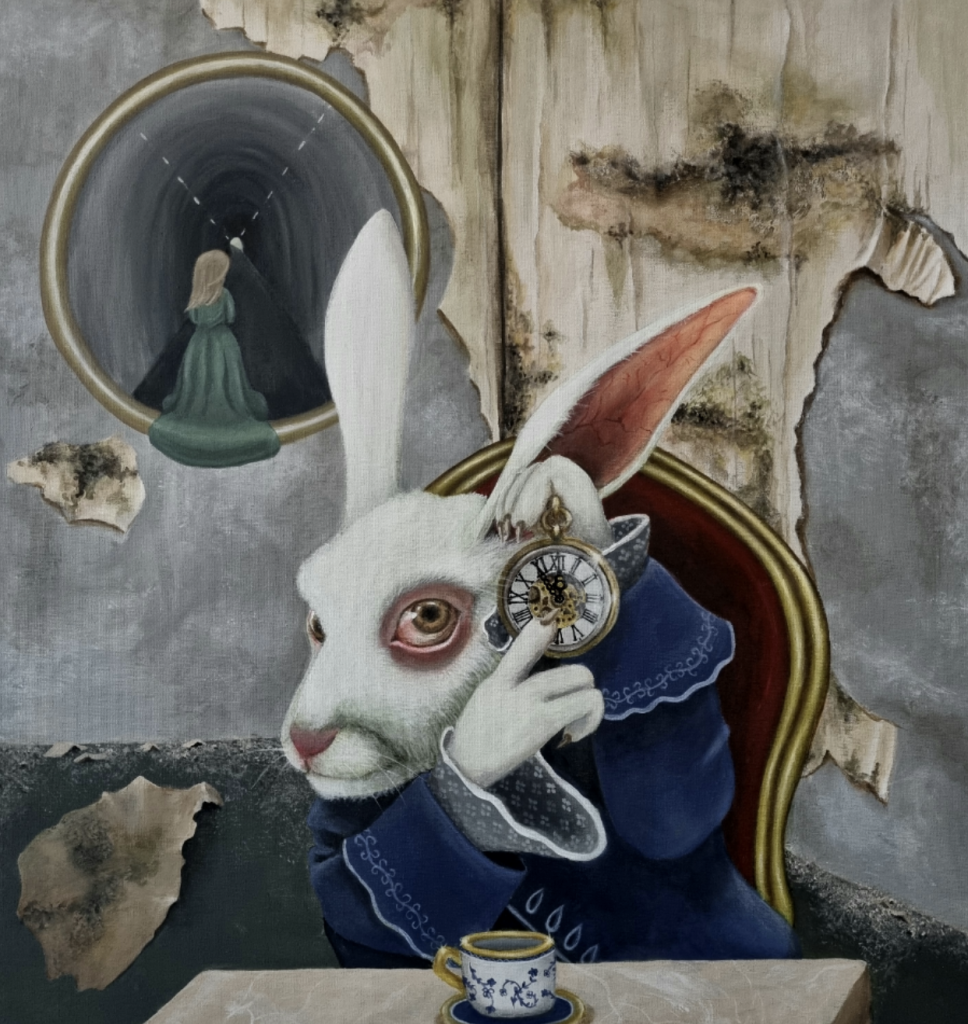
Another work presents the White Rabbit seated at a table, holding a watch while appearing lost in thought. The scene is rich with symbolic details. Crumbling walls suggest the passage of time and the fragility of memory, while a small figure in the distance appears to journey into an unknown space. Rather than functioning as decorative elements, these visual components contribute to a larger emotional narrative.
Time itself becomes a recurring subject throughout Zucker’s work. The pocket watch, a familiar symbol within Alice in Wonderland, takes on broader meaning in her paintings. It speaks to the human experience of waiting, searching, remembering, and confronting the inevitability of change. Through such imagery, Zucker transforms literary references into reflections on universal emotions.
Perhaps one of the most compelling aspects of her work is her treatment of the human figure. Her characters rarely engage directly with the viewer. Instead, they appear absorbed in their own internal worlds, creating a sense of distance that encourages observation rather than immediate connection. Their expressions often remain neutral or enigmatic, allowing emotional meaning to emerge gradually through context, posture, and symbolism.
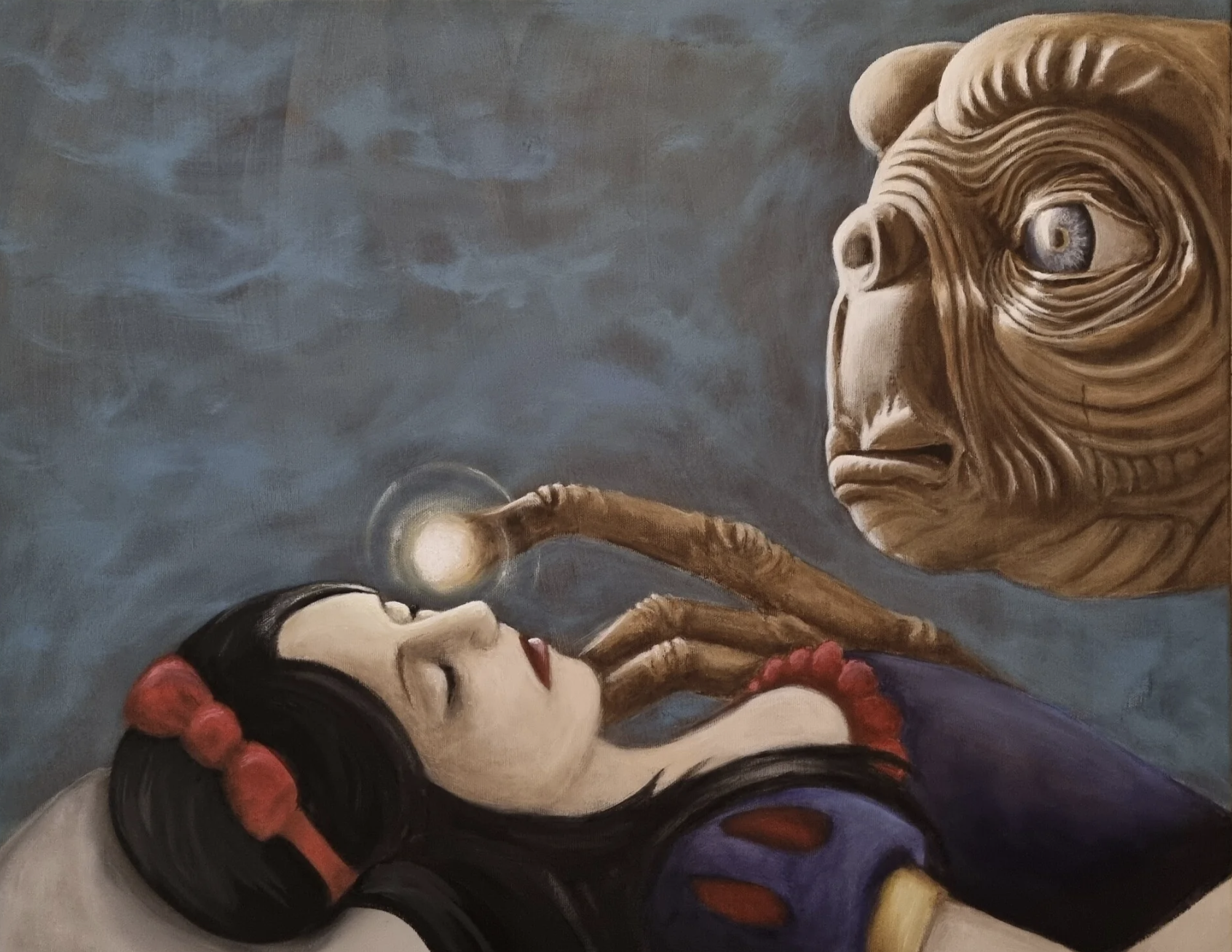
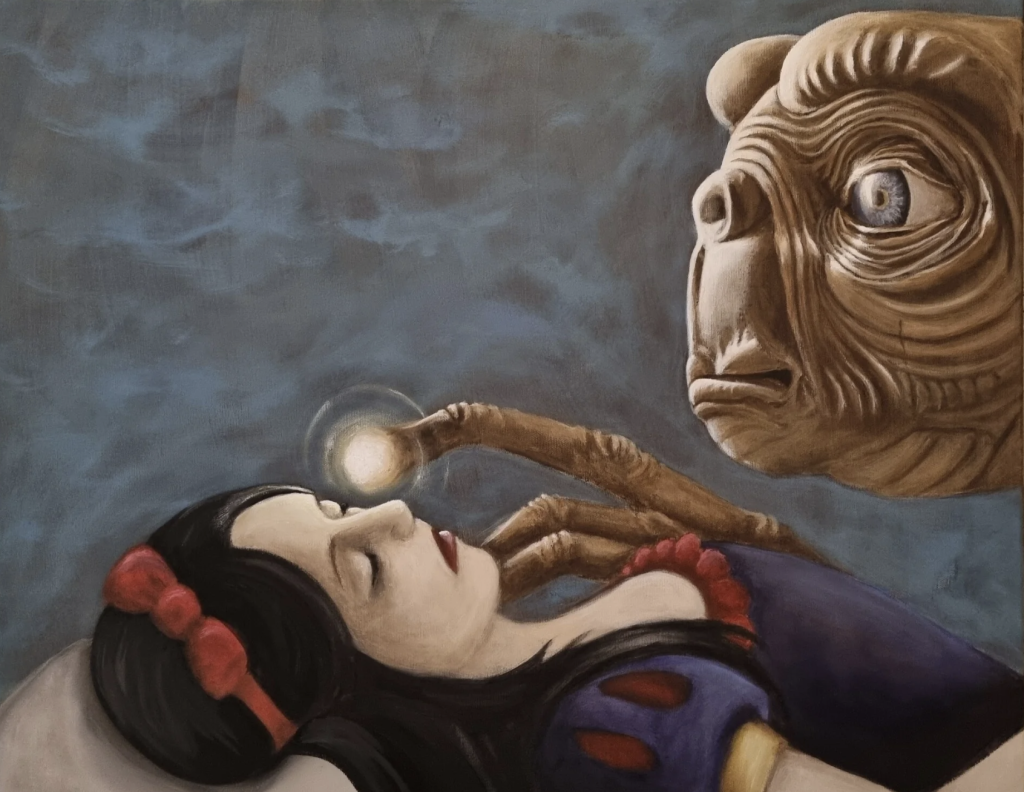
This psychological atmosphere is particularly evident in her interpretation of Snow White. In the painting, the familiar fairy tale character lies in a state resembling sleep while an unusual creature reaches toward her forehead. The scene immediately evokes themes of transformation, awakening, and vulnerability. Rather than depicting a moment from the traditional story, Zucker reimagines the character as part of a symbolic encounter between consciousness and the unknown.
The mysterious figure hovering above Snow White introduces a sense of ambiguity that is central to Zucker’s work. Is it a threat, a guide, a dream, or a manifestation of inner thought? The painting deliberately avoids providing a definitive answer. Instead, viewers are encouraged to confront uncertainty and develop their own interpretations.
Color and composition also play important roles in establishing the emotional tone of her paintings. Zucker frequently employs muted palettes dominated by soft earth tones, pale blues, greys, and subdued reds. These restrained colors contribute to the dreamlike quality of her work while allowing symbolic elements to command attention. Her compositions are carefully balanced, creating spaces that feel theatrical yet intimate.
What distinguishes Eva Zucker’s paintings is their ability to operate on multiple levels simultaneously. They engage with cultural memory through recognizable characters while also exploring deeply personal psychological territory. Her work speaks to the enduring influence of stories and myths, not as fixed narratives but as living symbols that continue to shape how people understand themselves and the world around them.
By blending figurative painting with symbolism and emotional introspection, Zucker creates artworks that encourage contemplation rather than certainty. Her paintings remind viewers that beneath familiar stories lie deeper questions about identity, perception, and the hidden dimensions of human experience. In these carefully constructed worlds, fairy tales become mirrors, reflecting the complexities, fears, and possibilities that reside within us all.
