



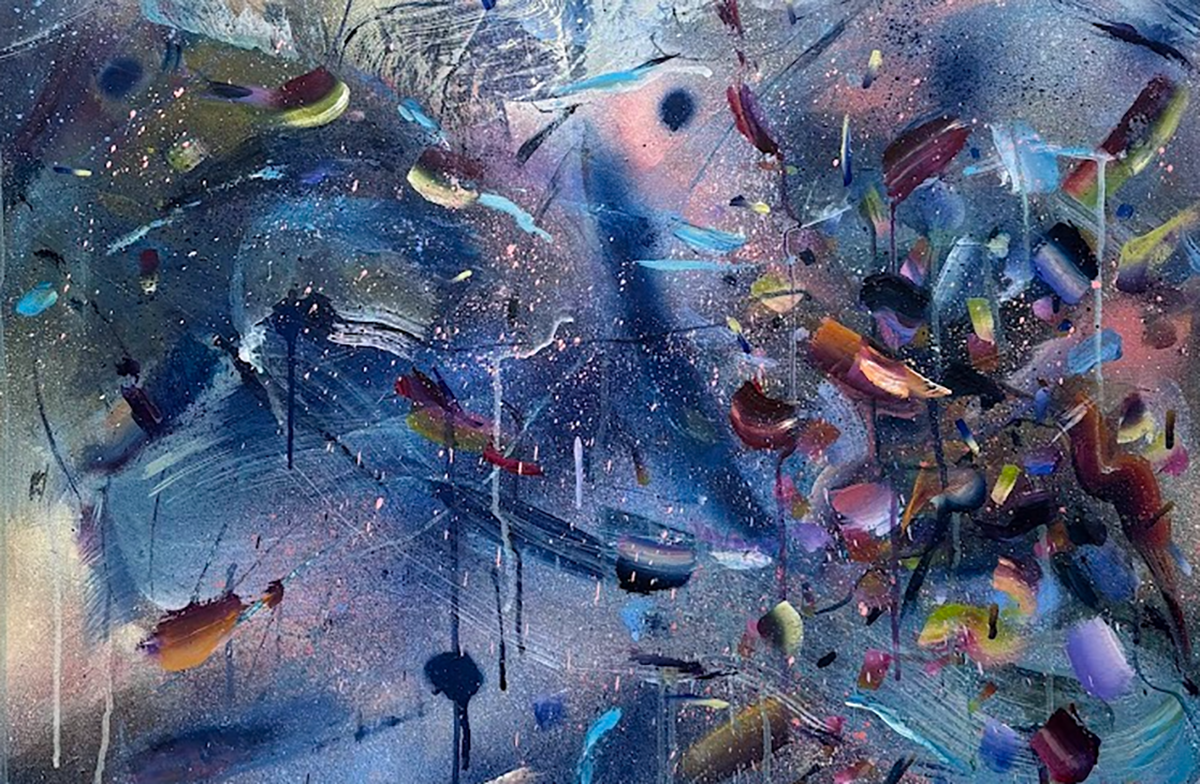
Based in Barcelona, Aga Wojtanowicz is a Polish visual artist whose practice spans painting, drawing, and collage. Working through an intuitive process, she creates images that explore memory, emotion, and the subtle traces left behind by lived experience. Rather than beginning with a fixed narrative, Wojtanowicz allows each composition to unfold through layered textures, energetic gestures, and carefully balanced color relationships. The result is work that feels both spontaneous and deliberate, inviting viewers into spaces where personal reflection and imagination naturally intersect.
Her paintings do not seek to describe the world in a literal sense. Instead, they suggest emotional landscapes that exist somewhere between memory and the present moment. Every mark contributes to an atmosphere that is fluid, open, and quietly immersive. Layers build upon one another without erasing what came before, reflecting the way memories accumulate rather than disappear. Through this process, Wojtanowicz creates dreamlike environments where moments of stillness coexist with movement, and where abstraction becomes a language capable of expressing experiences that words often cannot fully capture.
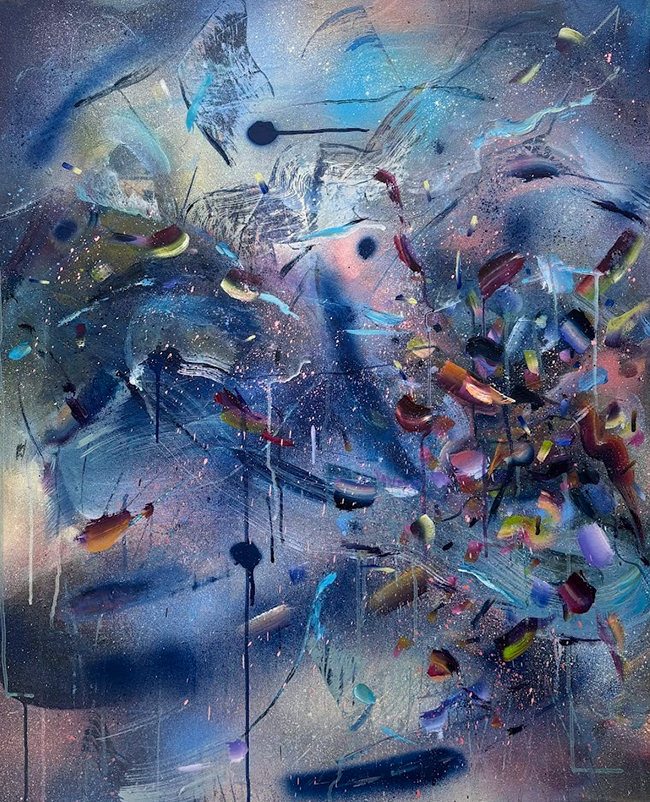
One such work is Synapse Garden. where endorphins bloom, uncontrolled, yet composed – not chaos: spatial freedom. a dance (2026), an acrylic and spray paint painting on canvas measuring 100 × 81 cm. The title immediately establishes the painting as more than a visual composition. It suggests an internal landscape shaped by emotion, sensation, and the invisible connections that define human thought. References to synapses and endorphins point toward the body’s neurological and emotional rhythms, while the mention of a garden introduces ideas of organic growth, renewal, and continuous transformation.
At first glance, the painting appears alive with movement. Broad fields of cool blues, soft violets, and muted greys provide an atmospheric foundation that seems almost weightless. Across this luminous background, bursts of saturated reds, yellows, turquoise, and deep purples emerge like fragments suspended in motion. Spray paint creates soft transitions and atmospheric depth, while acrylic brushwork introduces energetic strokes, textured surfaces, and expressive marks that travel freely across the canvas.
Although the composition appears spontaneous, it reveals a carefully balanced structure. Sweeping curves guide the eye across the surface, while clusters of vibrant forms create moments of visual concentration before dissolving into quieter passages. Drips descend through the painting, emphasizing gravity while contrasting with the floating quality of many of the surrounding elements. This constant interaction between movement and stillness reflects the balance suggested by the title: uncontrolled energy existing within an underlying sense of order.
The painting resists a single point of focus. Instead, the viewer’s attention continually shifts from one gesture to another, discovering new relationships between color, line, and texture. Small marks appear almost like sparks or impulses, while larger transparent forms overlap to create a sense of depth without relying on conventional perspective. The entire surface feels interconnected, much like a living network where each element influences the next.
Color plays an important role in establishing the emotional atmosphere. The cool palette creates a calm and expansive environment, while concentrated flashes of warmer tones introduce moments of excitement and heightened energy. These contrasting temperatures produce visual rhythm, allowing the painting to breathe without becoming visually overwhelming. Rather than functioning as decoration, color becomes an emotional force that shapes the viewer’s experience of the work.
Texture further enriches the composition. Layers remain visible throughout the surface, allowing traces of earlier decisions to coexist with later additions. Scraped passages, translucent washes, sprayed veils, and expressive brushwork create a history that remains embedded within the finished painting. This openness reflects Wojtanowicz’s intuitive process, where discovery is embraced rather than concealed. The visible accumulation of marks gives the work both physical presence and emotional depth.
The title’s description of “spatial freedom” is particularly evident in the painting’s organization. Instead of confining forms within rigid boundaries, Wojtanowicz allows them to expand and interact naturally across the canvas. Shapes appear to drift, collide, separate, and reconnect, creating a dynamic visual choreography. The final phrase, “a dance,” captures this sensation perfectly. Every brushstroke seems to respond to another, producing a composition that feels active without becoming restless.
There is also a poetic ambiguity that encourages prolonged viewing. The painting does not dictate meaning but instead creates room for personal interpretation. Some viewers may recognize echoes of microscopic biological structures, while others may imagine distant galaxies, flowing water, weather systems, or emotional states made visible through abstraction. This openness allows each encounter with the work to remain personal and continually evolving.
Synapse Garden demonstrates Aga Wojtanowicz’s ability to combine intuition with thoughtful composition. Through layered surfaces, expressive gestures, and carefully orchestrated color relationships, she creates a painting that reflects both emotional immediacy and quiet contemplation. Rather than illustrating a specific story, the work invites viewers to experience movement, memory, and feeling as interconnected forces. It is a painting that rewards repeated observation, revealing new rhythms and subtle relationships with each viewing while celebrating the expressive possibilities of contemporary abstraction.
