

For Allan Wesaquate, a painting can begin without a plan for what it will become. He follows feeling into the work, allowing acrylic paint to move, gather, and change direction across the surface. Vivid colors and layered forms create a sense of motion, but the mood is seldom settled. A passage may feel urgent beside one that invites a slower look. Rather than illustrating a single event, Wesaquate gives shape to sensations that can be difficult to put into words. Personal experience informs his paintings without closing them to other interpretations; viewers can recognize something of their own in the shifting colors and rhythms. That openness also carries into his work with photography and installation. Across different materials, he considers how an image can hold an experience, and how its meaning can change when it is seen again.
Party Hat: An Image Held in Memory
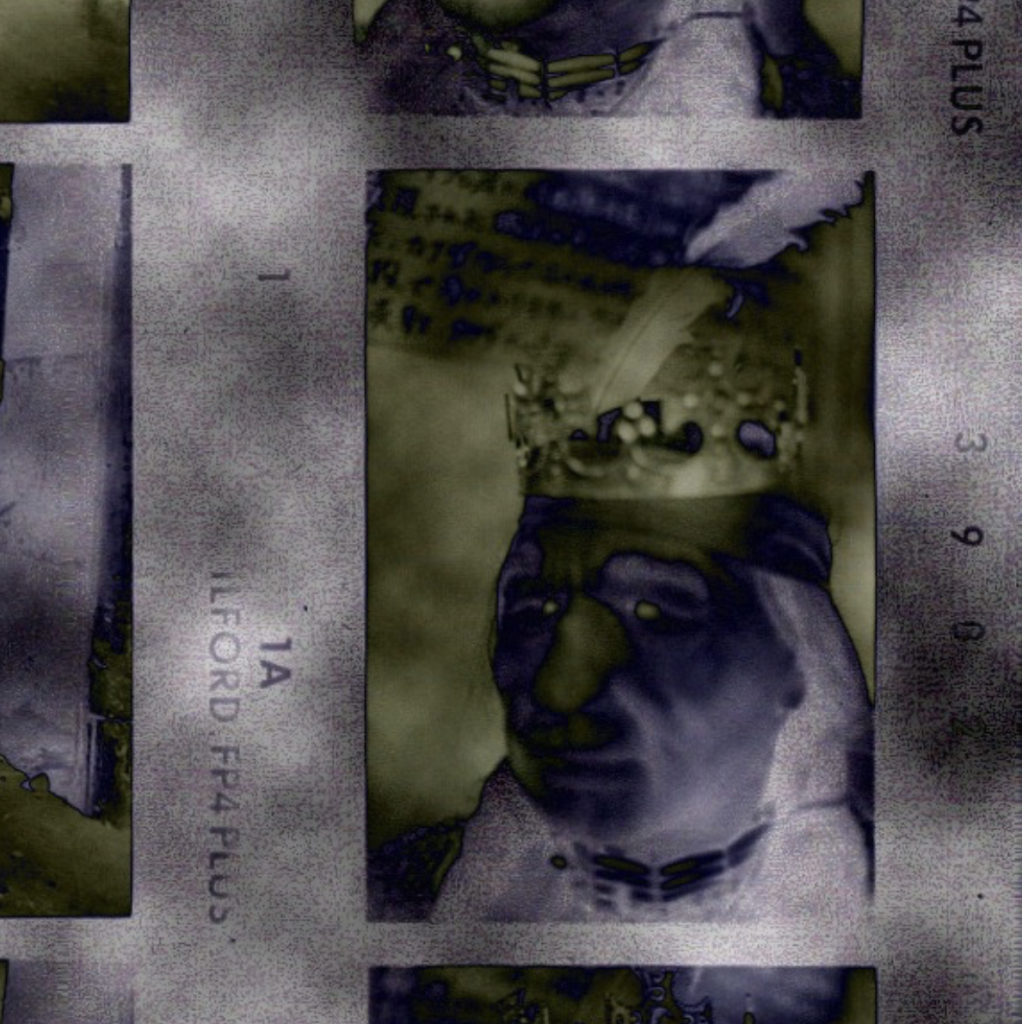
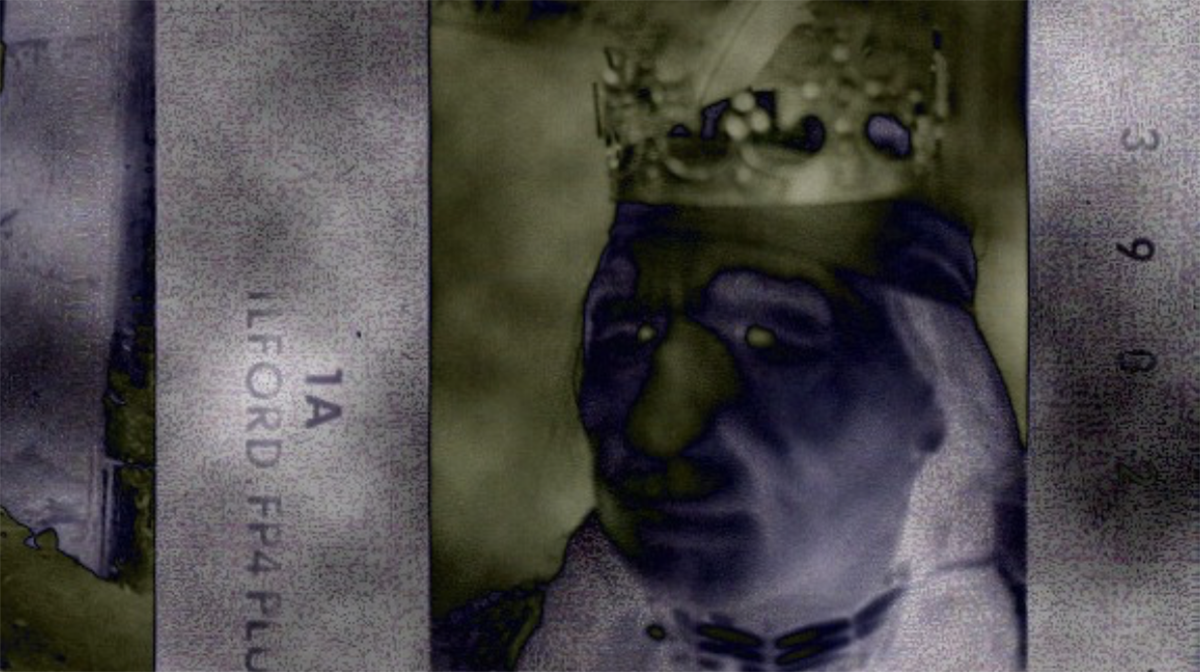
Party Hat offers a different entry into Wesaquate’s practice. The image is an excerpt from an installation of fifteen photographs transferred onto deer hide. The installation was enclosed in a Plexiglas frame and suspended from the ceiling. It appeared at the American Indian Community House Gallery in New York City as part of an exhibition of artists responding to HIV, and the exhibition later toured the United States. Wesaquate retouched the image in 2010 using a GIMP filter.
These details matter because the excerpt was once part of a larger experience. Seen alone, a photograph can appear self-contained. In Party Hat, each image belonged to a group of fifteen, encountered within a suspended structure. A visitor would have had to consider the photographs in relation to one another and to the space around them. The work asked for movement: approaching it, changing position, and taking time to look. Its meaning arose through that encounter as well as through the individual images.
Transferring the photographs onto deer hide also changed their physical presence. A photograph is often treated as a flat record, a way to preserve the appearance of a moment. Here, the image occupied a material surface with its own texture and associations. The choice brought the photographic record into contact with something tangible and vulnerable. It encouraged attention to how an experience is carried, rather than only to what a camera captured. Without assuming what the photographs depict, the material tells us that their presentation was central to the work.
The Plexiglas frame introduced another relationship between closeness and distance. It enclosed the installation while allowing the photographs to remain visible. Suspended overhead, the piece occupied the gallery differently from a photograph hung against a wall. Viewers could be near it, yet the frame and its position shaped how they approached it. That arrangement may have prompted questions about what can be seen clearly, what remains protected, and how people look at experiences that are difficult to discuss.
The exhibition’s focus on HIV gives Party Hat an essential context. The work was shown within a collective response to a subject that affects people’s bodies, relationships, and lives. Its place in that exhibition does not require every image to deliver an explicit statement. Art can open a conversation through its materials, scale, and manner of display as well as through recognizable subjects. By bringing photographs together in a form viewers had to spend time with, Wesaquate made room for sustained attention.
Its presentation at the American Indian Community House Gallery also placed the work within a space dedicated to Native artists and their communities. The gallery offered a setting in which artists could address contemporary experience on their own terms. As the exhibition traveled across the United States, Party Hat entered new spaces and met viewers who would bring different knowledge and memories to it. The work’s physical form remained connected to its original setting, even as each encounter changed the conversation around it.
Wesaquate’s 2010 retouching adds another point in the image’s history. The filtered version is not the suspended installation itself, nor can it reproduce the experience of moving around fifteen photographs on deer hide. It is a later encounter with one image from that work. Returning to it through a digital tool allowed the artist to revisit something made for another time and setting. The excerpt therefore carries more than one moment: its place in the original exhibition and the artist’s decision to work with the image again.
Party Hat asks what happens when a photograph continues beyond the instant it records. It can become part of an installation, travel with an exhibition, and return years later in an altered form. Wesaquate allows that passage of time to remain visible in the work’s story. The image belongs to a larger piece, but it also invites a fresh encounter of its own—one shaped by memory, material, and the act of looking closely.
