



Australian artist Clint Anthony has spent more than two decades developing a distinctive visual language rooted in abstraction, modern art, and graphic design. His artistic journey took shape in New York City, where he lived from 1996 to 2017 and immersed himself in its energetic creative culture. During this period, Anthony participated in exhibitions at venues including The Gershwin Hotel while also exploring video and photography as forms of visual expression. His studies at The Studio House expanded his understanding of abstract painting, color theory, texture, and personal expression. These experiences helped him develop a bold, emotionally driven approach to art. When Anthony returned to Australia in 2017, he carried with him the influence of New York’s diverse artistic environment and years of creative experimentation. His work now brings together expressive color, layered surfaces, graphic energy, and symbolism to explore emotion, memory, connection, and personal transformation.
The Zinnia: A Cosmic Flower of Love and Renewal
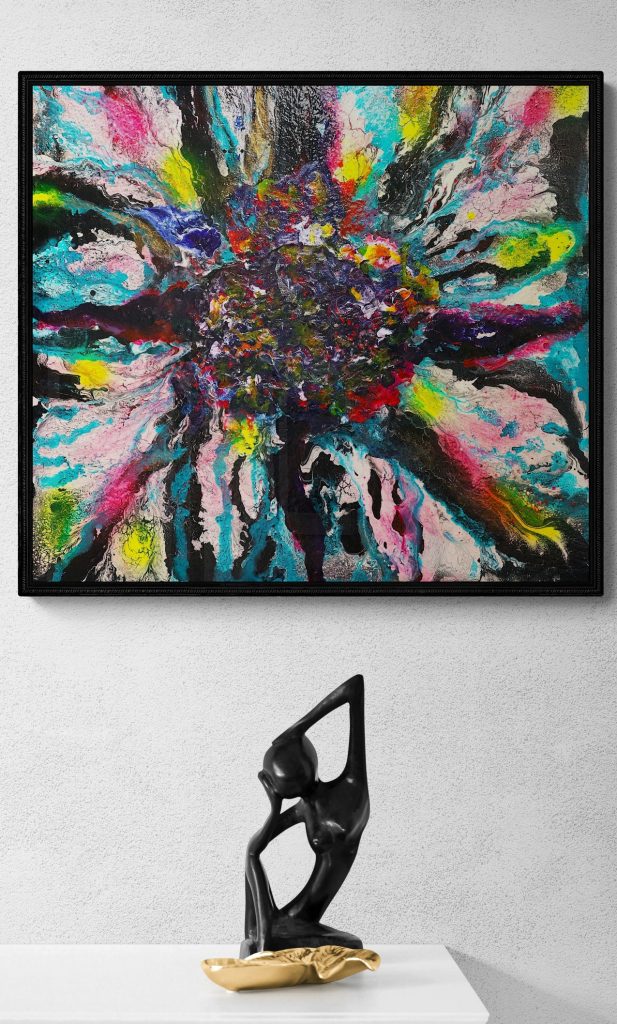
In The Zinnia, Clint Anthony transforms a familiar flower into an expansive symbol of love, endurance, remembrance, and emotional change. The work is inspired by the traditional symbolism of the zinnia, a flower associated with lasting affection, resilience, and thoughts of absent friends. Rather than presenting the subject through botanical realism, Anthony enlarges its emotional meaning through abstraction. The flower appears to exist beyond an ordinary garden, becoming a cosmic presence that radiates color and energy across the composition.
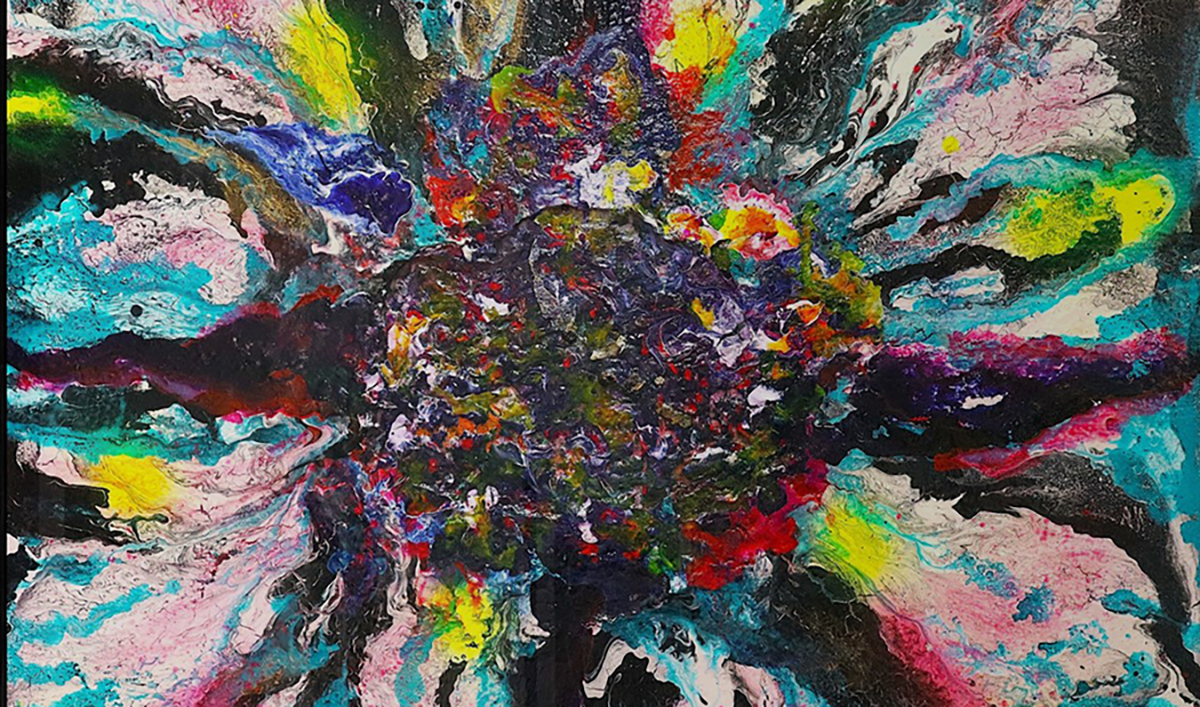
At the center of the painting is a dense, highly textured form filled with dark purples, reds, blues, yellows, and flashes of white. This intricate core gives the flower a powerful visual and emotional weight. It can be interpreted as the heart of the work, containing accumulated memories, experiences, and feelings. Its uneven, layered surface suggests that love and personal growth are rarely simple. They are formed through time, change, loss, connection, and renewal.
From this central point, broad petals extend outward with vigorous movement. Their irregular shapes prevent the flower from appearing static or carefully controlled. Instead, it seems to be opening, shifting, and expanding before the viewer. Some areas flow gently into one another, while others collide through sharp contrasts of color and texture. This combination creates the impression of a living force that is continually evolving.
Anthony describes the zinnia as a cosmic flower of life that embraces people with unconditional love. This idea is communicated through the painting’s open, radiating structure. The petals reach toward the edges of the canvas as if the flower’s energy cannot be contained. Its outward movement creates a sense of generosity and connection, inviting the viewer into its emotional space.
Color plays a central role in communicating these ideas. Hot pink represents love, affection, and emotional warmth. It appears throughout the flower in vivid bursts, bringing tenderness into an otherwise intense composition. Turquoise introduces a sense of joy, openness, and restoration. Its brightness offers moments of visual relief, particularly where it meets the heavier blacks and purples. Yellow, associated with optimism, light, and mental clarity, appears in energetic flashes that enliven the surface.
The darker colors are equally important. Black creates contrast and gives the composition depth, allowing the brighter tones to glow more intensely. Deep purple and blue contribute a contemplative atmosphere, suggesting mystery, memory, and the emotional complexity found beneath the painting’s joyful exterior. Together, the light and dark tones acknowledge that healing does not require difficult experiences to be erased. Instead, they can become part of a richer and more complete emotional life.
The physical texture of The Zinnia strengthens this message. Thick, raised passages create a surface that feels active and almost sculptural. Paint appears to have been layered, pushed, dragged, and allowed to merge organically. These visible gestures preserve the energy of Anthony’s creative process and encourage the viewer to imagine the physical act of making the work. The flower is not simply illustrated. It is constructed through movement, material, and instinct.
Although the composition is bold and energetic, it also contains a feeling of embrace. The flower’s large petals appear to surround its center protectively, holding everything within a shared form. This quality supports Anthony’s belief that the zinnia can heal the heart while reminding us that we are forever changing. The work does not present transformation as something frightening. It suggests that change can be colorful, expansive, and filled with possibility.
The Zinnia ultimately functions as both a personal symbol and a universal image. It may remind viewers of someone absent, a relationship that has endured, or a period of emotional renewal. Its meaning remains open enough for each person to bring their own memories to the painting. Through expressive color, tactile surfaces, and dynamic abstraction, Clint Anthony creates a flower that represents far more than nature. It becomes a celebration of affection, resilience, optimism, and the continuing ability of the human heart to heal, grow, and open again.
