



For Daniel Gaciu, painting is not simply a method of image-making. It is a form of investigation. Working between intuition and inquiry, Gaciu approaches art as a way to explore the underlying structures of reality. His practice is guided by a fascination with the relationship between color, light, sound, philosophy, and perception. Rather than beginning with fixed conclusions, he enters the studio with questions, allowing experimentation to become the driving force behind discovery.
Although his academic background began at the Design Academy Eindhoven (DAE), Gaciu’s artistic path gradually developed beyond formal training. As a self-taught painter, he transformed his studio into a place of research, where trial and error serve as essential tools for learning. His interest in art history runs parallel to a deeper curiosity about how images function and why visual representation continues to matter. Through constant exploration, he seeks to uncover truths that exist beneath the surface of appearances.
This balance between intellectual inquiry and artistic freedom defines Gaciu’s work. His paintings invite viewers into spaces where certainty dissolves, symbolism emerges, and meaning remains fluid. The result is an artistic practice that combines rigorous experimentation with philosophical reflection, opening pathways toward experiences that are both deeply personal and universally relevant.
If your mind gives you many answers, that is a question…, 2018–2022
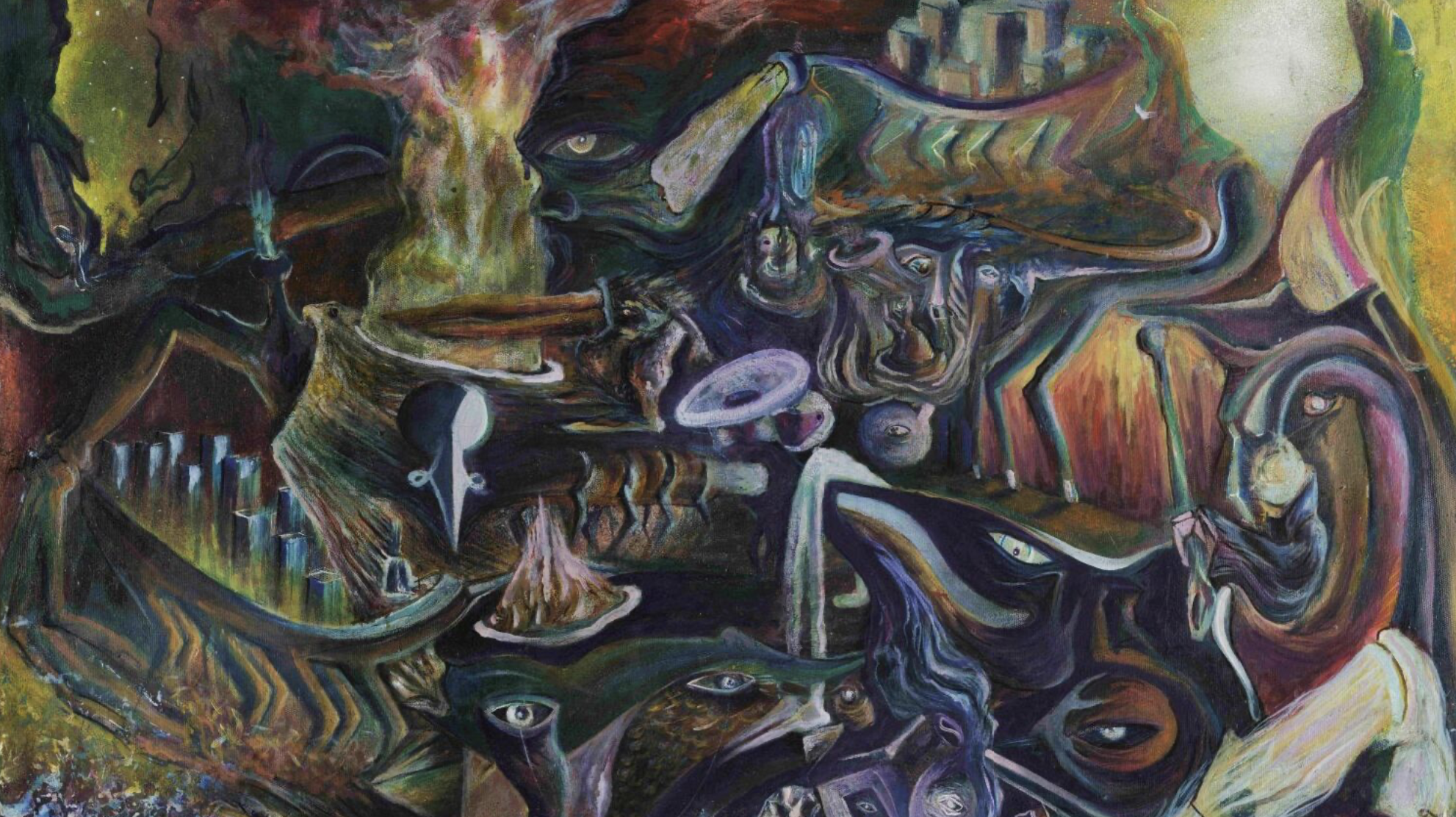
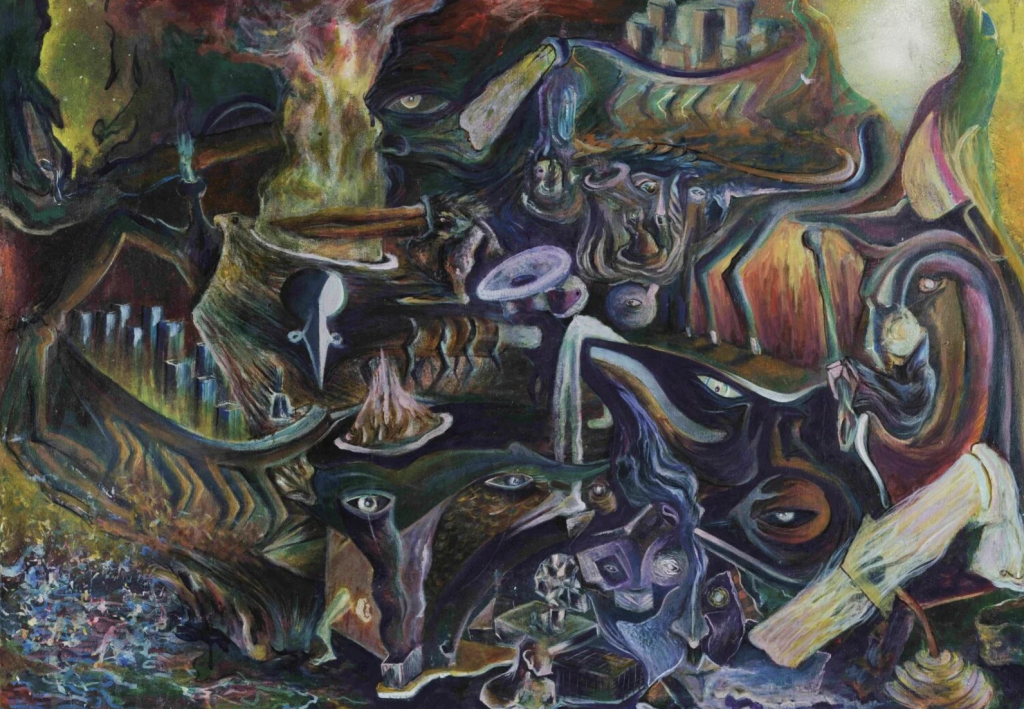
Daniel Gaciu’s If your mind gives you many answers, that is a question… is a painting that immediately resists simple interpretation. Created over a four-year period from 2018 to 2022, the work unfolds as a labyrinth of images, symbols, figures, and fragments that appear to emerge from a subconscious landscape. Rather than presenting a singular narrative, the painting functions as an open field of possibilities, encouraging viewers to navigate its complexity through their own perceptions and associations.
At first glance, the composition appears almost dreamlike. Faces emerge and disappear within swirling forms. Eyes appear throughout the painting, observing from unexpected locations. Architectural structures, organic shapes, flames, flowing water, and mysterious figures coexist within the same visual environment. Each element seems connected to the others, yet the exact nature of those connections remains elusive.
The title itself provides an important entry point into the work. If your mind gives you many answers, that is a question…suggests a paradox. Questions are traditionally associated with uncertainty, while answers imply resolution. Here, Gaciu reverses that expectation. The abundance of answers becomes evidence that the question remains unresolved. The painting mirrors this idea visually. Every section seems to offer clues, but each clue opens new avenues of interpretation rather than leading toward a definitive conclusion.
Color plays a central role in creating this experience. Rich blues, purples, greens, golds, reds, and blacks move across the canvas in complex layers. Light appears to emerge from within the painting itself rather than from an external source. Certain forms glow against darker passages, creating moments of revelation before dissolving back into ambiguity. This dynamic relationship between color and illumination reflects Gaciu’s ongoing investigation into how color generates light and shapes perception.
The painting also demonstrates a remarkable balance between structure and spontaneity. While the composition may initially appear chaotic, careful observation reveals an intricate network of relationships. Shapes echo one another across different sections of the canvas. Curving lines guide the eye through the composition, linking seemingly unrelated elements. Faces transform into landscapes, objects merge with figures, and boundaries between subjects become increasingly fluid.
One particularly compelling aspect of the work is its treatment of human consciousness. The recurring eyes and fragmented faces suggest multiple layers of awareness operating simultaneously. Some figures appear contemplative, while others seem trapped within transformation. The viewer encounters a visual representation of thought itself—restless, associative, and constantly generating new meanings.
The imagery often feels symbolic without becoming fixed. A vessel near the center may evoke ideas of containment, memory, or spiritual passage. Flames can suggest destruction, purification, or creative energy. Architectural forms hint at civilization, order, or the structures through which humans attempt to understand existence. Yet none of these interpretations dominates. Instead, Gaciu allows symbols to remain open-ended, preserving their mystery.
This openness is one of the painting’s greatest strengths. Rather than instructing viewers what to think, Gaciu creates conditions for active engagement. The artwork becomes a conversation between the painting and the observer. Each viewing reveals new details, new relationships, and new questions.
The four-year creation period further reinforces the sense of a work that evolved through discovery rather than predetermined planning. The painting feels accumulated rather than constructed. Layers of thought, experimentation, revision, and reflection seem embedded within the surface. It carries the energy of a long investigation, where answers continually generated further questions.
There are echoes of Surrealism, Symbolism, and visionary painting throughout the work, yet Gaciu avoids direct allegiance to any single movement. His visual language feels highly personal, shaped by philosophical inquiry as much as by artistic tradition. The painting occupies a space between dream and analysis, intuition and reason, abstraction and representation.
Ultimately, If your mind gives you many answers, that is a question… reflects Daniel Gaciu’s broader artistic pursuit: an attempt to explore reality through observation, experimentation, and reflection. It is not a painting that seeks to resolve uncertainty. Instead, it embraces complexity and invites viewers to do the same. In a world often driven by the desire for quick conclusions, Gaciu offers something different—a space where curiosity remains alive, and where every answer becomes the beginning of another question.
