



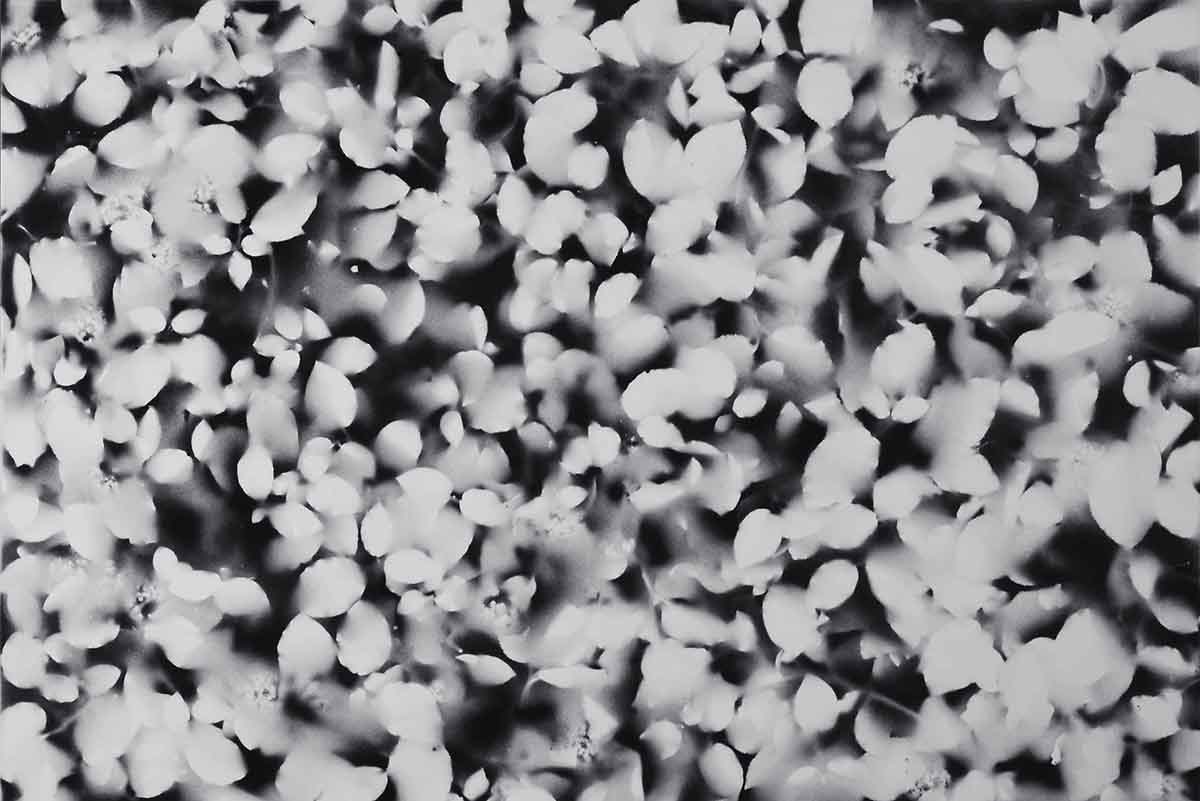
Pavel Hayek doesn’t chase spectacle. His art isn’t built on shock or grandeur—it’s grounded. It lingers in the quiet spaces most people rush past. What sets Hayek apart is his ability to hold a mirror up to the everyday. He doesn’t invent drama where none exists. Instead, he observes, listens, and records what’s already there. His work—ranging from paintings and graphic pieces to experimental prints—stems from a simple but rare discipline: attention. With precision and patience, he reframes the familiar, offering it back to us through a fresh lens. What might seem forgettable becomes, in his hands, something quietly magnetic. Hayek’s approach is a kind of visual mindfulness. It insists that the things we overlook deserve a second look. His art reminds us that beauty often sits quietly in plain sight, waiting for someone like him to notice.
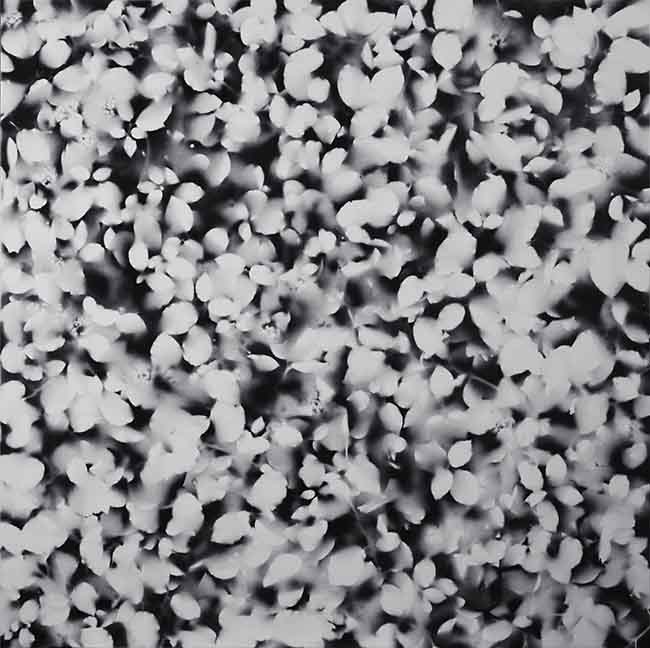
In 2021, Hayek started a new experiment. It was simple in setup but rich in result. He began collecting pieces of nature—branches, weeds, seed pods, wildflowers—and bringing them home. In his garden, he’d place them directly on white canvas. Then came the paint—black spray, quick and direct. The silhouettes that emerged were immediate. The outlines, soft and blurred at the edges, carried the memory of what had been there just moments before. It wasn’t just about the shapes themselves. It was about the absence, the trace left behind.
The works looked almost like photograms, a process where objects are placed on light-sensitive paper and exposed to light to create an image. Except Hayek’s method introduced the artist’s hand more overtly. Sometimes the paint pooled or scattered unpredictably. Sometimes the spraying went beyond the edges of the leaves or stems. These moments of over-spray introduced a looser, more painterly feel. It was nature and human intention working together—sometimes in harmony, sometimes at odds.
He didn’t treat it as a side project. For three years, he committed to the process. Each image began with a walk, a small act of foraging. He gathered what he found in his immediate surroundings—plants most of us wouldn’t stop to name. Back in his garden studio, he worked quickly. The materials were delicate, often dry or brittle, and he wanted to preserve their form before they crumbled. This urgency shaped the work. It forced him to be present. To act with speed but not haste.
The process was tactile. There was no screen, no digital intervention—just hand, plant, and paint. It wasn’t about composition in the traditional sense. Hayek let the materials speak first. The curves of a stem, the jagged edge of a leaf, the negative space left between blades of grass—all of these elements dictated the final image. He was there to assist, not impose.
What emerged from this practice were black-and-white compositions that sit somewhere between abstraction and realism. They aren’t dramatic. They’re quiet. But they hold depth—both visual and emotional. The shadowed shapes feel almost ghostly. They suggest memory. They ask the viewer to look closely, to trace the edges, to guess at the species of plant, or maybe just to feel their presence.
Hayek describes the work as an “adventure,” which is telling. The excitement didn’t come from spectacle but from process. From the interaction between hand and nature. From the unpredictability of how a paint mist might catch a petal’s edge. From the fact that no two prints could ever be exactly alike. This isn’t the kind of art you plan in advance. It’s built through doing. Through showing up. Through repetition. Through trust in the material.
There’s also an honesty in the limitation of the palette—just black and white. It strips away distraction. It lets the shapes stand on their own. It allows for contrast, for depth, for breath. It’s minimal, but not cold. There’s warmth in the touch. A kind of reverence for the natural world.
In a time when art often leans toward the digital, the synthetic, or the grandiose, Hayek’s work offers something else. A pause. A return to materials. A close look at what’s right in front of us. These prints don’t shout. They don’t demand attention. But once you stop and look, they keep you there. And that’s the point.
