



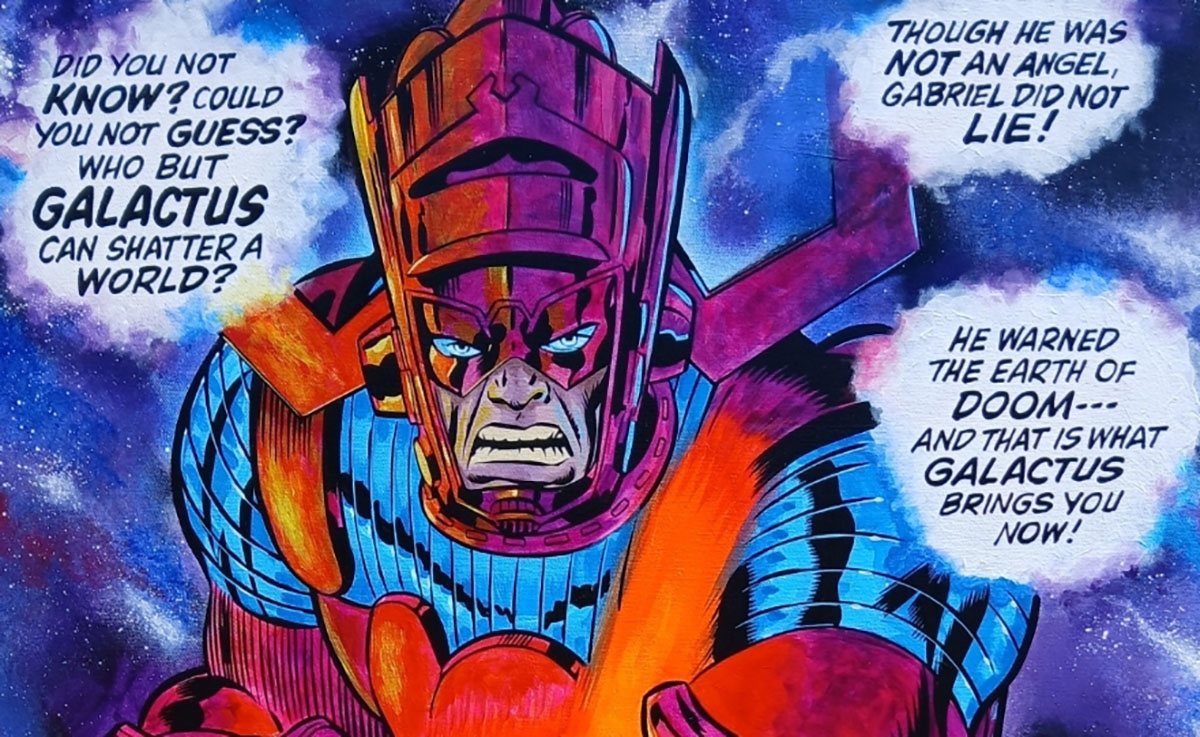
This story began with an unexpected coincidence. A message arrived from someone named Peter Parker, and given the subject matter, the name immediately caught our attention. Whether it is his real name or simply a remarkable coincidence, we’ll leave that mystery unsolved. Still, for a brief moment, we couldn’t help but wonder if New York’s most famous web-slinger had decided to take an interest in the art world.
Although Peter Parker is not the artist featured here, he plays an important role in the story. As a supporter of Pete “PG” Garcia, he helps bring Garcia’s paintings to collectors, comic book fans, and others who appreciate the rich visual heritage of the medium. It is the kind of support that often takes place behind the curtain but can have a meaningful impact.
The connection feels particularly appropriate. Garcia’s paintings draw inspiration from the Golden, Silver, and Bronze Ages of American comics, revisiting the characters, covers, and imagery that have remained part of popular culture for decades. Through vibrant color, energetic compositions, and a genuine respect for the artists who shaped the genre, he creates works that celebrate comic book history while offering his own interpretation of these familiar icons.
In the interview that follows, Pete PG Garcia reflects on his creative path, discusses the influence comics have had throughout his life, and explains how he transforms classic comic book imagery into paintings that honor the art form that first inspired him to pick up a pencil.
What first sparked your interest in creating artwork based on comic books and superheroes?
My name is Pedro Garcia (aka Pete PG Garcia). During my childhood in Peru, I read superhero comics translated into Spanish and thus began my interest in drawing. I studied anatomy and fine art with private instructors but focused on practicing my pencilling, inking and lettering skills. This was all pre the digital age. When I came to the United States, and in my late teens, I got a chance to join a couple of independent comic book publishers where I honed my trade. Sadly, the deadlines took their toll and I became burnt out to the point where a blank page would cause anxiety attacks. Fast forward 30 years, at one of the lowest points in my life, I came across a youtube video of a man making comic book re-creations and I thought “this is something I can do, and do well”. Not only would I be privileged to emulate my favorite artists of the 90’s, pay homage to them, If you will, but I would also continue to paint and improve over the coloring printing techniques of the time. As I gained followers, mostly comic book collectors, I was introduced to pre code comics, early Marvel and all the wonderful art of that era.
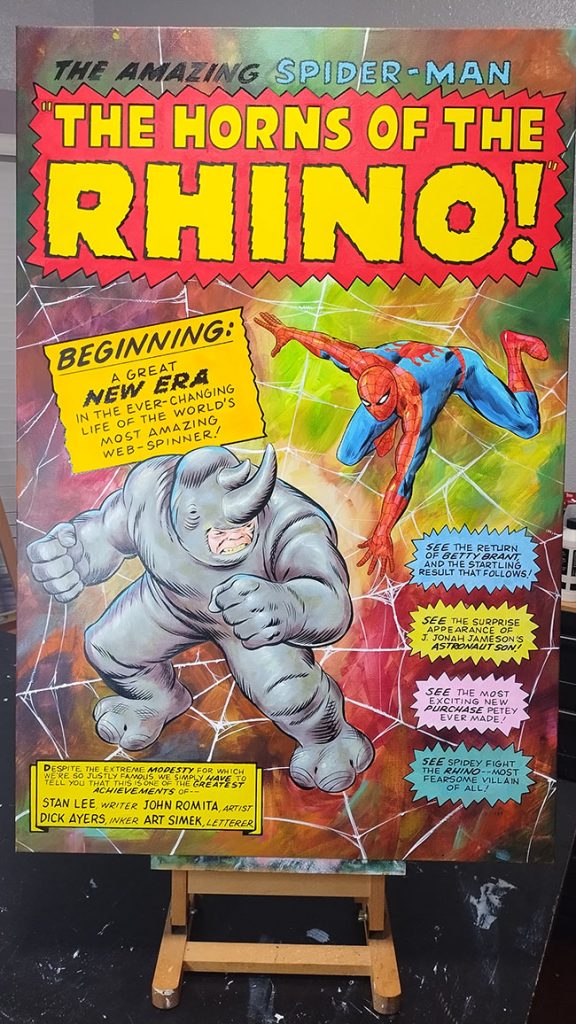
Which superhero character do you enjoy depicting the most, and what makes that character special to you?
There is not a favorite character that I enjoy painting. Excluding commissions, I make decisions on which cover or page to recreate based on how iconic it is, how challenging it will be to paint, meaning, will I learn something from the process, and If I can bring something new to it in design or color. I have the good fortune of having Peter Parker as a patron that encourages my choices from any era of comics and understands these things are important for a painting to be unique and successful. Too many times when painting a commission, the artist can fall into a “paint by numbers” rut. I seek to avoid that.
What aspects of comic book art do you find most enjoyable to capture in your artwork?
Some aspects that I find enjoyable when recreating a cover include: figuring out the inking techniques used (such as Jack Kirby’s creative inking or Jerry Ordway’s crosshatching), the technical logistics of making titles, fonts and captions so that they look accurate but not pasted on, creating new color palettes, and giving depth to figures where flat colors were originally used.
Are there any characters or classic covers that you hope to feature in future pieces?
In the future, I’d love to recreate Marvel works by Moebius and other European artists, pulp fiction fully painted covers from the 50’s and 60’s, and more pre digital age 90’s covers.
