



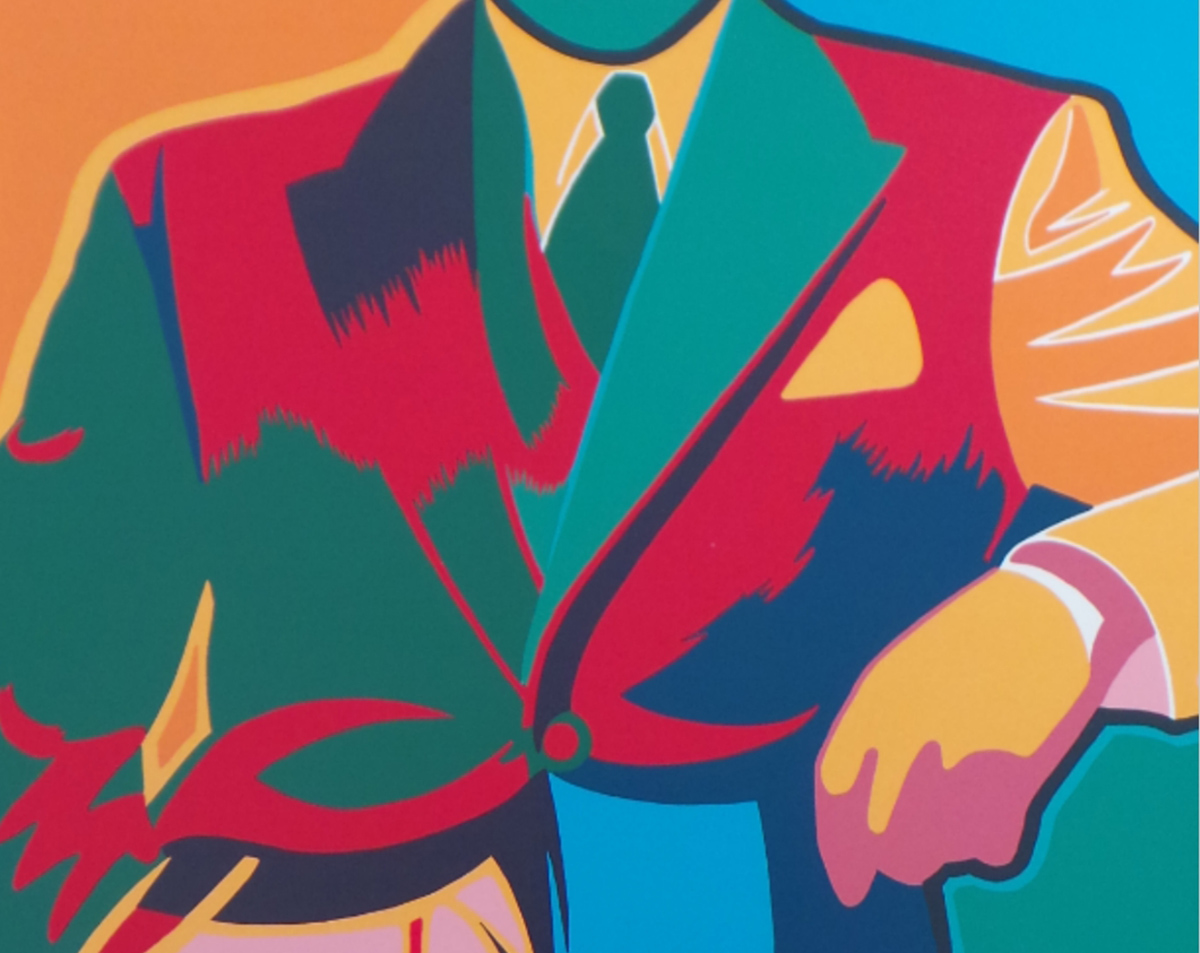
Francisco Merello is a visual artist from Chile whose work moves between abstraction, surrealism, and symbolism. He’s not pinned down by one school of thought, nor is he trying to be. His work lives in the tension between control and chaos—where color and gesture serve as both signal and mystery. Merello uses paint, drawing, and digital tools with equal ease. What ties his pieces together isn’t the medium, but the mood. His images often center on the human condition—how we relate to each other, how we hold our emotions, and how we live within society.
The figures in his work are frequently distorted, fragmented, or symbolic. They aren’t portraits so much as states of being. Organic shapes snake across the surface. Colors vibrate, patterns pulse. There’s a subconscious pull to it all. You feel like you’re in a place you know, but can’t quite name. A space made of sensation, memory, and metaphor.
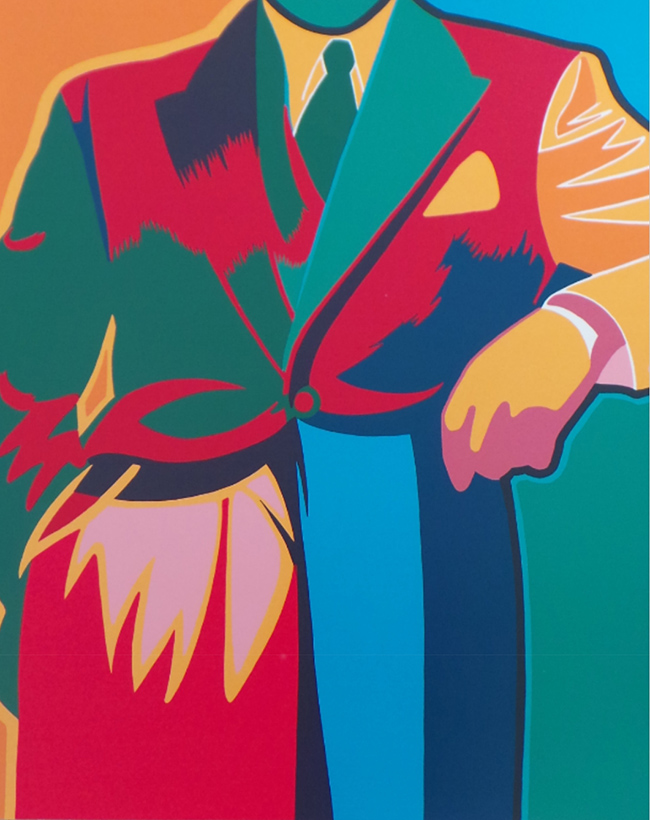
One of Merello’s defining traits is that his work refuses to seduce through polish. There’s no overt manipulation, no gimmick. Instead, it reveals itself slowly, like writing that demands to be read between the lines. Each mark or figure coexists with the others in a strange harmony, creating an internal language. You don’t decode it—you follow it, like a whisper in a foreign tongue that still makes sense on a gut level.
In some ways, his compositions feel like they’re unfolding in real time. There’s motion in the brushwork, rhythm in the layering. Forms echo one another, bend and repeat like thoughts caught in a loop. And yet, nothing about it is careless. There’s intention here, even if the path is nonlinear. His approach builds an “unheard-of order”—something outside of conventional structure, but deeply coherent in its own way.
Merello’s work lives in the same sphere as poetry. Like verse, it plays with tone, pace, and image. It’s structured, but never stiff. Fluid, but not formless. When you’re standing in front of one of his paintings, it doesn’t just show you something. It moves you—pulls you down a corridor that isn’t quite physical. The colors, the gestures, the shapes—they’re not representations. They’re impressions.
What’s striking is his ability to hold complexity without flattening it. He gathers influences—personal, cultural, emotional—and absorbs them into his practice without losing his voice. You can feel that Chilean edge, that Latin American pulse. But it’s not ethnographic or nostalgic. It’s lived. Present. He doesn’t present a country or a culture. He presents a way of seeing, formed by experience and made whole by art.
Recurring symbols appear—humanoid forms with stretched limbs, eyes that hover without sockets, cellular structures that feel biological but also metaphysical. Sometimes the work hints at conflict or fragility. Other times it leans into calm, but never silence. Even in stillness, his paintings hum. They are vibrant, but not decorative. Emotional, but not sentimental.
In digital work, Merello doesn’t lose what makes his paintings effective. If anything, he sharpens it. The precision of the medium lets him fine-tune the layering of shapes and intensify the palette. Yet he never lets the technology take over. The work is still about the same thing: connection. Between ideas, between people, between matter and emotion.
There’s a cinematic quality too. Some paintings feel like scenes from a film that doesn’t exist. As if a dolly shot is moving through layers of thought, stopping just long enough for you to catch a glimpse. You don’t need to see the whole story to feel it. That’s the power of his visual language—it gives you just enough to feel grounded while leaving room for personal interpretation.
In a time when so much visual culture aims to be digestible and immediate, Merello’s work does the opposite. It invites slowness. It’s not about recognition, but recognition’s shadow. He’s not trying to define reality, but to stretch it—reorder it into something that feels emotionally true even if visually surreal.
Francisco Merello doesn’t paint to impress. He paints to explore. What you see in his work depends as much on your state of mind as on the image itself. That’s the gift—and the challenge—of his art. It won’t meet you halfway. But if you’re willing to step in, it will take you somewhere unfamiliar and unforgettable.
